
Environment
Topical
Archeologists dig for a wind farm and stumble upon a medieval tunnel hidden for centuries
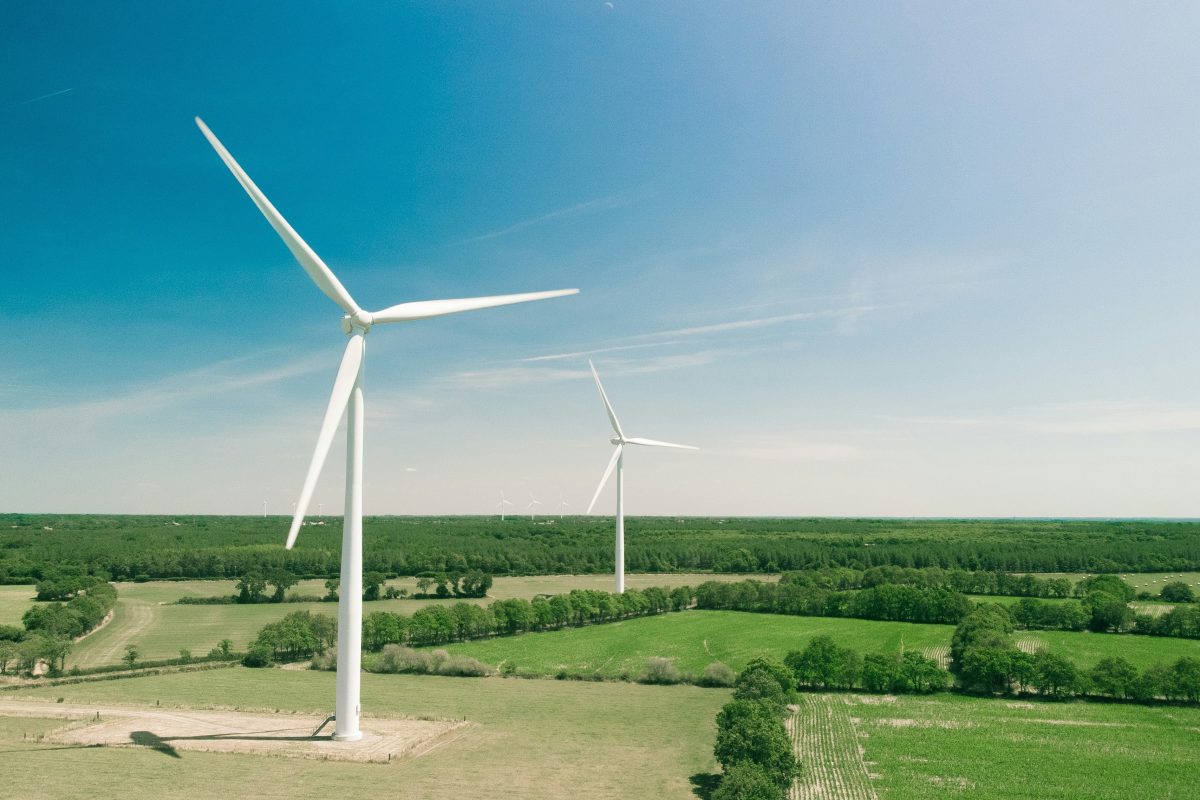 ©Thomas Réaubourg via Unsplash
What happens when energy transition collides with an area's millennial history? In Germany, during the construction of a wind farm, a secret medieval tunnel was discovered hidden under a more than 6,000-year-old Neolithic monument.
We are east of Reinstedt, in the state of Saxony-Anhalt. Here, archaeologists from the Landesamt für Denkmalpflege und Archäologie Sachsen-Anhalt carried out the usual preventive checks prior to the installation of wind turbines. This seems to be a routine job, at least at first glance. Until the soil began to tell a very different story.
A 6,000-year-old Neolithic moat
The first element that came to light was a trapezoidal moat from the Middle Neolithic, attributed to the Baalberge culture and dating to the fourth millennium B.C. A monumental structure, probably with a ritual or funerary function, exceptional in itself.
In the southern part of the area, in addition to an oval pit capped with a stone slab, the archaeologists noticed an anomaly. At first they thought of a grave. But as they dug deeper, a narrow, low underground passageway emerged: an erdstall, a type of medieval passageway that remains shrouded in mists to this day.
The tunnel is about a meter high and between 50 and 70 centimeters wide. In some sections, you can only propel yourself by walking bent over or even crawling. It is not a space designed for comfort, but for a very specific and purposeful use.
What is an erdstall?
Erdstalls are underground corridors found in several regions of Central Europe, especially in German and Alpine regions. They are not mines. Not traditional crypts. Not ordinary cellars. And above all: we do not have written sources that explain their function with certainty.
Even in the case of Reinstedt, the finds are scarce but significant: a horseshoe, the skeleton of a fox, some mammal bones and traces of a small fire that burned for only a short time. At the entrance, a few stones indicate a deliberate seal, as if someone deliberately wanted to seal the tunnel.
Preliminary analyses place the tunnel's construction between the 10th and 13th centuries, i.e. in the middle of the Middle Ages. The real mystery, however, is its location: why excavate a medieval subterranean passage right under a Neolithic monument?
Researchers don't rule out the possibility that the site was still visible in the Middle Ages and recognized as an ancient, significant site. Possibly it was seen as a sacred, powerful place that needed to be reactivated or retranslated. Or perhaps it was a temporary refuge, used in times of danger. None of the hypotheses has yet been conclusively proven.
There is one aspect that deserves additional attention. Without the mandatory archaeological checks as part of wind farm construction, this medieval tunnel would have remained hidden.
(©LDA-LSA via GreenMe.it 2026 / Managing Editor: Julie Morgan - The Press Junction / Picture: ©Thomas Réaubourg via Unsplash)