
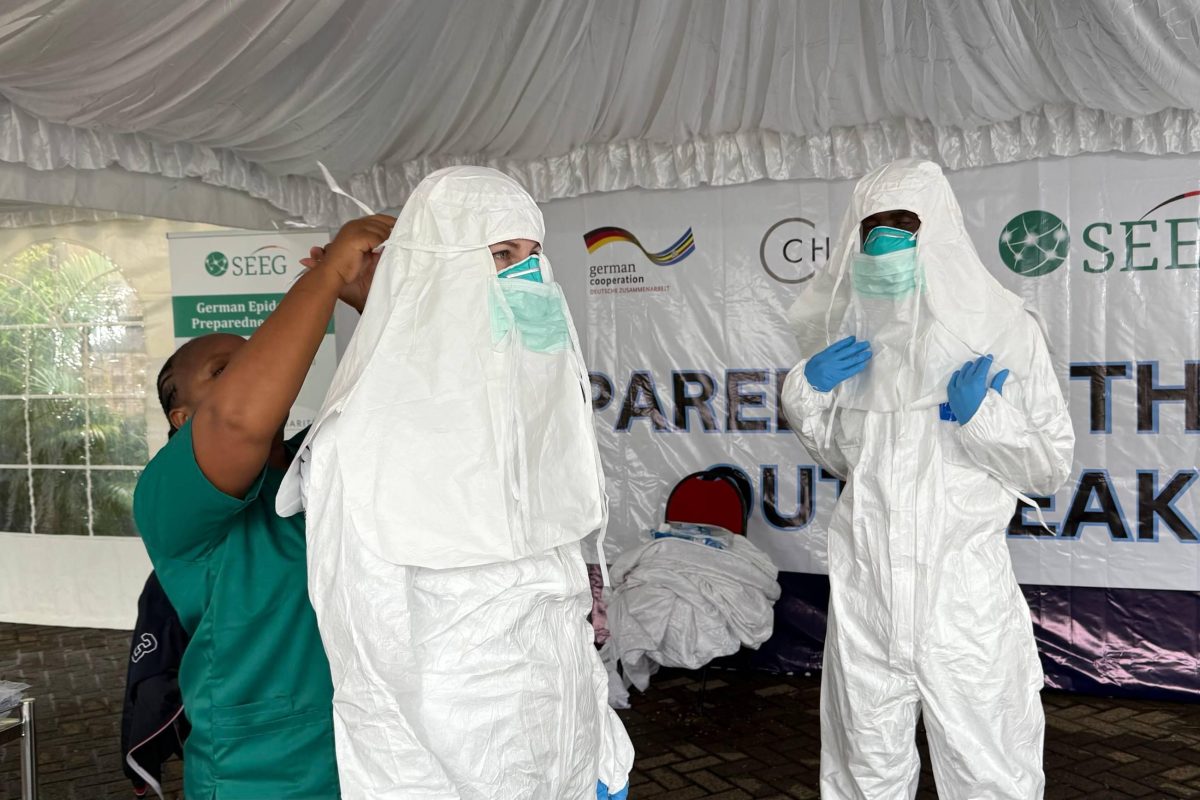
 © picture alliance/dpa | Eva Krafczyk
The World Health Organization (WHO) has declared an international state of emergency after an Ebola outbreak in eastern Congo spread with lightning speed. At least 80 people have died and 246 infections have been recorded. Cases have now also been confirmed in the Congolese capital of Kinshasa and the Ugandan capital Kampala.
At issue is the rare Bundibugyo virus, for which there is no approved vaccine or treatment. Local tests initially did not detect the variant, which seriously delayed the fight. Experts fear that the true scale of the outbreak is much larger than the numbers show.
The Ituri region is particularly vulnerable: ongoing violence, refugee movements and a weak health system make contact detection virtually impossible. People are buried without protection, families nurse the sick at home, and the virus is therefore ahead of health services.
The state of emergency is primarily a call for international organizations and donors to act quickly. "For the region, this is a very serious situation," Laurens Liesenborghs, an infectious disease expert at the Institute of Tropical Medicine and KU Leuven, told NRC. "This may well become a major outbreak."
Picture: © picture alliance/dpa | Eva Krafczyk