
Environment
Mobility
Science
Weird & strange
YouTube engineer made car run on 500 batteries from disposable e-cigarette
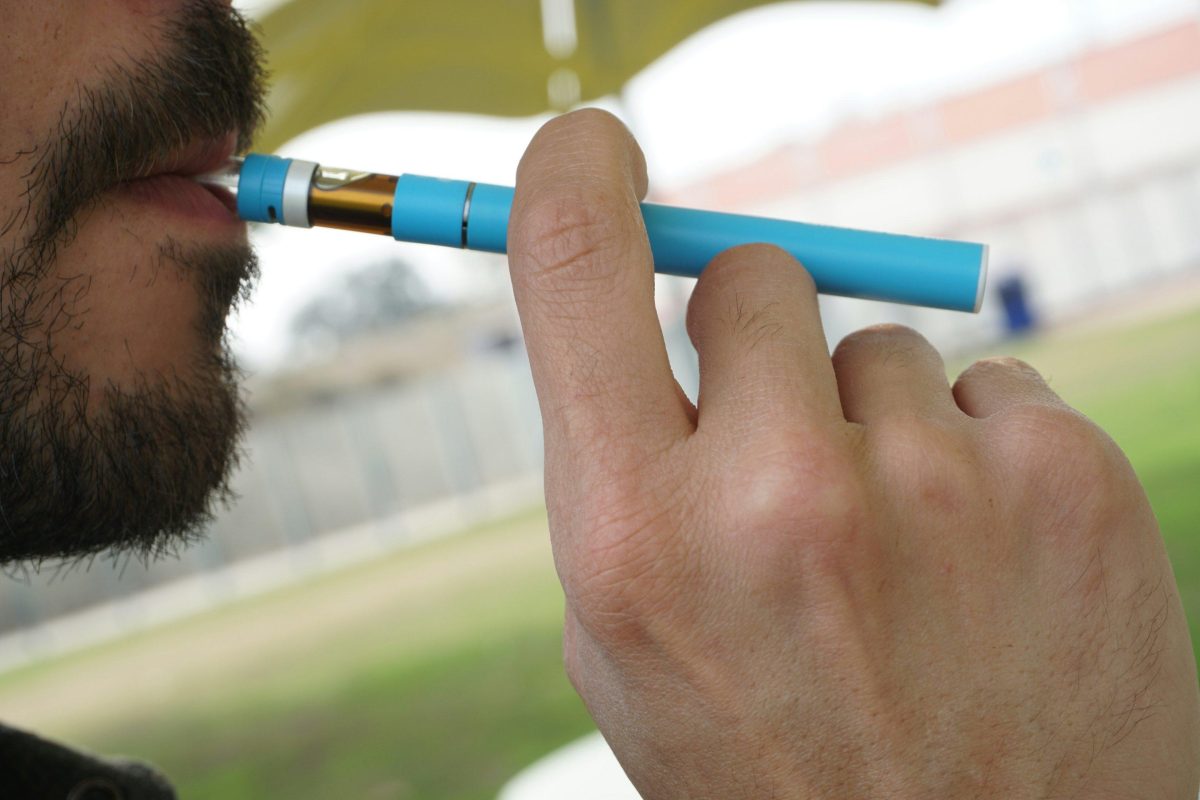 © Elsa Olofsson via Unsplash
There are objects that enter our lives with the promise of making our lives easier, but disappear just as quickly. Disposable e-cigarettes are one of the clearest examples of this contemporary paradox: a few days of use, a perfectly working lithium battery, followed by a noiseless journey to the trash can.
Inside those tiny, colorful cylinders, however, lies something we rarely think about: a rechargeable battery, designed to store energy, that ends up unused and thrown in the waste stream following a few hundred puffs.
Precisely out of that contradiction, a young British engineer decided to do something that seems straight out of a novel about a nerd conducting experiments in his garage: salvage hundreds of batteries from disposable e-cigarettes and use them to power an electric car. His name is Chris Doel, 27, and he describes himself in a way that already says a lot about the character: "the engineering equivalent of a mad scientist." And judging by what he has managed to put together, there's little to argue with that.
Batteries from disposable e-cigarettes
The story begins with a fairly simple question: how much energy do we throw away every day without realizing it? Chris Doel works as an engineer and, with technical curiosity, began looking at the disposable e-cigarettes piling up in trash cans and at specialty stores. Inside each device is a small rechargeable lithium battery. It's designed for countless charge cycles, yet it's destined to end up in the landfill after a short use.
The idea originated almost as a joke: recover those batteries and build a huge home battery with them. So he reported to an e-cigarette store in his neighborhood last May with an unusual request: whether he could collect the devices that customers had turned in. The ones that retailers simply call 'returns', or returned products that would be disposed of. He went home with bags full ofj some 2,000 disposable e-cigarettes.
Then began the real work, which requires more patience than genius: disassembling each device individually, taking out the lithium battery, testing and storing it. For six months, Chris spent his evenings in his spare time doing exactly that. Eventually, he had collected hundreds of perfectly working cells. Of these, he used 500, which he housed in a complex system: groups of batteries connected in parallel and then in series. For the whole thing, he designed his own protective housing, which he made using 3D printing.
The result was a huge home battery. When he connected it to his home during the first test, the experiment worked better than expected: the home remained powered for about eight hours before running out of energy. A result that gave him a new idea. More ambitious. And a lot more insane.
The experiment that amazed even engineers
The next step came during a conversation with a colleague. Chris mentioned that he would love to power an electric vehicle with the battery pack system from e-cigarettes. The problem, however, was technical: modern electric cars run on high-voltage systems, often around 400 volts. Far too much for his setup.
The solution came with an idea that was as simple as it was brilliant: find an electric car with a much smaller battery. So Chris bought a 2007 G-Wiz, a micro-electric car known in part because Top Gear once declared it the worst car of the year. Not a feat of automotive engineering, but perfect for his test.
In fact, this little car runs on a battery of only 48 volts. Chris paid about 800 pounds for it and began the conversion. For five months he spent every spare minute on the project: five hours a day after work during the week and up to 12 hours on weekends. He took apart the car's entire electrical system, redid all the wiring and designed a safety system to contain any problems with the batteries.
The battery pack built with cells from disposable cigarettes was housed in a large, protective enclosure designed to withstand even the worst-case scenario. Chris winces no words: if something goes wrong, you want the flames to remain within an insulated structure. Finally, it was time for the test drive. The little G-Wiz got moving.
Two hours at a time, the car covered about 18 miles (nearly 29 kilometers) solely on the energy stored in the e-cigarette batteries. Top speed was around 80 miles per hour, more than enough for an urban microcar capable of carrying two adults and two children. And all thanks to batteries from devices meant to last only a few days.
From trial run to daily use
A project like this inevitably involves certain risks, especially when you're talking about hundreds of lithium batteries switched together. That's why Chris Doel decided to buy specific insurance, which cost him about $700 for a year's coverage. An amount he himself found surprisingly low, given the experimental nature of the project.
After the test, the battery pack containing the e-cigarettes was removed again. Meanwhile, the microcar runs with two Tesla battery modules, controlled by custom software that makes the vehicle's electronic system think it is a Tesla Model 3. As a result, the little G-Wiz has now become his daily car. Meanwhile, Chris continues to document his experiments on his YouTube channel. To more than 160,000 subscribers, he shows every technical step of his projects.
Behind this story is also a broader reflection on an object we see everywhere these days: the disposable e-cigarette. Chris Doel does not hide his opinion. He sees these devices as one of the clearest examples of planned obsolescence in the world of consumer electronics. Each e-cigarette contains a rechargeable battery and valuable materials, but the entire device is designed to last only a few days. The result is a growing pile of electronic waste that is difficult to recover.
The British engineer's experiment makes one thing crystal clear: Even the most banal objects contain energetic resources that we often overlook. All it takes is someone curious enough to open them up, take them apart and really see what's inside. And perhaps that's the most interesting thing about this whole story: the technology we throw away every day says a lot more about us and our time than it seems at first glance.
(©GreenMe.it 2026 / Managing Editor: Julie Morgan - The Press Junction /Picture: © Elsa Olofsson via Unsplash)