
Science
Weird & strange
Topical
Scientists discover why we don't remember the first years of life (and why that may be a good thing)
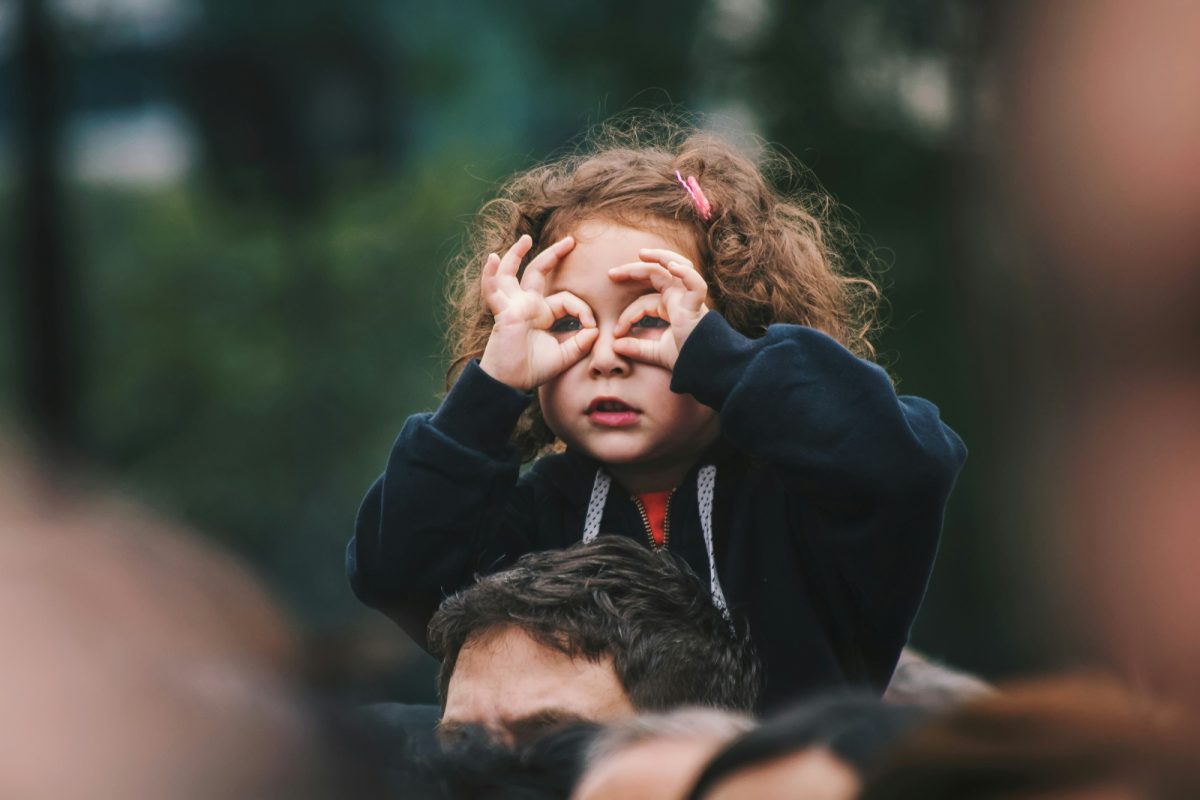 ©Edi Libedinsky via Unsplash
Try going back in your memory and recall your second birthday. Hardly anyone really succeeds. In most cases, what we think we remember is a construction of stories we have heard a thousand times and photos we have seen in family albums. Infantile amnesia, meaning the inability to remember the first years of life, is a condition common to almost all people. And science is now beginning to explain why.
For a long time, it was thought that forgetting the first years of life was a kind of technical defect of the still immature brain. A temporary problem that automatically disappears as we grow up. New research tells a different, and in some ways more fascinating story: the brain does not lose those memories out of inability, it deliberately sets them aside.
During the very first years of our life, we learn an awful lot. Language, relationships, social rules, emotions. It's a phase of intense and continuous learning. This is precisely why, neuroscientists explain, the brain needs to make space, to reorganise, to simplify. And to do that, a little-known but fundamental mechanism kicks in.
Microglia, the brain's 'clearance cells' that determine what we remember
In our brain, there are special cells called microglia. They are part of the immune system and are tasked with maintaining balance in the brain environment. During childhood, when the brain is in full development, these cells continuously work to fine-tune the connections between neurons: they clear out the least useful ones and strengthen the others.
A group of researchers from Trinity College Dublin has found that this very 'cleaning up activity' appears to be linked to the disappearance of our oldest memories. In experimental conditions, when the action of microglia is temporarily weakened, memory traces remain more accessible. Not because they become stronger, but because they are not stored as deeply.
The gist of the research is this: childhood memories are not erased as useless files, but silenced, pushed to the background so that the brain can better adapt to a rapidly changing world.
Memories do not really disappear
Thanks to increasingly sophisticated observational techniques, researchers have been able to identify so-called 'memory traces': groups of neurons that preserve a lived experience. Even when a memory can no longer be consciously recalled, these traces persist.
The areas involved are the same ones we use on a daily basis to remember places, emotions and situations: that is, the hippocampus and the amygdala. The difference is that over time, access to those traces is regulated, as if the brain decides to no longer make them central to our adult lives.
According to Erika Stewart, now a researcher at Columbia University, microglia behave as true 'memory managers': they help the brain determine which memories remain active and which fall into the background.
An interesting aspect of this research concerns the relationship between the immune system and brain development. Under certain circumstances, this balance can shift and also influence how memory is organised during the first years of life.
Scientists stress that a kind of 'golden mean' is needed for harmonious development: microglia activity should be neither too high nor too low. It's a fragile balance that can also help to better understand individual differences in the way we remember, learn and perceive the world.
Forgetting in order to grow
Infantile amnesia is probably the most common form of forgetting there is. Precisely because it affects us all and we rarely dwell on what it actually means. We now know that forgetting is an integral part of learning: a way of making the brain more flexible, ready to take on new experiences without being overloaded by the past.
As Tomás Ryan, senior author of the study published in PLOS Biology, explains, memory is not a static archive, but a dynamic system that changes with us throughout our lives.
And perhaps that is the most reassuring thought: if we cannot remember our first steps or our first words, it's not because something has gone wrong. It's because our brain was, quietly, making space for who we would become.
(© PLOS Biology via GreenMe.it/Managing Editor: Selma Keshkire - The Press Junction/Picture: Unsplash)