
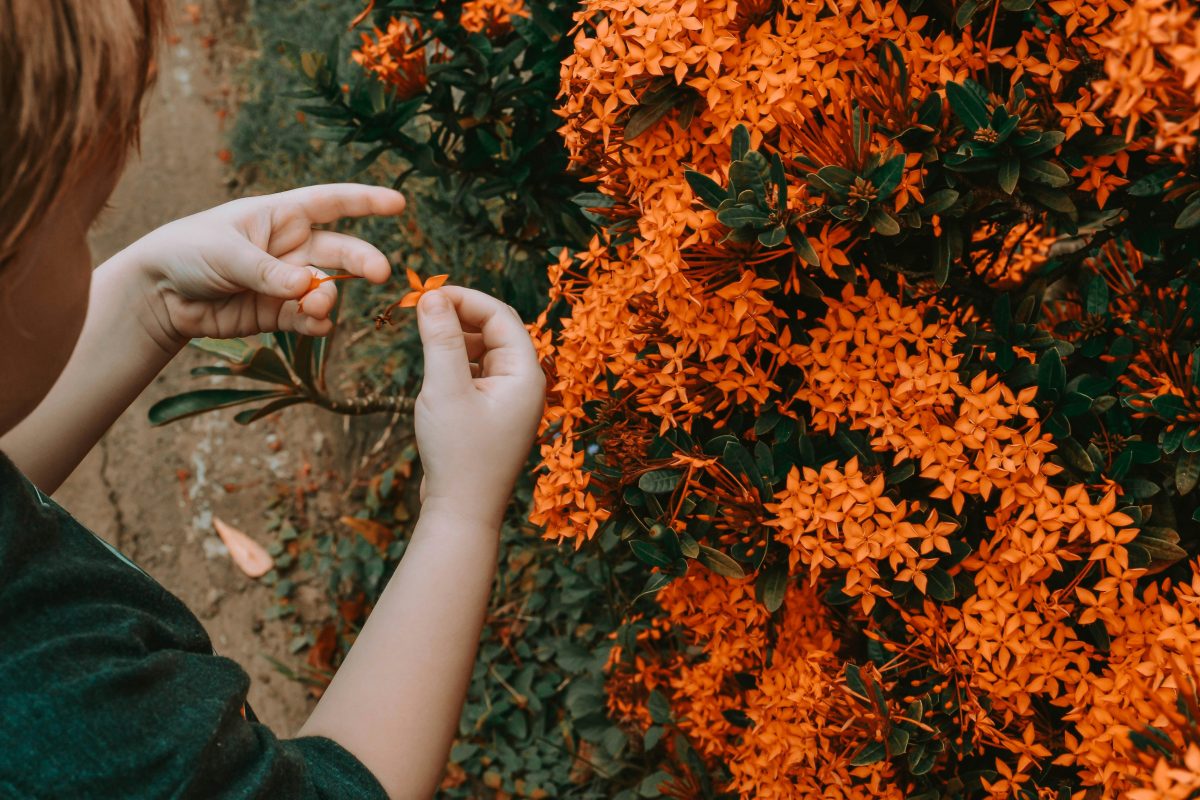
 ©Wander Fleur via Unsplash
On March 3, 2026, the yearly calendar reminds us how important it is to celebrate World Nature Day. Yet in order to establish a real contact with the earth, you don't need to go on trips to remote forests or specially landscaped green spaces, because any balcony - even the tiniest one, even the one overlooking a busy street - can turn into the setting of a real scientific investigation. A journey of discovery that can awaken a quiet wonder in children that can only come from observing the cycle of life. Through the five senses, with simple materials and without specialized equipment, you can create a route of discovery that turns every pot, every seed, every leaf into an object worthy of study.
Plant what you actually wanted to throw away
After eating an orange, a lemon or even a plain tomato, don't let the seeds disappear into the bin with other leftovers, but take them out, rinse them under running water and let them dry on a piece of kitchen paper. A small act that can change your outlook: what seemed like trash becomes a new start.
Fill a pot with universal potting soil, make a small hole with your finger - not with gardening tools, just with your finger - and place the seed a few inches deep. Cover it without pressing on it too hard, gently water and put the pot in a place where light can reach it. During the following days, look at it every morning, almost like a ritual: feel if the earth is dry and inspect the surface for a crack, a sign.
Not all the seeds will germinate, and that's not a bad thing at all. The waiting and the possibility of failure are as much a part of the experiment as the seedling that eventually emerges. When that happens - because it does - the connection is crystal clear: that piece of fruit you ate for breakfast is now a plant that exists thanks to you.
Smell and tell
The second experiment focuses on the sense of smell, a sense strongly linked to emotional memories, through the creation of a 'smell map' of aromatic plants. By gently rubbing your fingers over the wrinkly leaves of rosemary, the velvety leaves of sage or the fresh, pungent leaves of mint, children can learn to identify plant species without using their eyes.
You could organize a little blindfold challenge, where each scent has to be linked to a memory or an emotion. This way you can encourage a cognitive development in which botanical knowledge merges with narrative ability. This kind of activity not only enriches a child's scientific knowledge, but also creates a deep connection with the environment. Each plant ceases to be mere green scenery and becomes a source of unique, unrepeatable sensations.
Watch the earth change color
Dry soil has an almost dusty smell, a dull color and a texture that falls apart between your fingers. Before you water a pot, first ask the child to touch the potting soil and describe it as well as pay attention to its temperature. Then slowly, without haste, pour water on the soil and watch the change: the brown becomes darker, the surface becomes firmer, the smell becomes more intense.
The sequence is always the same, but never exactly identical. The next day you can check what the soil looks like and compare a freshly watered pot with one that has dried out for a little longer. You can watch the leaves go from limp to firm in a few hours. There's no need for grand explanations: watering is not an automatic act, it's a relationship. Too much water stifles, too little weakens, you have to seek balance - a big word for a small gesture.
And therein lies the heart of the matter - not in a poetic, but in a practical sense. Nature is not something to watch from a safe distance. It responds, she responds, and sometimes she disappoints. A balcony is more than enough to understand that, and all you have to do is stand still for a moment, even if it's only for five minutes.
(©GreenMe.it 2026 / Managing Editor: Julie Morgan - The Press Junction /Picture: ©Wander Fleur via Unsplash)