
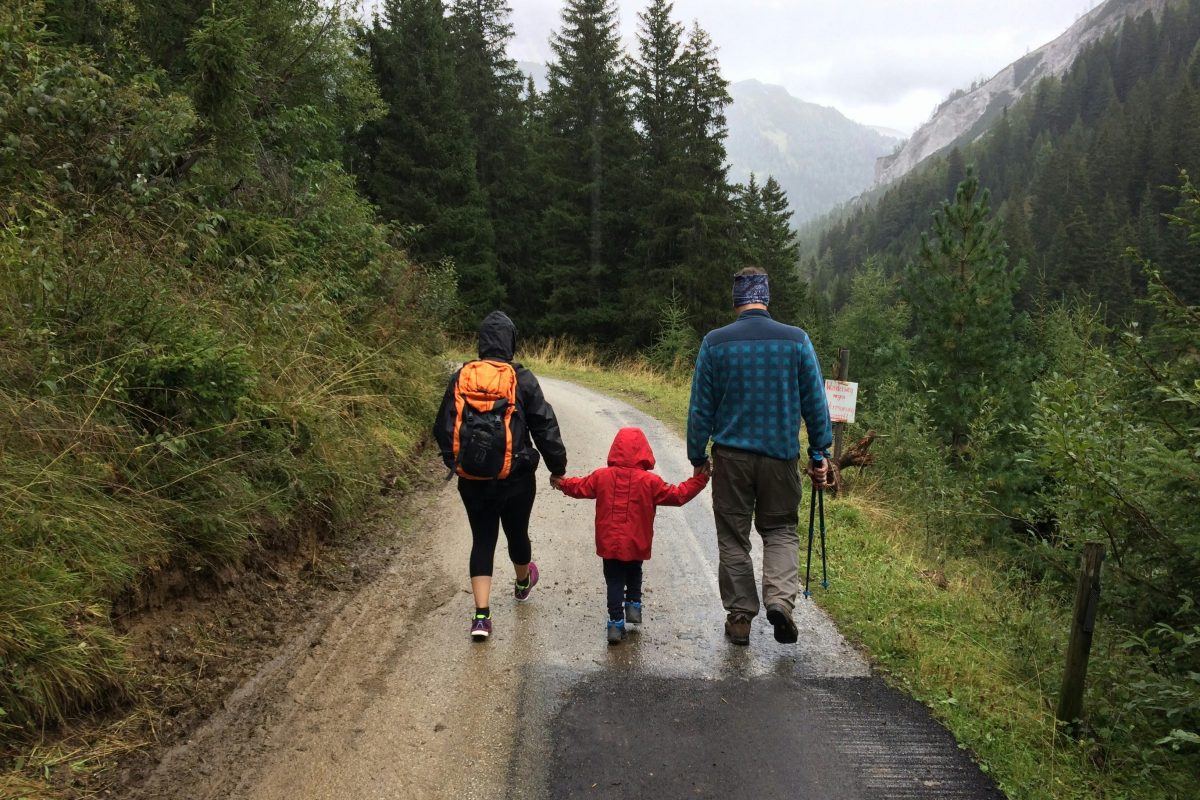
 ©Alberto Casetta via Unsplash
Winter is not just a season: for those who have children, it's often a daily endurance exercise. The days get shorter, the cold keeps everyone indoors, the kids seem to have endless energy while the adults fall behind, and between colds, flu and nighttime coughing, the fatigue becomes chronic. If you too are counting down the days to spring, know this: you are not alone and most importantly, you are not doing anything wrong.
Before you look for solutions, know a liberating truth: winter is biologically tougher on humans. It's not a lack of patience, organization or mental strength. Our bodies simply work differently in the cold, dark months.
The reduction of natural light alters the production of serotonin, dopamine and melatonin, substances essential to regulate mood, motivation, attention and sleep. Less light often means less energy, more irritability, more difficulty concentrating and sleeping well. If we add to that the cold, less time outdoors and the constant adjustment to slower rhythms, we are left with a constant feeling of fatigue.
From a physical standpoint, winter coincides with a spike in seasonal illnesses. Children spend many more hours in enclosed spaces, viruses circulate easily and the immune system may not respond as effectively. Parents live in a state of constant alertness: the call from school, nights interrupted by coughs, having to work even when you're not feeling well. Parenting does not hibernate, and that weighs on you.
Routines also get messed up faster. Snow, rain, cancelled activities, unpredictable days. Children, who need structure to feel safe, respond with more tantrums, emotional outbursts and nervousness. That's not bad parenting: it's emotional dysregulation. And when screen time also increases, often used as an emergency solution, little ones' nervous systems (as well as adults') become even more overloaded.
If you feel more tired, irritable or less present than in other seasons, the explanation is simple: winter demands much more than it seems.
Staying healthy in winter: here's how to protect the whole family
Completely banishing all ailments and viruses is impossible, but you can do a lot without turning your home into a sterile zone. The basics always remain the same and are surprisingly simple. Sleep is essential. Chronic lack of sleep weakens the immune system and makes emotional regulation more difficult for both children and adults. Even when times change, it helps to maintain set evening rituals to create safety.
Nutrition does not have to be perfect. Choose balance over rigidity. Vitamin D plays an important role in the winter months: it may be useful to discuss this with the pediatrician to see if supplementation is necessary.
Hand hygiene also remains one of the most effective remedies. Washing hands properly before meals, after school and after going to the toilet reduces the spread of viruses in a concrete way. There is no need to disinfect everything: too much disinfection often increases anxiety, not protection. And no, cold air does not make you sick. Viruses do. Even a few minutes outside, well wrapped up, improves mood and supports the immune system.
When children get sick, it's important to normalize this. Being sick is part of childhood. What matters is comfort, rest, adequate drinking and presence. Children do not need parents who remain calm because nothing is wrong, but adults who remain reliable when something is.
Winter blues or depression?
In winter, many people experience what is called 'winter blues': less energy, less motivation, some irritability, different sleeping and eating patterns. These are transient states that don't stop daily life.
It becomes different when more intense signs occur: persistent gloom for much of the day, loss of interest in things that previously gave pleasure, noticeable changes in sleep or appetite, feelings of futility or despair. In such cases, it's not about "gritting your teeth for a while".
If symptoms persist for more than two weeks or interfere with your daily life, asking for help is an act of responsibility, not a sign of weakness. Taking good care of your mental health also means protecting your children.
Winter and children: how to help them better regulate themselves
Children regulate themselves through movement, rhythm and connection. In winter, we need to look for these more purposefully. Daily exercise is not an option, but a necessity. After all, it is necessary for the brain, emotions and stress. There are many things you can do at home: spontaneous dance parties, games with pillows and chairs, yoga, building cabins with blankets. A body that moves helps calm the mind.
Routines remain fundamental, but flexibility is also needed. Keeping mornings, meals and evenings stable gives hold, even when the rest of the day is more flexible. Make the most of natural light when it's there. Opening curtains immediately after getting up, going outside for a moment, even if only a few minutes, really makes a difference.
Giving small responsibilities also helps. Children feel more balanced when they feel useful: setting the table, helping in the kitchen, taking care of an animal. And let's never forget: connection comes before correction. In winter, troublesome behavior and difficulty speak a language of stress, not rebellion.
Lowering the bar is an act of love
Winter reinforces feelings of comparison and guilt. Better let go of those. This is not the season for major transformations, but for emotional resilience. Saying out loud, "This period is tough" lowers shame. You are not failing: you are responding to a demanding season. Look for micro-pleasures, not grand, unrealistic plans: a hot drink, a favorite series, going to bed earlier one night a week.
Stay in touch with others. Isolation makes everything heavier. Even brief moments of connection, with friends or with your children, matter. And it's okay to say, "This weather makes me a little gloomy." Children learn emotional skills by seeing how adults handle emotions.
Winter asks a lot of families. You don't have to love winter to be a good parent. All it takes is to keep showing up, with gentleness for your children and for yourself. And that's enough.
(©Kristen Cook, MD via GreenMe.it 2026/Managing Editor: Julie Morgan - The Press Junction/Picture: ©Nick Karvounis via Unsplash)