
Environment
Weird & strange
Female turtles plunge off cliffs to escape sexual attacks from males: "It's demographic suicide"
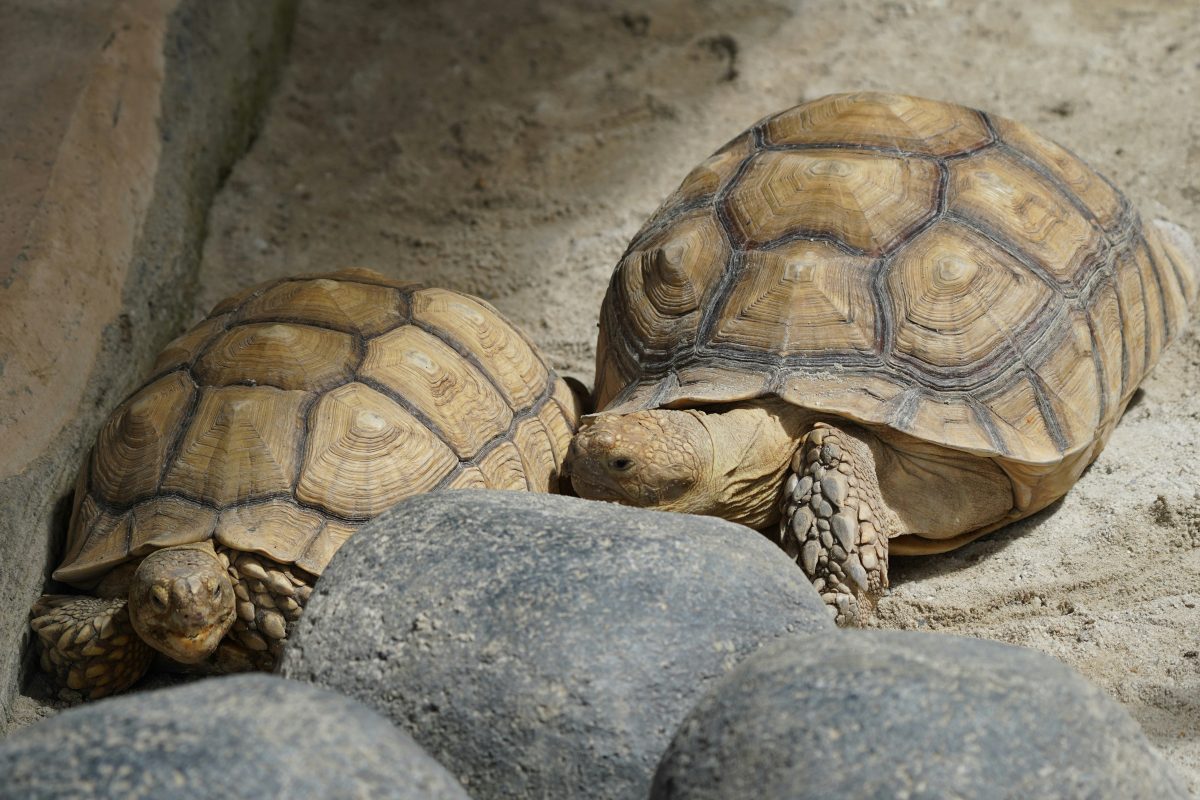 ©Eka Kurniawan Muchiar via Unsplash
The uninhabited island of Golem Grad, in Lake Prespa in northern Macedonia, is home to a population of some 1,000 Moorland tortoises. A small natural paradise that, when observed up close, appears to be the scene of a disturbing phenomenon: a dramatic gender imbalance, with about 19 males for every female.
The study, published in Ecology Letters and signed by Macedonian biologist Dragan Arsovski along with colleagues Xavier Bonnet, Ana Golubović and Ljiljana Tomović, speaks plainly of 'demographic suicide' and of a possible 'sex-specific extinction spiral'. If the trend is not reversed, females could disappear by 2083.
Repeated attacks and a leap of faith
Field observations, which began in 2008, have revealed behaviors that go far beyond simple mating behavior. Multiple males chase a single female, surrounding her, bumping into her and biting her until she sustains lesions to the genitalia, climbing on her and hitting her with the tip of their tails as she tries to flee. In some cases, the female is literally buried under a tangle of turtle slabs.
The sustained pressure causes such a chronic level of stress that drives many young females to the island's cliffs. In an attempt to escape the attacks, they plunge into a vacuum. Males also fall down, but the percentage of deaths among the females is significantly higher. According to the researchers, these are not just accidents: in several cases, the behavior resembles an extreme flight choice.
Disrupted reproduction and extinction risk
The consequences are not limited to direct mortality. X-ray analyses have shown that stress affects reproductive capacity: only 15% of females on the island carry eggs, a rate much lower than in a neighboring mainland population. Moreover, harassed females show lower survival rates.
The result is a vicious cycle. The fewer females survive, the greater the pressure from males on the few that remain, and the closer the system comes to possible collapse. This is the mechanism the researchers call an 'extinction spiral': an internal process within the population that, without external intervention, runs the risk of feeding itself until the female gender on the island disappears entirely.
The experiment confirming male pressure
To test the weight of nuisance attacks on escape behavior, Arsovsky conducted a controlled experiment. A few females, from both the island and the mainland, were placed in an enclosure with only one safe exit to the outside. In the absence of males, the mainland females almost never tried to escape, while many females from the island spontaneously sought escape.
Then, when five males were introduced into the enclosure, the response was clear: Almost all the females fell out through the opening. With one striking difference. The mainland females were often pushed, while those raised on the island plunged down of their own accord. The behavior is indicative of a desperate adaptation to a habitat that had become hostile. This internal dynamic shows how fragile a natural balance can be when the pressure on either genders becomes untenable.
(Ecology Letters via GreenMe.it 2026/Managing Editor: Julie Morgan - The Press Junction/Picture: ©Jonas Leupe via Unsplash)