
Environment
Science
Weird & strange
For first time in 40 years, deep water off Panama's coast hasn't risen: ocean system appears to be on verge of collapse
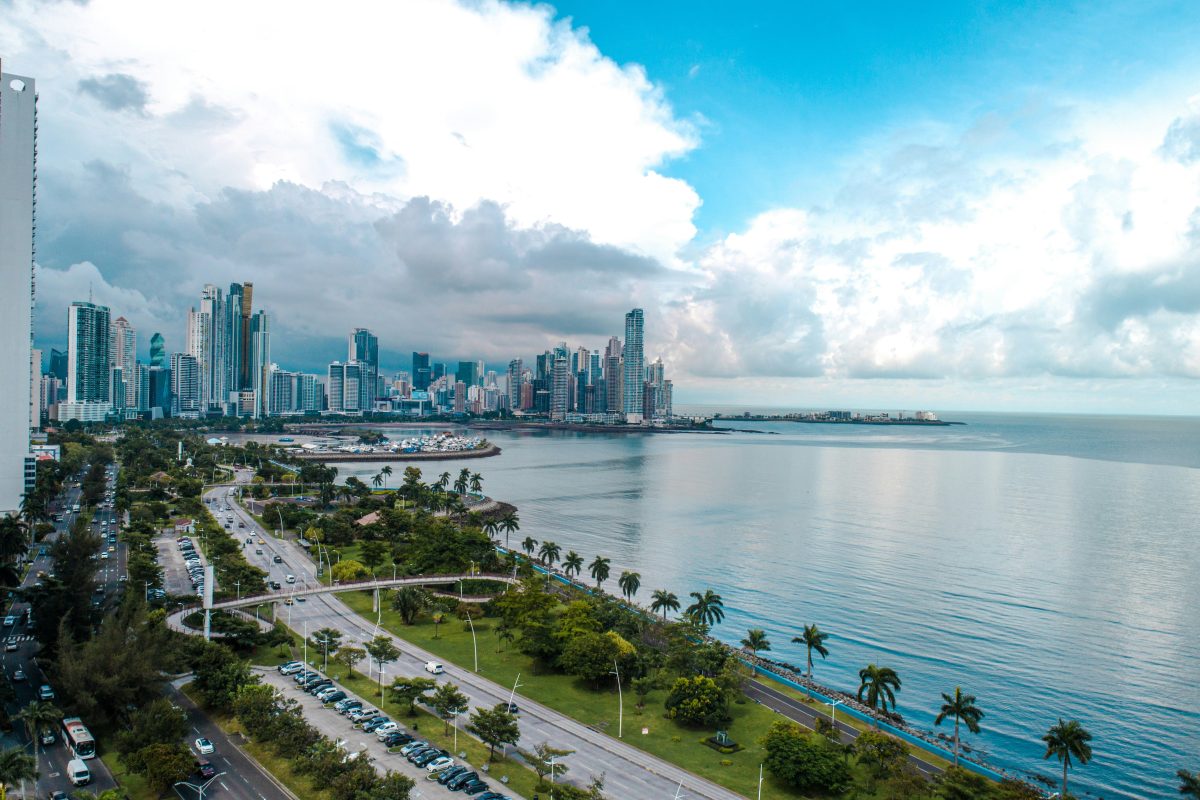 ©Luis Aleman via Unsplash
For more than four decades, the ocean along Panama's Pacific coast followed a precise and reliable rhythm. Between January and April, cold, nutrient-rich water masses rose from the depths, feeding the marine food chain and protecting coral reefs and local fisheries. In 2025, however, this mechanism came to a sudden halt. The Panama upwelling did not take place, leaving scientists without historical references and questioning the stability of tropical ocean systems.
The phenomenon was documented almost in real time thanks to a scientific expedition already active in the area. The measurements collected in the first months of 2025 showed a clear anomaly: no ascent of cold water at all, continuously high surface temperatures and the absence of the usual increase in nutrients. An event that, according to available data, has never before been observed in the measurement series that began more than 40 years ago.
Normally, northeast trade winds push surface water away from the coast, allowing deep water to rise. This process supports the growth of phytoplankton, the basis of the entire marine ecosystem. By contrast, in 2025, the sea remained remarkably warm and 'silent', depriving the ocean of its usual biological engine.
Weakened winds, fewer nutrients
Underlying the collapse of the Panama surge was an unusual weakening of the trade winds. Without the necessary atmospheric thrust, the water column was not mixed and nutrients remained locked in the depths. Satellite observations confirmed exceptionally low chlorophyll levels in the Gulf of Panama, precisely during the period when marine productivity normally peaks.
The consequences did not take long to appear. Sardines, mackerel and squid, key species for both small-scale and commercial fisheries, showed signs of decline. Coastal communities are already recording declining catches while the overall economic impact is still being estimated. Coral reefs also came under severe thermal stress: without the usual cooling caused by rewelling, the conditions favoring coral bleaching have increased significantly.
The study that confirmed the event, published in the Proceedings of the National Academy of Sciences, is based on data collected aboard the research vessel S/Y Eugen Seibold, jointly operated by the Smithsonian Tropical Research Institute and the Max Planck Institute. The researchers speak unequivocally of a complete disappearance of the upwelling mechanism, a fact that removes one of the most important stabilizing elements of the local marine ecosystem.
An event that had gone almost unnoticed
One of the most critical issues that emerged concerns the lack of coverage of monitoring systems in tropical regions. Had the expedition not taken place precisely during this period, the collapse of the Panama surge might have gone unnoticed. Unlike currents such as the Humboldt or California Current, which are continuously monitored, tropical regions often rely on separate, short-term measurement campaigns.
According to the researchers, these data gaps create dangerous blind spots in understanding global ocean variability. The Smithsonian Institute itself labeled the episode a clear example of the climate vulnerability of tropical oceans, where even small atmospheric changes can have enormous ecological effects.
Signal of a systemic change or just an anomaly?
The crucial question remains unanswered: is what happened in 2025 an isolated event or the first alarm signal of a much deeper transformation? Scientists outline two main scenarios. On the one hand, natural variability, coupled with multi-year climate cycles such as the Pacific Decadal Oscillation. On the other, the influence of human-induced climate change, which could permanently alter wind patterns in the tropics.
Atmosphere models suggest a link between weaker winds and new pressure distributions over the eastern Pacific. But without a fine-grained, continuous observation network, it remains extremely difficult to recognize early signals or crossings of critical thresholds in time. The Panama surge, taken for granted for decades, now appears to be a fragile equilibrium that may no longer be guaranteed.
(©Smithsonian Tropical Research Institute via GreenMe.it2026 / Managing Editor: Julie Morgan - The Press Junction / Picture: ©Miguel Bruna via Unsplash)