
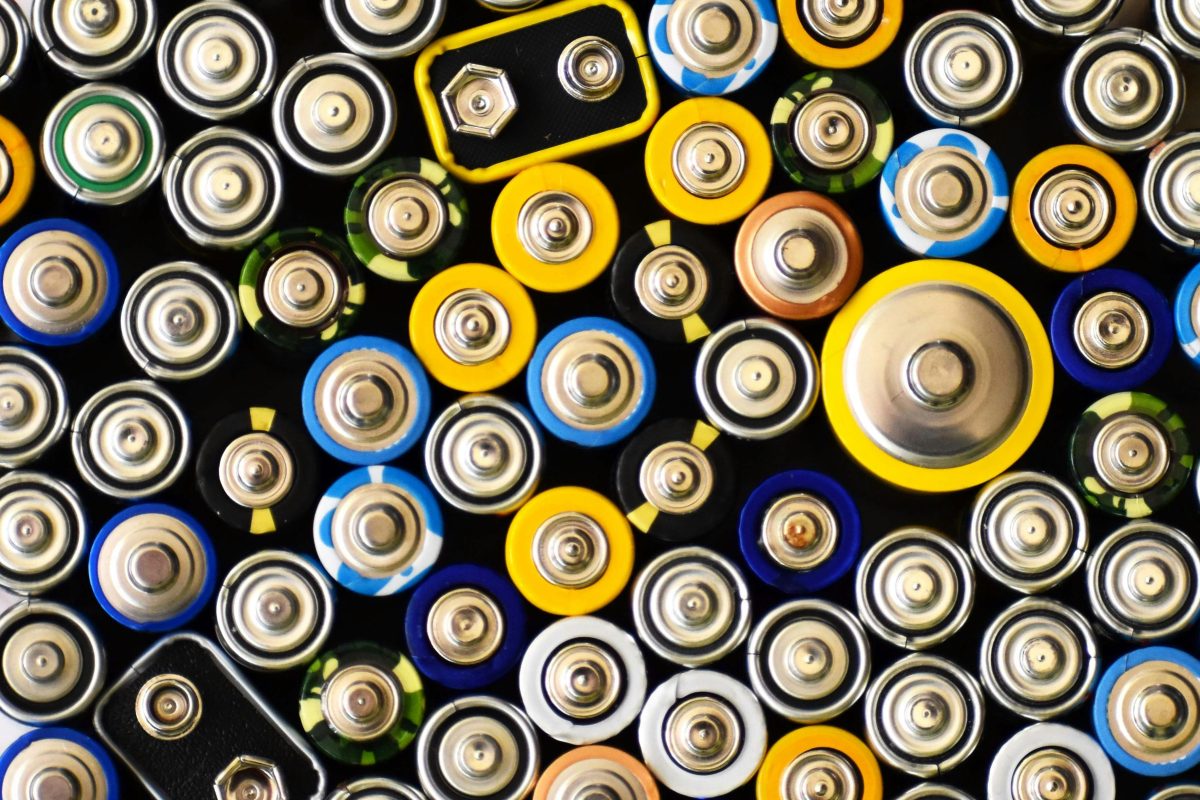
 ©Vardan Papikyan via Unsplash
Some innovations initially seem light years away from our daily lives, but then suddenly pop up in everyday conversations, somewhere between a coffee break and a thoughtless scrolling moment on the phone. The tofu battery belongs exactly in that category: initially it surprises, then the idea sticks, because it contains something that sounds just a little bit different from anything we've ever heard before.
The tofu battery comes from labs between Hong Kong and Shenzhen, where a group of researchers decided to tackle one of the most concrete problems of modern technology: the energy we use, which we often forget where it comes from and where it ends up.
Why this lab technology is already joining our daily lives
In everyday reality, we are surrounded by batteries. We have them in our pockets, in the house, in the car, hidden in objects that we constantly touch without thinking about them. Yet, every time a battery shows signs of malfunction, that familiar feeling of dependence returns: we are dependent on something that always lasts just short of what we would like.
Lithium batteries have made the digital world as we know it possible, with all its efficiency as well as its limitations. They are expensive, degrade over time, require complex materials to be mined, and require careful handling when they reach the end of their useful life. That realization has prompted the research community to look around, searching for new ways: less fragile, more predictable.
And that's where the tofu battery comes in, with an idea that seems almost disarmingly simple. Instead of aggressive electrolytes, it uses a neutral pH solution based on magnesium and calcium salts from tofu brine. A stable base, kinder to internal materials and a lot more manageable from an environmental perspective.
Within that structure, another quiet revolution is also taking place: that of electrodes. Heavy metals are giving way to organic covalent polymers, materials that deliver solid performance without the burden of a complicated, burdensome supply chain.
Up to 300 years of life, high safety and still open frontiers
There's something almost unreal about the numbers that accompany this technology, but they come directly from laboratory tests. More than 120,000 charging cycles and a theoretical lifespan approaching 300 years of daily use. A number that completely tilts our perception of time as soon as it comes to technology.
Also striking is the stability. Aqueous batteries such as these are more resistant to problems around overheating and provide a safety that is increasingly crucial in a world full of devices that are always on.
At the same time, there's a feature that's already guiding the first concrete applications: lower energy density. This battery stores less energy in the same volume than lithium, which makes it especially suitable for specific applications.
And this is precisely where the story gets interesting. In storage systems for renewable energy, in infrastructures that must operate continuously for years, in situations where stability outweighs immediate peak power, the tofu battery finds an ideal breeding ground.
The project is still under development, with all the steps required to turn a prototype into something that can be widely deployed. Yet it already shows a change of perspective: the idea that a battery can accompany us for decades without itself becoming a problem to be solved.
(©Nature via GreenMe.it 2026 / Managing Editor: Selma Keshkire - The Press Junction / Picture: ©Vardan Papikyan via Unsplash)