
World
Politics
Society
Science
A connected ring on every American's finger by 2030: Trump's grand plan
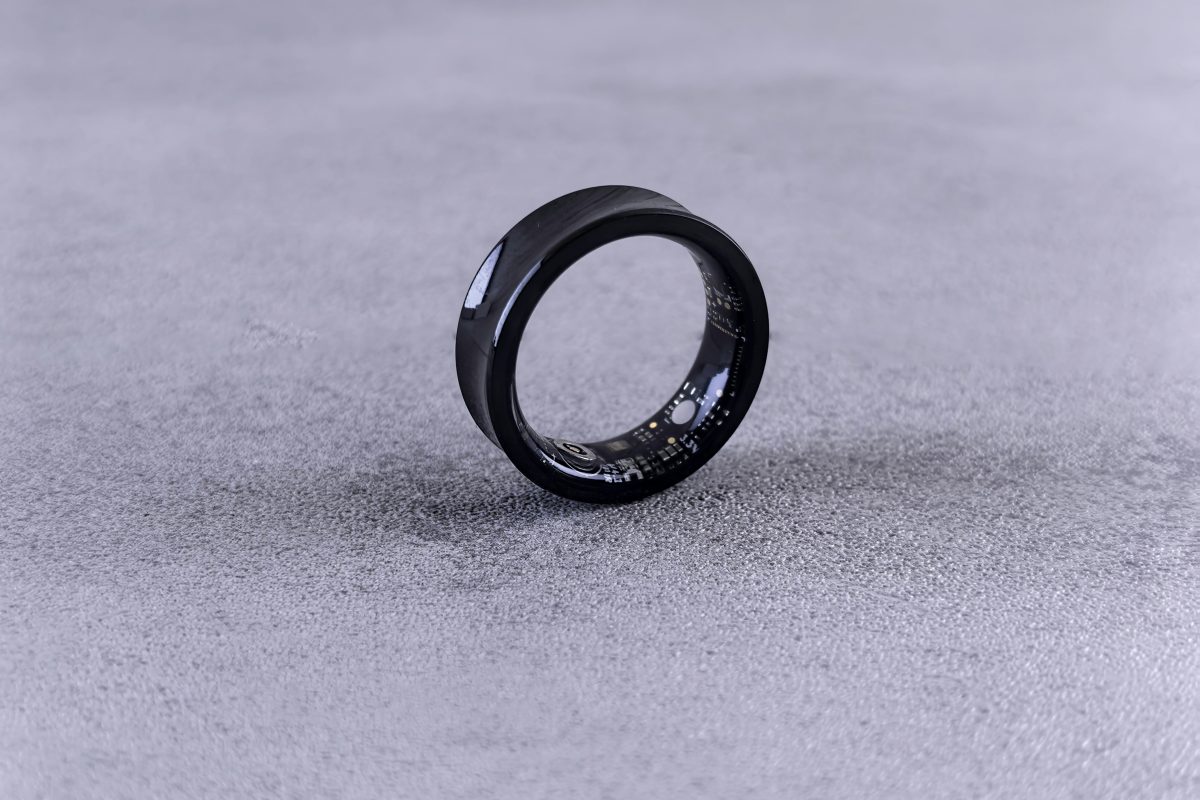 ©Andrey Matveev via Unsplash
A titanium ring, a few sensors, an app to manage it all: at first glance, not exactly the heart of a healthcare revolution. And yet, the Oura Ring - produced by the Finnish company Oura, founded in 2013 - has become one of the most talked-about objects in the corridors of Washington, and one of the symbols of the Trump administration's 'Make America Healthy Again' program.
On June 24, 2025, before the House Energy and Commerce Committee, Health Secretary Robert F. Kennedy Jr. announced that his department was preparing to launch one of the largest advertising campaigns in the history of HHS (United States Department of Health and Human Services) to encourage the adoption of connected objects (wearables).
The vision is clear, as is the goal: within four years, every American should be equipped with such a device. The estimated cost of a basic model is around eighty dollars a month, compared with the 1,300 dollars needed for certain drugs such as Ozempic - an argument that Mr. Kennedy explicitly put forward to congressmen, adding that he was exploring ways of covering these costs.
In reality, the issue was addressed in a more nuanced way. The Secretary of Health himself later clarified to Axios that the campaign would not focus specifically on wearables, but would rather aim to encourage Americans to stop eating ultra-processed foods and take back control of their health. A step backwards from the initial enthusiasm, which the HHS itself has acknowledged.
The Pentagon and the $96 million contract
Long before Mr. Kennedy's statements, Oura had won strong institutional support. In October 2024, the Department of Defense had awarded the company a $96 million contract to provide connected rings and data analysis services to the Defense Health Agency. The objective? To monitor the stress, recovery and resilience of military personnel within 130 medical facilities.
The story took a different turn, however, as the Defense Health Agency canceled the agreement on March 6, 2025, citing a new hedgerarchization of budget priorities rather than technical and/or confidentiality issues, as some media had initially reported. In the meantime, Oura has announced the opening of a production site in Texas to meet the Pentagon's needs, scheduled for inauguration in 2026.
The case has also generated controversy due to the involvement of Palantir, the data analysis company founded by Peter Thiel. At the Fortune Brainstorm Tech conference, its CEO, Tom Hale, attempted to allay concerns. He explained that it was a limited commercial relationship, linked to a SaaS contract to obtain the security certification required by the Pentagon: the systems are not interconnected, and no one at Palantir or in the government has access to user data.
The FDA issue and the proposal for a third category
On the regulatory front, Mr. Kennedy and Oura are looking in the same direction. In December 2025, Tom Hale published an op-ed in the Wall Street Journal arguing that federal policy is out of step with technological advances. He proposed the creation of a third category called 'digital health screeners' - an intermediate level between simple wellness accessories and full-fledged medical devices. In 2025, Oura spent over a million dollars on lobbying activities, compared with $40,000 in 2024.
The FDA has responded by updating its guidelines: from now on, non-invasive wearable devices that measure blood pressure can be classified as general wellness products, provided they do not claim to diagnose pathologies such as hypertension. A step in the direction desired by Oura, albeit only a partial one.
Company growth
Against the backdrop of the political game, Oura is posting record figures. In October 2025, it completed a $900 million fund-raising round led by Fidelity, taking its valuation to $11 billion. Estimated sales for 2025 are approaching the billion-dollar mark, with over 5.5 million rings sold since the company was founded - including three million in the last year alone.
The grey areas: conflicts of interest, privacy, reliability
There are many reservations. The candidate for Surgeon General, Casey Means, co-founded Levels, an app that promotes the use of blood glucose meters. Her brother, Calley Means - an advisor to Mr. Kennedy - owns TruMed, a company that allows Health Savings Accounts funds to be used to purchase activity trackers (connected bracelets). Several observers have already pointed the finger at these conflicts of interest.
On the medical front, some experts point out that there is as yet no solid evidence of long-term benefits, not to mention the fact that these devices are capable of collecting extremely sensitive data - of a biometric, behavioral and reproductive nature - which current regulations do not protect to the same standards as medical records. Connected watches and health apps do not fall within the scope of HIPAA, the federal health data privacy law, leaving millions of people in danger of reducing their quality of health. This leaves millions of Americans exposed to data collection practices with no real transparency obligations. Republican Senator Bill Cassidy has introduced the Health Information Privacy Reform Act (HIPRA) to fill this gap, extending the same protections provided by HIPAA to wearables and health apps. The bill is still pending in the Senate.
A ring on every American's finger by 2030: that's the goal. As to who will really benefit, and under what conditions, the answers have yet to be written.
(©GreenMe.it 2026/Managing editor : Selma Keshkire - The Press Junction/Picture : Andrey Matveev via Unsplash)