
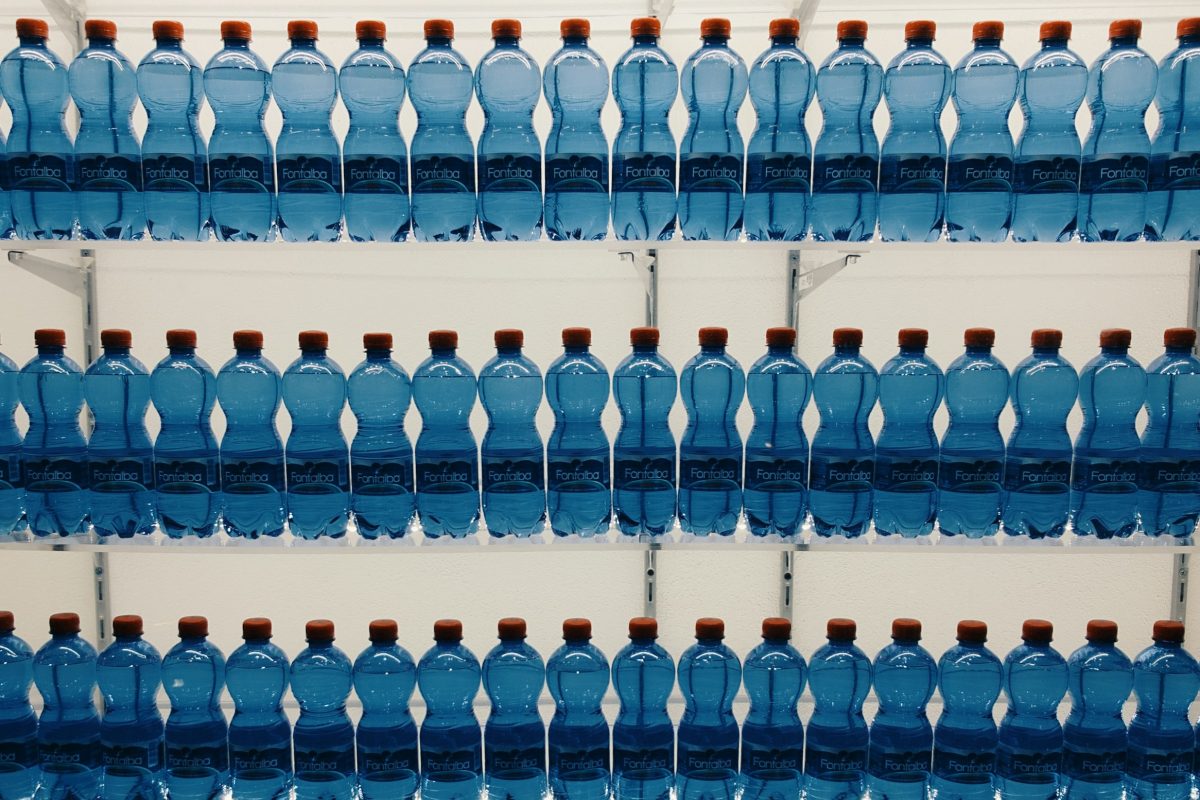
 ©Unsplash
PFAS chemicals—used for decades in food packaging, waterproof textiles, and hundreds of other industrial and consumer products—have accumulated in water, soil, and air.
Consumer magazine Que Choisir, which in February 2025 had already identified worrying concentrations of PFAS in tap water in 30 French communes, has now turned its attention to bottled mineral and spring water, subjecting 32 samples to laboratory analysis. The results confirm a rather dramatic trend: there is no longer any water source that can be considered totally safe from eternal pollutants.
Monitoring has focused on the 20 PFAS indicated by a European directive, which sets an overall limit of 100 nanograms per liter (ng/l) for drinking water. For natural mineral waters, France applies an even more restrictive value: 30ng/l.
The good news is that, of the 20 PFAS monitored, only a few were detected, and only in three mineral waters and one spring water, often in modest quantities. The only significant exception was Carrefour natural mineral water with added carbon dioxide, from the Perle spring in Ardèche: the sample contained 8 of the 20 PFASs monitored, for a total concentration of 21.7ng/l, close to the French threshold of 30ng/l.
The most serious problem, however, was the presence of four particularly dangerous pollutants: PFOA, PFOS, PFNA and PFHxS. Their combined concentration in the Carrefour sample reached 13.7ng/l, far exceeding the 2ng/l limit adopted for these specific compounds by countries such as Denmark. It's no coincidence that the retailer has announced the suspension of sales of the product.
The most worrying result of the investigation, however, concerns another substance: trifluoroacetic acid, or TFA, a PFAS for which no maximum limit has yet been defined at European level. Released into the environment by refrigerants and pesticides, it's highly persistent and suspected of being toxic to the liver and reproduction system.
In the bottled waters analyzed, TFA proved to be by far the most widespread PFAS: it was detected in 21 out of 32 samples, and in 17 cases at over 100ng/l. The maximum value - 650ng/l - was measured in Thonon natural mineral water from Haute-Savoie. Next came Vittel (440ng/l), mineral water from the Pyrenees (410ng/l), Saint Antonin (370ng/l) and Contrex (350ng/l).
These figures remain below the provisional threshold of 2,200ng/l adopted by the Netherlands, currently the most protective country in terms of TFA, however, given the substance's persistence in the environment, they're set to rise over time if no action is taken.
(©GreenMe.it 2026 / Managing Editor: Selma Keshkire - The Press Junction / Picture: ©Unsplash)