
 ©Sofia Rotaru via Unsplash
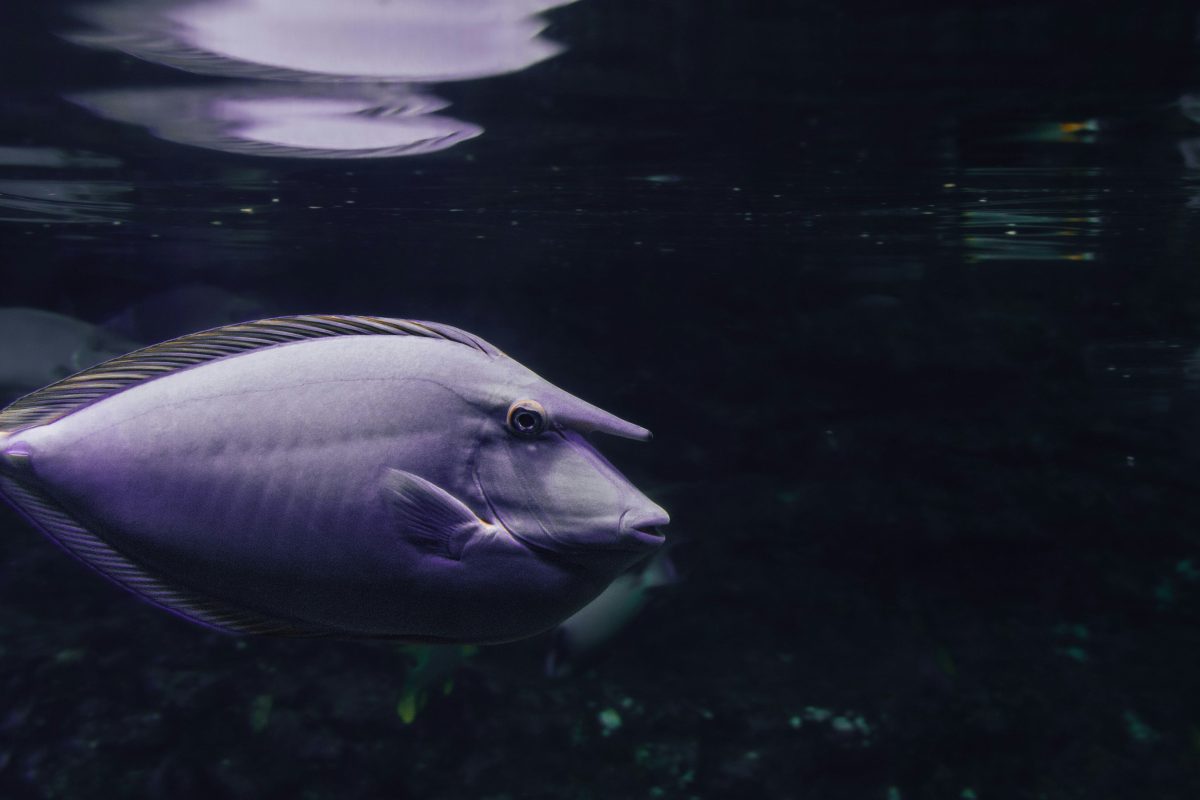
On the beach of the Milazzo Tennis and Sailing Club, in the province of Messina (Italy), an unexpected guest has appeared, a creature that rarely shows itself. It's the unicornfish (Lophotus lacepede), a mesopelagic species that lives in the middle and deep layers of the sea and whose sightings in the Mediterranean are very rare.
This discovery immediately attracted the attention of experts because of its scientific value. The specimen, which was still alive when it ran aground, was helped back into the sea, but unfortunately didn't survive. It was a rare event that gives insight into ecosystems that usually remain inaccessible.
Biologists' race and scientific analysis
Biologist Carmelo Isgró, director and founder of MuMa (Milazzo Museum of the Sea), went to the scene alongside Alessandro Magistri and Gianni D'Angelo, who had quickly reported the animal's presence. Once recovered, the specimen was transferred to the Anton Dohrn Zoological Station in Messina, where Isgró and researcher Pietro Battaglia are currently carrying out analyses.
The aim is to understand the conditions that brought one of the Mediterranean basin's most enigmatic fish to shore. Once the studies are completed, the animal will be exhibited in the MuMa collections inside the Milazzo Castle, as well as at the University of Messina's Museum of Fauna, thus becoming a tangible testimony to the biodiversity of the deep sea.
Like a mythological creature
The nickname 'sea unicorn/ unicornfish' or 'liocorno' evokes a fantastic image. Its head features a prominent horn-like protuberance, a detail that contributes to its almost legendary aura. Its body is elongated and ribbon-like, tapering towards the tail. It has a long red dorsal fin made up of flexible rays that run almost the entire length of its back. While its anal and caudal fins are tiny, its enormous eyes reveal its adaptation to the darkness of the deep sea. Finally, its conical teeth, arranged in three irregular rows, are perfect tools for capturing small pelagic organisms.
When it ran aground, the animal released a jet of thick liquid from an internal pouch, a defensive strategy reminiscent of that used by cephalopods. This detail reinforces the biological interest of this already extraordinary discovery. Once again, the sea reveals a fragment of its mysteries.
(©GreenMe.it 2026/Managing editor: Julie Morgan - The Press Junction/Picture: Sofia Rotaru via Unsplash)