
Environment
Science
Weird & strange
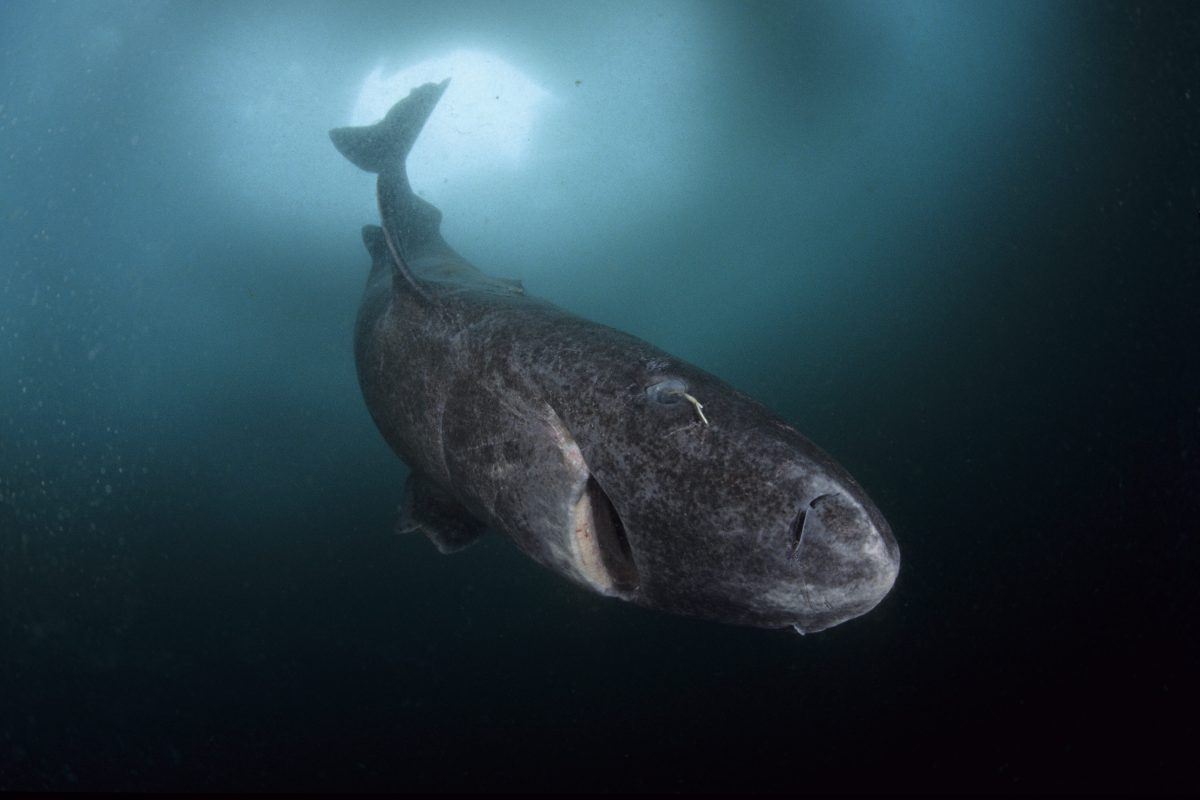
Gigantic Greenland shark filmed for the first time in the depths of Antarctica
 ©picture alliance / WaterFrame | Franco Banfi/WaterFrame
An astonishing encounter has captured the attention of scientists: a Greenland shark has been filmed for the first time at near-freezing depths off the South Shetland Islands in the Southern Ocean. The animal, 3 to 4 meters long, moved slowly along the seabed, a place where sunlight never reaches.
The discovery challenges the conventional wisdom that sharks don't frequent these extreme waters.
The images, captured by a camera at the Minderoo-UWA Deep-Sea Research Centre, show the shark swimming cautiously through layers of stratified water at a depth of around 490 meters. The temperature was only 1.27°C (34.3°F), close to freezing. Next to the shark, a ray lay motionless on the seabed, seemingly indifferent to the predator's passage, a reminder that some species already possess adaptations for living at these extreme latitudes.
The center's founder, Alan Jamieson, stressed that they had not expected to find a shark of this size. The video has been described by specialists as a 'historic' moment for marine research, as until now there is no documented record of sharks this far south. Conservation biologist Peter Kyne also confirmed that this was the first official record of a shark in the Southern Ocean at this latitude.
Explanations and implications
According to the experts' hypothesis, climate change and ocean warming could be pushing certain shark species towards the colder waters of the Southern Hemisphere, although data remains limited due to Antarctica's isolation. Alan Jamieson suggests that these sharks may have been present there for a long time, without ever having been observed. Their slow-motion lifestyle and presence at such depths, difficult for researchers to access, make their detection exceptional.
The shark photographed was found at around 500 meters, where slightly warmer water layers create a relatively stable environment compared to surface and deeper waters. Greenland sharks may feed mainly on the carcasses of whales, giant squid and other marine animals that sink to the bottom of the sea, playing a key role in the Antarctic ecosystem.
The discovery highlights just how little is known about the Southern Ocean. With cameras only operational during the summer months, many mysteries remain hidden during the rest of the year. Greenland sharks are not only a fascinating biological phenomenon, but also a window onto the dynamics of the planet's most extreme ecosystems, ready to reveal new secrets of the underwater world.
(©GreenMe.it 2026/Managing editor : Selma Keshkire - The Press Junction/Picture : picture alliance / WaterFrame | Franco Banfi/WaterFrame)