
 ©Unsplash
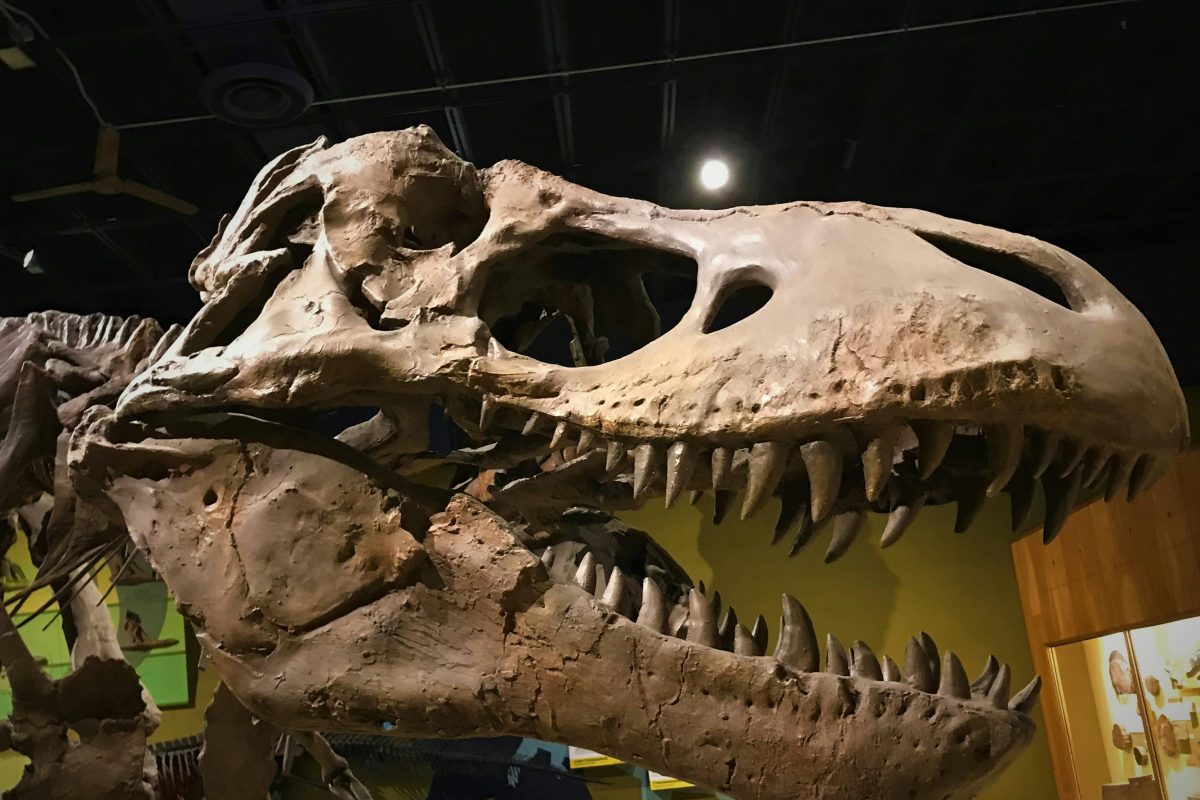
When we think of the great predators of Earth's history, our mind immediately turns to the Tyrannosaurus rex, a pop icon, a film and documentary star, the very embodiment of primordial force.
And yet, from time to time, paleontology still manages to surprise us and challenge certainties we thought were carved in stone. Such is the case with the discovery of Spinosaurus mirabilis, a new species identified in the heart of the Sahara and described in a study published in Science.
This new spinosaurus is said to have been over two meters longer than the largest known specimen of Tyrannosaurus rex, making it the largest predator ever to have lived on Earth. The statement changes perspectives and forces us to take a fresh look at a past we thought we knew so well.
The fossil remains were discovered in the central Sahara desert in Niger, in continental deposits dating back some 95 million years to the Upper Cretaceous. Today, the Sahara is synonymous with sand and extreme aridity, but back then it was criss-crossed by river systems, wetlands and environments teeming with life. It was in this setting that the new protagonist of our story evolved: Spinosaurus mirabilis.
The animal belongs to the Spinosauridae group, carnivorous dinosaurs ranging in height from 2.35 to 5-7 meters, characterized by an elongated skull, conical teeth and adaptations that suggest a strong specialization in the capture of aquatic prey. The most famous name in this group remains the Spinosaurus aegyptiacus, known for its spectacular dorsal sail, but the new species presents even more singular features.
The skull of Spinosaurus mirabilis features a distinctive scimitar-shaped crest, most probably covered with keratin when the animal was alive. According to the authors of the study, this structure had no feeding function, but rather a role related to visual communication or recognition between individuals. The details of the find hint at complex behaviors, perhaps social rituals or competitive dynamics that we can only imagine.
Morphological analysis of the skull revealed another fascinating feature: the teeth of the upper and lower jaws interlocked very precisely, a feature compatible with a predominantly piscivorous diet. This reinforces the hypothesis that spinosaurids, and in particular the genus Spinosaurus, were specialized fishing predators, capable of catching large fish in streams.
They were not, however, animals confined to marine shores. The geographical context of the discovery is a key aspect: the remains come from inland continental deposits in the Sahara, far from ancient coastlines, allowing for the different configuration of continents in the Cretaceous. This suggests that Spinosaurus mirabilis frequented river systems and continental wetlands, moving with ease between water and land.
Every new species discovered adds a piece to the grand story of life on Earth, but in this case, the piece is huge, both literally and figuratively. Knowing that there once existed a predator larger than the T. Rex, capable of living in inland river environments and endowed with such distinctive morphological features, broadens our understanding of the ecological complexity of the Cretaceous.
The Sahara, which we imagine today as a hostile and stagnant place, continues to deliver traces of a dynamic and surprising past, made up of rivers, swamps and gigantic carnivores that dominated African ecosystems. It's fascinating to think that beneath these expanses of sand still lie stories ready to rewrite what we thought we knew about evolution.
(©GreenMe.it 2026 / Managing Editor: Julie Morgan - The Press Junction / Picture: ©Unsplash)