
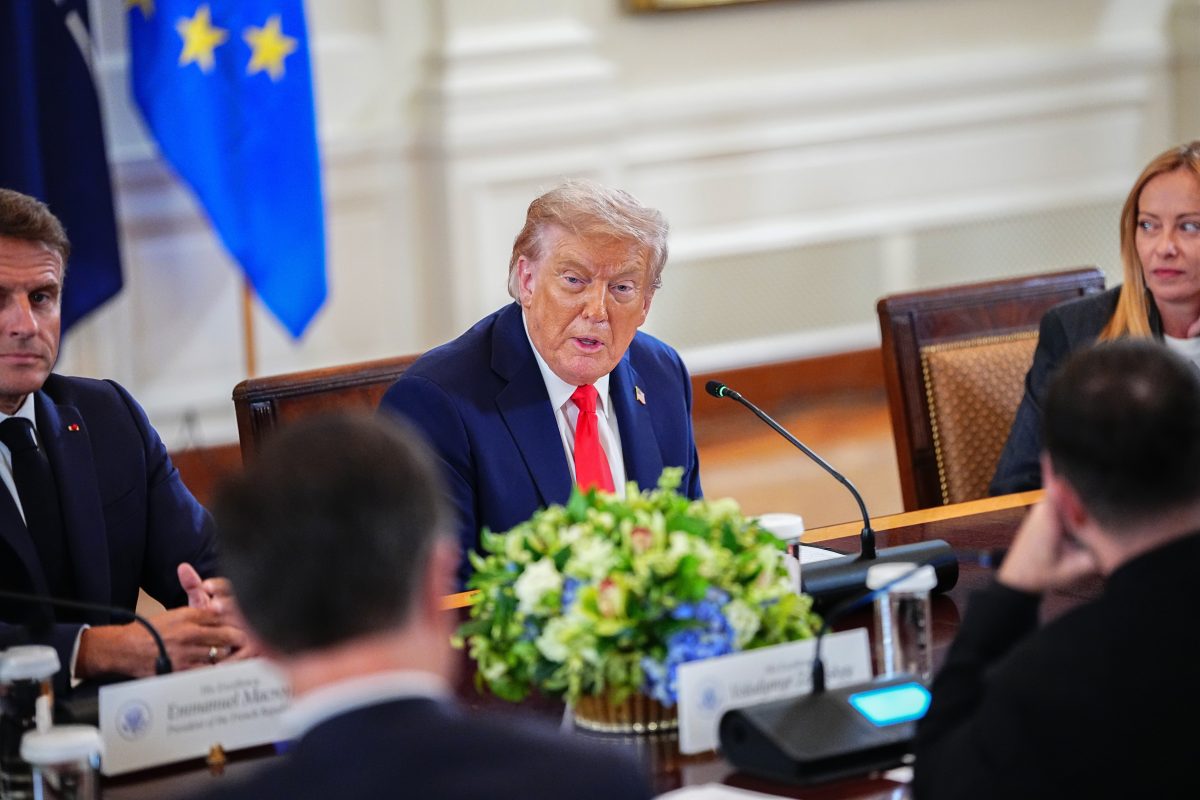
 ©picture alliance / CNP/AdMedia | CNP/AdMedia
President Donald Trump announced last week that he was raising import tariffs on cars and trucks made in the European Union from 15% to 25%. A firm announcement from Trump that has not yet gone into effect for now. Mediation and a good conversation with EU Commission President Ursula von der Leyen caused Trump to delay.
Trump reacts nervously to sluggishness of European institutions
The US president believes that the EU is not complying with a July 2025 trade deal in which the US cut the tariff on most EU products, including cars, to 15% in exchange for EU commitments such as eliminating tariffs on US industrial goods. Consequently, the Republican president said that instead of the previous 15%, as much as 25% import tariffs will have to be paid on European cars and trucks.
Trump announced this hefty increase on his platform Truth Social. But it hasn't come to that yet. The 2025 deal on which Trump relies followed earlier threats of 25-30% tariffs and was complicated by a February 2026 U.S. Supreme Court ruling that blocked certain "reciprocal tariffs" but allows auto import tariffs under a different law. Trump stressed that the measure encourages American production and does not apply to US-made European cars. But the inertia of European institutions, meanwhile, makes the US president nervous.
European Parliament votes to reduce
However, the EU-US trade deal, known as the July 2025 Turnberry deal, has not yet been implemented. In late March 2026, the European Parliament voted on two bills to implement tariff cuts on industrial and agricultural products from the US. Thus, Europe voted in favor of the reduction. But even after this "yes" vote by the Parliament, the deal with the US is not yet final. That's because member states and the U.S. must ratify additional agreements. The US president thinks it's beginning to smell of "non-compliance" because the EU has not yet fully reduced tariffs to zero, which, however, requires ratification. A direct implementation of the tariff cut is therefore not in place yet.
'Trump needs to be more patient'
EU Commission President Ursula von der Leyen rejected Trump's accusation, saying the EU is "prepared for any scenario". Von der Leyen stands by the agreement, stressing that implementation is in the final stages. European automakers, especially German companies, already saw their shares fall due to the U.S. threat.
EU Commission President Ursula von der Leyen stated on May 4, 2026 that "a deal is a deal" and that the EU is sticking to the agreements while the U.S. still has obligations such as adjusting tariffs on steel and aluminum. She stressed that the EU is ready to respond, but prioritizes dialogue and respect for democratic procedures.
Conversation with von der Leyen causes delay
Following a phone conversation with Ursula von der Leyen on Thursday night, Donald Trump postponed his threat of "much higher" tariffs on the European Union until July 4. Von der Leyen praised the "good progress" toward implementation. The European Union has now been given until July 4 to fully implement its trade agreement with the United States. Otherwise, "much higher tariffs await," the U.S. president said.
"I have been patiently waiting for the EU to fulfill its side of the historic trade deal we agreed to at Turnberry, Scotland, the largest trade deal ever! A promise was made that the EU would honor its side of the deal and, as agreed, cut its tariffs to zero!" the US president wrote on social media.
Trump was referring to the American Independence Day, known as the Fourth of July, and said, "I agreed to give the EU until our country's 250th birthday, or else, unfortunately, their tariffs would immediately jump to much higher levels."
©picture alliance / CNP/AdMedia | CNP/AdMedia