
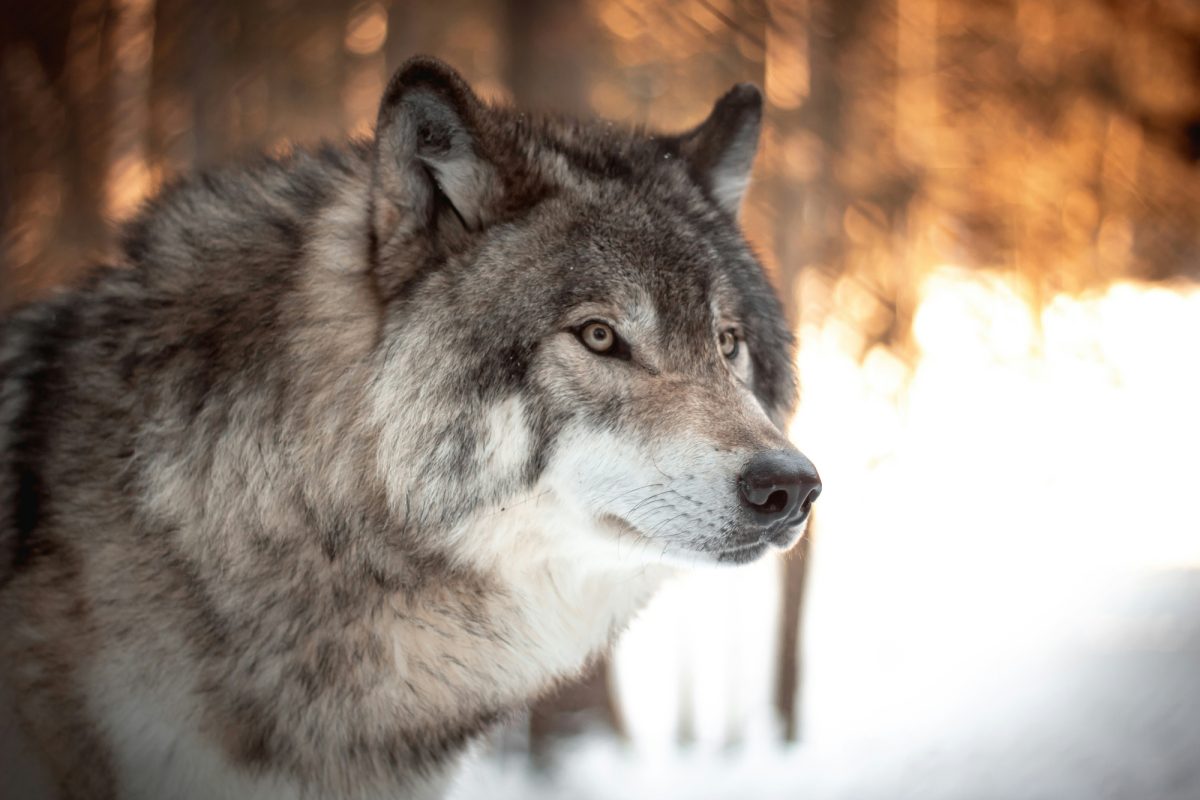
 ©Unsplash
The downgrading of the wolf's protection status has officially entered the Italian legal system with the publication of the decree issued by the Ministry of the Environment in the Official Journal. This measure transposes the recent amendment to the European Union's Habitats Directive, paving the way for a more flexible management of the species.
However, this amendment does not mean that hunting is immediately authorised: law 157 of 1992 still guarantees strict protection for the wolf. Nevertheless, the decree sends out a clear political message, and the dividing line now seems thinner than ever.
What really changes with the new decree
The decree authorises the drawing up of regional management plans, which could include selective culling in cases deemed necessary. According to ISPRA data, the theoretical national ceiling would be around 160 wolves, but any intervention would have to be scientifically assessed and authorised on a case-by-case basis. Without a formal amendment to law 157/92, the wolf remains a protected species and hunting is not automatically allowed.
Criticism from environmentalists and the scientific community
The main environmental associations, LAV and WWF Italy, describe the decision as political and ideological. They claim that it does not take into account the opinions of the international scientific community. According to the studies cited, wolves are responsible for only 0.6% of livestock losses. Selective culling does not reduce predation in the medium or long term. The organisations stress that the real problem remains the lack of systematic application of non-lethal preventive measures, including electric fencing and good farm management.
Regions, culling plans and the risk of legal disputes
The new regulatory framework gives the regions a central role, enabling them to draw up and propose culling plans within defined limits. According to WWF, this decree risks creating a period of legal disputes, particularly due to the lack of up-to-date data on illegal culls, which are already taking place in some regions.
Without uniform monitoring, it's becoming increasingly complex to ensure that a satisfactory level of protection is maintained. And while wolf hunting has not been opened up in Italy, the path taken marks a significant turning point in the country's wildlife policy. After decades of reinforced protection, the pressure exerted by the hunting lobby could wipe out all the guarantees obtained to date.
Source: WWF Italia / LAV
(©GreenMe.it/Managing Editor: Selma Keshkire - The Press Junction/Picture: Unsplash)