
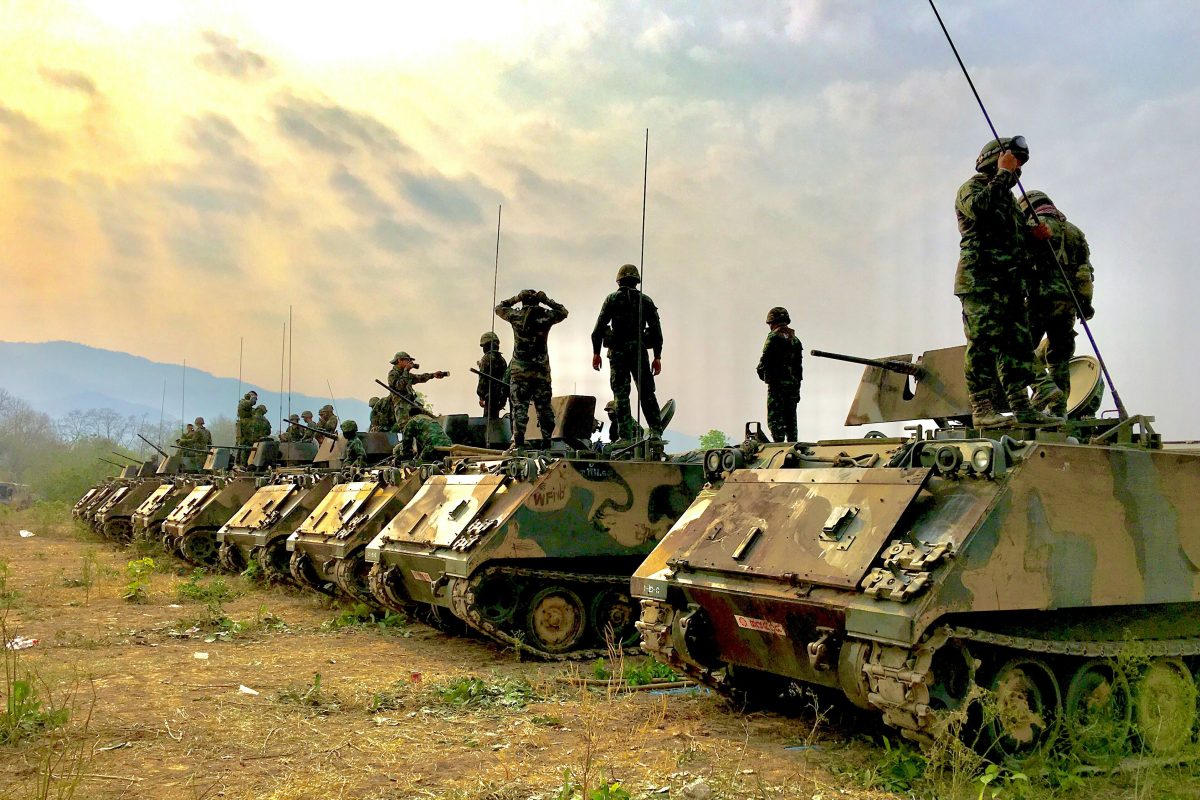
 ©Chuanchai Pundej via Unsplash
A thin cloud that settles on a wound and forms a solid barrier within a second, capable of stopping a potentially fatal bleed. That's the picture coming out of South Korea, where a group of researchers has developed a hemostatic spray for use in the most extreme situations, from the battlefield to disaster-stricken areas.
In severe trauma, severe blood loss remains one of the leading causes of death. Gaining even a few seconds in sealing a wound can make the difference between life and death. According to the scientists who developed the drug, this new powder succeeds in exactly that: it stops bleeding almost immediately.
The project was developed at the Korea Advanced Institute of Science and Technology (KAIST) in Daejeon. Also on the team was an Army major, Kyusoon Park, a doctoral candidate and coauthor of the study. Due to his input, the research focused heavily on practical use, in conditions involving dust, heat, moisture and the pressure of hands desperately trying to stem bleeding.
When the AGCL powder comes into contact with cations in the blood, such as calcium, it turns into a hydrogel within one second. Professor Steve Park, who led the research, explains that the internal three-dimensional structure allows it to absorb more than seven times its own weight in blood. In practice, this creates a compact, well-adhesive barrier that can withstand pressure.
Until now, the most commonly used hemostatic agents have been plasters or patches sensitive to temperature and moisture and poorly suited to irregular surfaces such as a gunshot wound. Traditional powders absorb blood and form a superficial layer. Here, it works differently: the chemical reaction creates a solid, reliable sealant.
How it works
The composition of the powder is based on materials of natural origin with a demonstrated antibacterial activity of 99.9%. The formula combines alginate and gellan gum, biocompatible substances that react rapidly with calcium to promote gel formation, with chitosan, which binds to the components of blood and enhances hemostasis both chemically and biologically.
In animal experiments, the researchers saw that wounds healed faster, with a stimulation of the formation of new blood vessels and collagen. In experiments with surgical liver lesions, blood loss and time to cessation of bleeding decreased significantly compared with currently available products.
A notable aspect is shelf life. The hemostatic spray retains its action for two years, even at room temperature and high humidity. This increases its potential for use in disaster areas, humanitarian emergencies and countries with fragile healthcare infrastructure.
Major Park said he began the research with the idea of saving lives, even if only one more soldier. Today, that same technology is serving the civilian world as a potential ally of emergency medicine, disaster relief and anyone working in places where time is the only real resource.
(©Advanced Functional Materials via GreenMe.it 2026/Managing Editor: Selma Keshkire - The Press Junction/Picture: ©Chuanchai Pundej via Unsplash)