
Society
Environment
Science
Weird & strange
Unexpected underwater life lurks beneath these offshore wind turbines
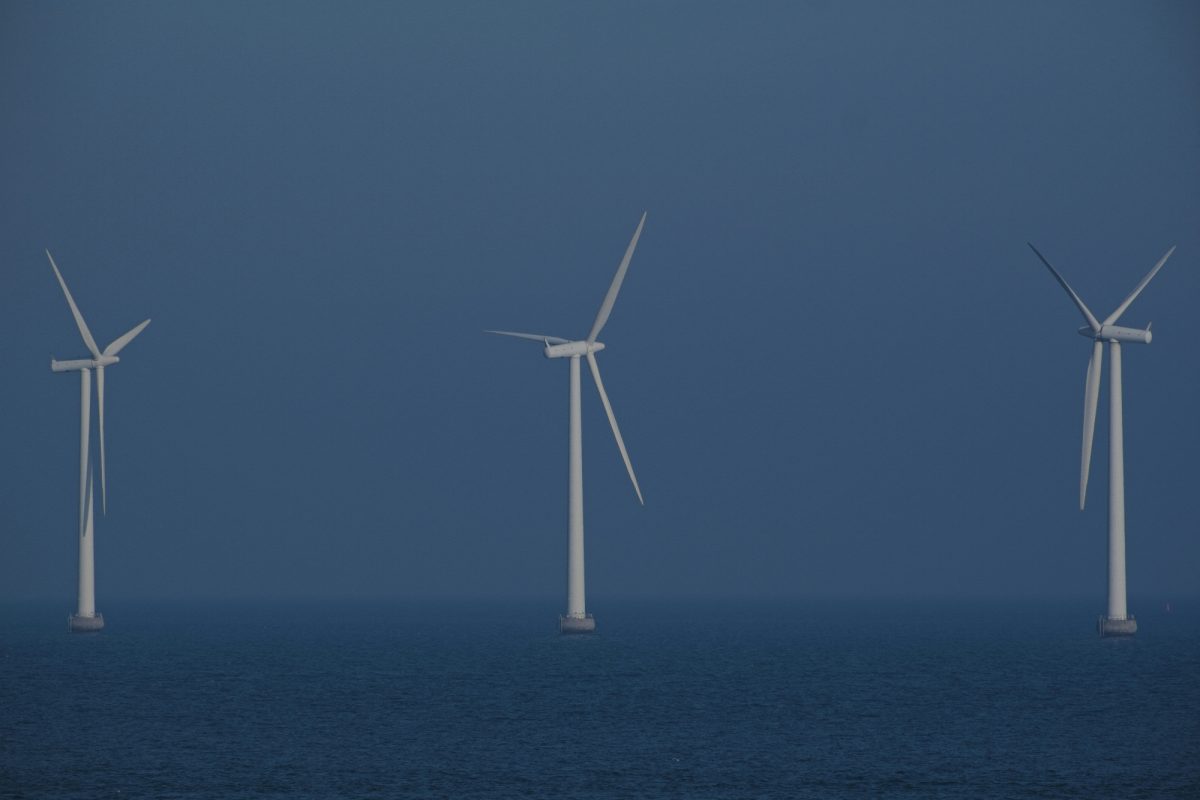 ©Unsplash
In the North Sea, well away from the coast and prying eyes, an unexpected phenomenon is taking place. No revolution announced, no sudden miracle, just a slow, silent, almost invisible change involving offshore wind turbines and what 'lives' beneath them.
For decades, these specific areas have been considered as simple technical spaces: an appropriate depth, a stable seabed, sufficient distance from the shore. Everything was designed to resist, not to accommodate. The seabed was flat, with few anchor points and no refuge. A functional place, but essentially empty.
The change comes when new shapes are created on the seabed, around the foundations of the OranjeWind wind turbines; solid, heavy structures that, at first glance, seem to exist solely to meet technical needs. And yet... These irregular shapes, rough surfaces and cavities fulfil an entirely different function: they break up the monotony of the seabed.
The water slows down and calmer zones form. Where there was nothing to hold on to, surfaces now appear. And it's here that nature, as is so often the case, is quick to respond.
The smallest organisms are the first to arrive. They attach themselves, grow and prepare the ground. Then come fish, molluscs and oysters. The consistency of the seabed begins to change, sediments stabilise and water quality improves. It doesn't all happen at once, but it does happen. And when it does, the space that has long been ignored slowly comes back to life.
Beyond energy, beneath the turbines of the OranjeWind project
The OranjeWind project was developed in the North Sea by RWE and TotalEnergies, off the Dutch coast. Around the wind turbines, structures called 'Reef Cubes' have been installed, designed not only to coexist with the energy infrastructure, but also to transform the seabed into a habitat.
These are not decorative elements (...), these structures remain on the seabed for the wind farm's life span and, together, they create over 1,400 square metres of potential living space in an area that was previously almost entirely devoid of it.
And above the surface, the wind turbines do what is expected of them: they generate renewable energy. Quietly below, they give the sea a second chance.
A simple idea that changes the way we look at offshore wind energy
It's not a question of saying that wind turbines will 'save' the oceans, but of highlighting how clean energy can be better thought through, taking into account what is happening beneath the surface of the water.
(...)
Source : OranjeWind
(©GreenMe.it/Managing Editor: Selma Keshkire - The Press Junction/Picture: Unsplash)