
 Wikimedia Common/Public domain
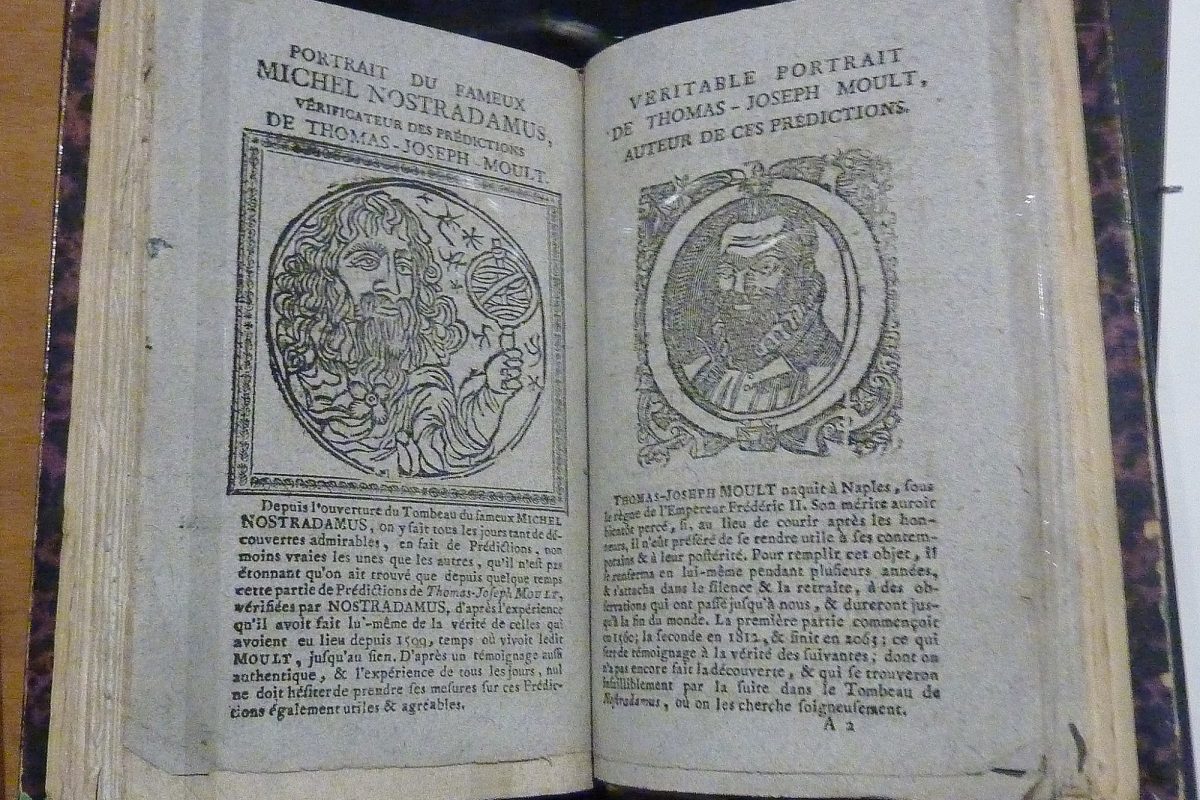
Like a Swiss watch marking the passage of time, the end of each year brings Michel de Nostredame's mysterious quatrains back into the spotlight. The 16th-century French prophet, better known as Nostradamus, continues to exert a magnetic fascination on our times, just as he did on his contemporaries.
His 942 quatrains, first published in 1555 in an enigmatic blend of archaic Latin and medieval French, are once again being anxiously scrutinized in the run-up to 2026, a year which, according to some interpreters, could prove to be particularly eventful.
2026 will be marked by an astronomical event of rare power: the first total solar eclipse over Europe for twenty-seven years. It is precisely this celestial phenomenon that offers the clairvoyant's enthusiasts a concrete anchor for linking his prophecies to the year ahead. After all, Nostradamus was also an astrologer, and his verses abound with references to darkened moons, retrograde planets and fires falling from the sky.
"Seven months of great war, people dead because of evil," reads one of the most quoted quatrains in recent weeks. The reference to Rouen and Evreux, already important French cities in Nostradamus' time, is now reinterpreted in the light of contemporary geopolitical tensions. With the conflict between Russia and Ukraine still unresolved and international tensions rising, this verse once again resonates with a particularly sinister tone. Modern interpreters are divided between those who see in it an allusion to Ukrainian President Zelensky and those who see in it the figure of Donald Trump instead.
One of the most powerful images evoked by Nostradamus is that of the 'great swarm of bees' emerging from the night. An ancient symbol of power and organization - coincidentally adopted by Napoleon as an imperial emblem centuries later - the swarm is today interpreted as a metaphor for charismatic and controversial leaders. Putin and Trump, dominant figures on the international stage, could be the protagonists of this 'swarm', according to those who try to decipher the seer's cryptic language. The quatrain suggests unexpected victories or bold maneuvers, perhaps new balances in the Middle East or decisive turning points in the Ukrainian conflict.
Particularly troubling is the reference to the Swiss canton of Ticino, which according to Nostradamus will be "flooded with blood". In this interpretation, Switzerland, a symbol of neutrality and stability at the heart of Europe, becomes the scene of violence and conflict. Analysts prefer to interpret this verse symbolically: it does not necessarily mean war on Swiss soil, but rather the spread of tensions along European corridors, already crossed by military deployments and political unrest. Ticino, on the border with Italy, would thus represent a nerve center in a wider crisis.
When the Roman god of war "governs his course among the stars", writes Nostradamus, blood "will splatter the sanctuary". This is one of the most apocalyptic passages, interpreted as a harbinger of intensifying global conflict that could involve both Western Europe and Asian powers.
But there's more: a line speaks of "three fires rising from the eastern sides, while the West silently loses its light" is read as a prophecy of a shift in the global balance of power. The East rises, the West declines - a narrative that echoes contemporary concerns about the decline of Western hegemony.
Perhaps the boldest interpretation concerns artificial intelligence. According to some modern readers, when Nostradamus speaks of the West losing its "light in silence", he could be referring metaphorically to the technological advances made by China, Japan and other Eastern countries in the field of AI.
Interpretations for 2026 spare neither the economy nor the environment. Symbols such as "fire from heaven" are linked to the extreme climatic events already characterizing our times. Other verses mentioning "corrupt coins" and "turbulent markets" are interpreted as harbingers of a new financial crisis. In a world already marked by inflation and economic instability, these prophecies find fertile ground in collective anxieties.
And yet, in the midst of so much doom and gloom, Nostradamus also offered a glimmer of hope: "Darkness will fall, but the man of light will rise" is the line that concludes many interpretations. A message of collective renewal, perhaps the arrival of a new visionary leader, a social change that will favor human relationships over technology. It's the classic happy ending that every apocalyptic prophecy seems to demand, the promise that after the storm comes the calm.
Will 2026 be a year of wars, crises and technological revolutions? Maybe yes, maybe no. But one thing is certain: at the end of the year, someone will find a way to prove that Nostradamus was right.
(©GreenMe.it 2026 / Managing Editor: Selma Keshkire - The Press Junction / Picture: public domain - Wikimedia Commons)