
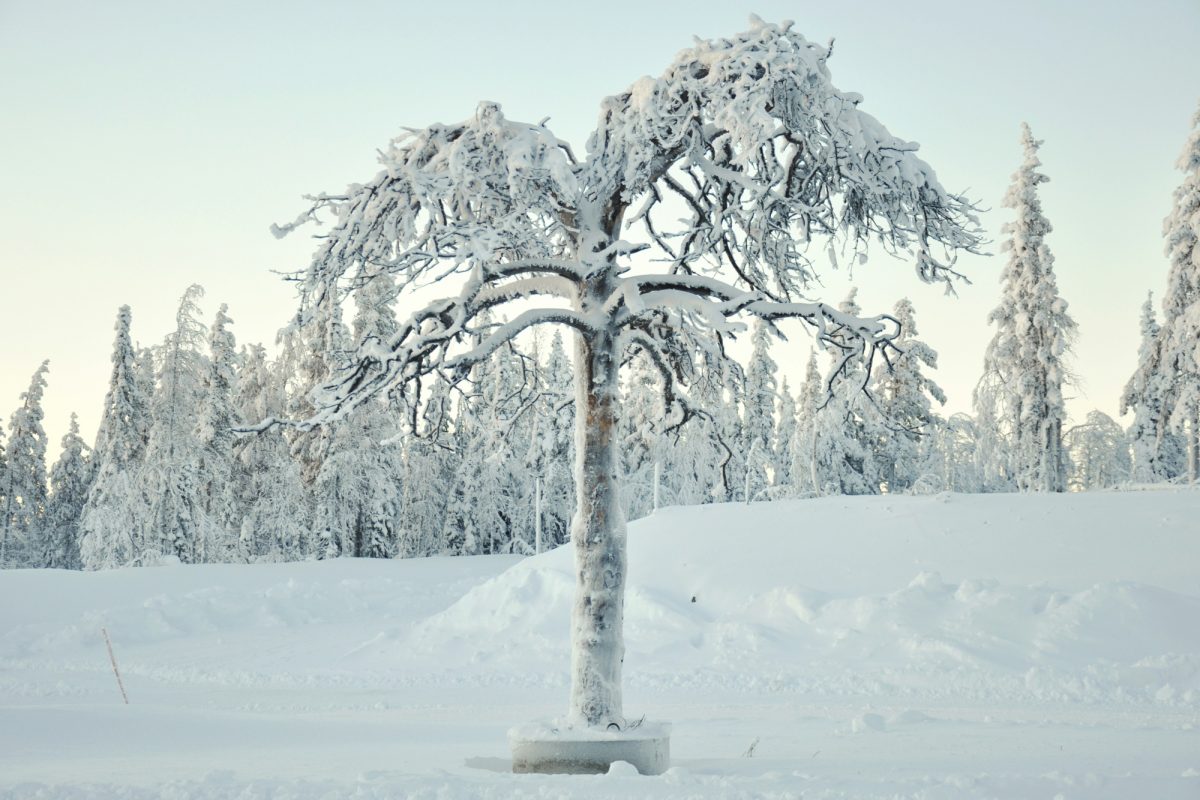
 ©João Monteiro via Unsplash
At the end of January, videos and photos of trees appearing to explode during intense cold snaps in the United States began to circulate on American social media networks. While some were generated by AI, many were real. While the phenomenon may be surprising, botanical experts say there's nothing strange about it.
It's a natural phenomenon known as frost cracks, not actual explosions.
The phenomenon occurs when temperatures suddenly drop, preventing the tree from adapting. Inside the trunk, sap and water in the tree's tissues freeze rapidly. As the water expands with freezing, the internal pressure can exceed the strength of the bark and wood, causing a sudden crack that produces a sound similar to a gunshot.
(...) Despite the noise, the danger is minimal; wood splinters rarely pose a risk to those around them. On the other hand, the resulting wound can become an entry point for fungi, bacteria and insects, which can compromise the plant's long-term health.
Damage and tree survival
The tree's survival depends on where the crack occurs. If it affects a branch, the tree can survive by sacrificing that part of the tree, while damage to the base of the trunk can be fatal, unless the species has the ability to regenerate from underground buds.
Experts point out that during winter storms, the real danger is not sudden 'explosions', but the accumulation of ice and wet snow, which can cause branches to fall or tree tops to break off. Species such as the Taeda pine, that have long needles that retain more ice, are particularly vulnerable, increasing the risk of material damage (houses, cars) and potential injury to humans. While the effect may seem spectacular, frost cracks are plant's natural response to extreme cold.
Source: University of Connecticut
(©GreenMe.it 2026/Managing editor: Sarah Lavigne - The Press Junction/Pic: ©João Monteiro via Unsplash)