
Environment
Mobility
Photovoltaics on railroad tracks: after Switzerland, France installs solar panels between the tracks
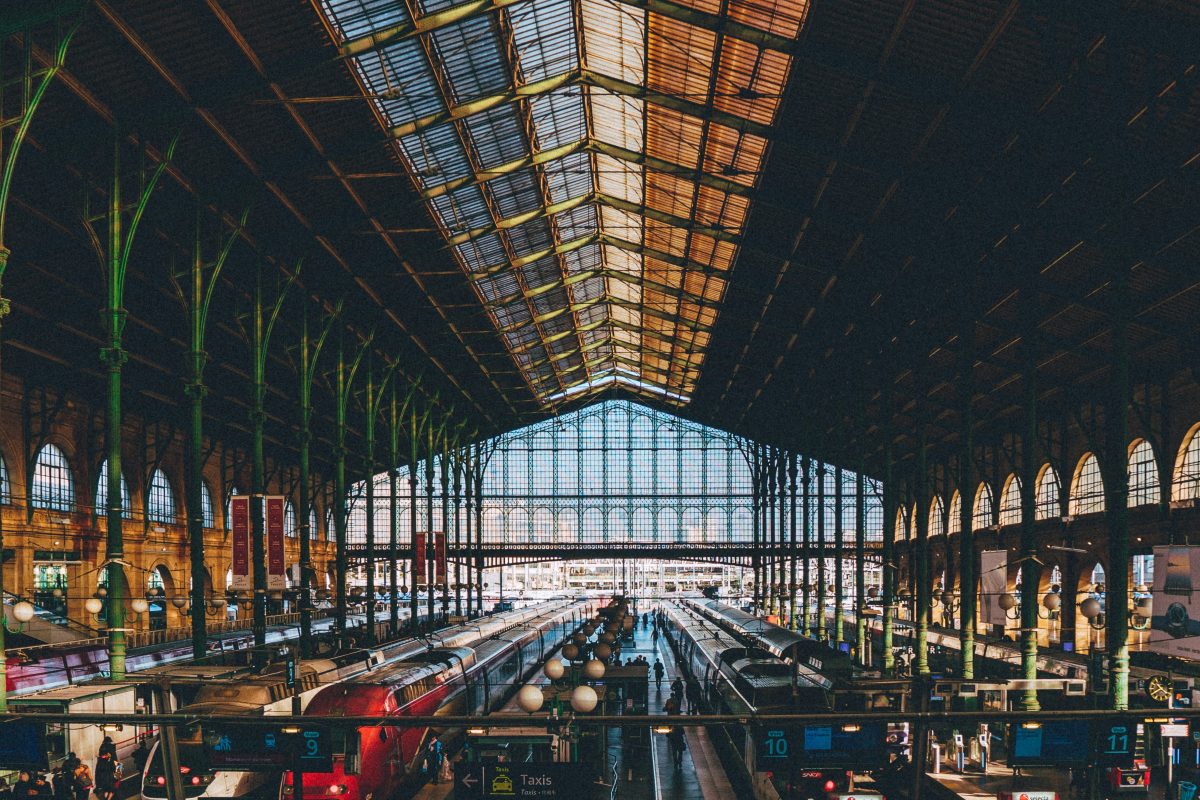 ©Moiz K. Malik via Unsplash
The energy transition is not limited to the vast photovoltaic farms that dot the countryside or the wind turbines that dot the horizon. It's sometimes born out of an intuition that is both simple and powerful: make better use of what already exists. In a Europe struggling to find new sites for renewable energy plants, some have decided to look downwards, precisely where thousands of trains run every day.
French rail giant SNCF has launched a pilot project that could change the way we think about infrastructure: the installation of solar panels between rail lines, thanks to a technology developed by Swiss start-up Sun-Ways. The project, if it lives up to its promise, would transform rail lines into a vast renewable energy production network.
Why railroads?
One figure alone illustrates the scale of the choice in question: the SNCF consumes around 9 TWh of electricity a year, making it France's leading industrial energy consumer. At the same time, it's one of the country's largest landowners. At a time when photovoltaics are struggling to expand due to a lack of available space, making the most of the thousands of kilometers of existing rail lines is a logical, sustainable and strategic move.
The basic idea is as simple as it is revolutionary: to give the rails a dual function. They would not only carry millions of passengers and tons of freight, but also generate clean solar energy, without taking up any additional land. At a time when every square metre counts, this choice embodies environmental responsibility and intelligent design.
The Swiss pilot project: figures and objectives
Sun-Ways' technology is not just a concept. Since April 28, 2025, a pilot plant has been in operation in the canton of Neuchâtel, in Buttes. It consists of 48 photovoltaic panels installed on 100 meters of railroad track. Each panel has a power output of 380 watts, for a total of 18 kWp. Annual production is estimated at 16,000 kWh, a significant volume given the short distance covered.
The real innovation lies in the system's modular, removable structure. The panels can be quickly installed and dismantled thanks to a dedicated railway machine and a patented device. This is a crucial aspect: line maintenance remains the priority, and the infrastructure must integrate perfectly with the operational requirements of rail traffic.
The partnership between SNCF and Sun-Ways provides for a test phase lasting until 2028. Between now and then, the mechanical strength of the modules, their compatibility with the passage of trains, the impact on maintenance operations and actual long-term energy efficiency will be analyzed. It's a gradual process, essential for a rigorous technical and economic assessment of the feasibility of nationwide deployment.
A rail network generating clean energy
If the results prove conclusive, the next step could be to install solar panels on vast stretches of the French rail network. The image is powerful: kilometers of track that not only connect towns and citizens, but also help produce the renewable energy needed to run services and infrastructures.
Of course, there is no shortage of challenges. We need to guarantee the durability of panels subjected to constant vibration, accurately assess installation and maintenance costs, and strike a balance between investment and energy yield. Any innovation of this scale requires time, testing and fine-tuning.
Yet this pilot project highlights a deeper trend. It shows that sustainability depends not just on new buildings, but also on our ability to reinvent the use of what we already have.
(©GreenMe.it 2026/Managing editor: Selma keshkire - The Press Junction/Picture: Moiz K. Malik via Unsplash)