
Society
Environment
Science
PFAS in water: in Italy, technology is being that can remove 'eternal toxins' up to 99%
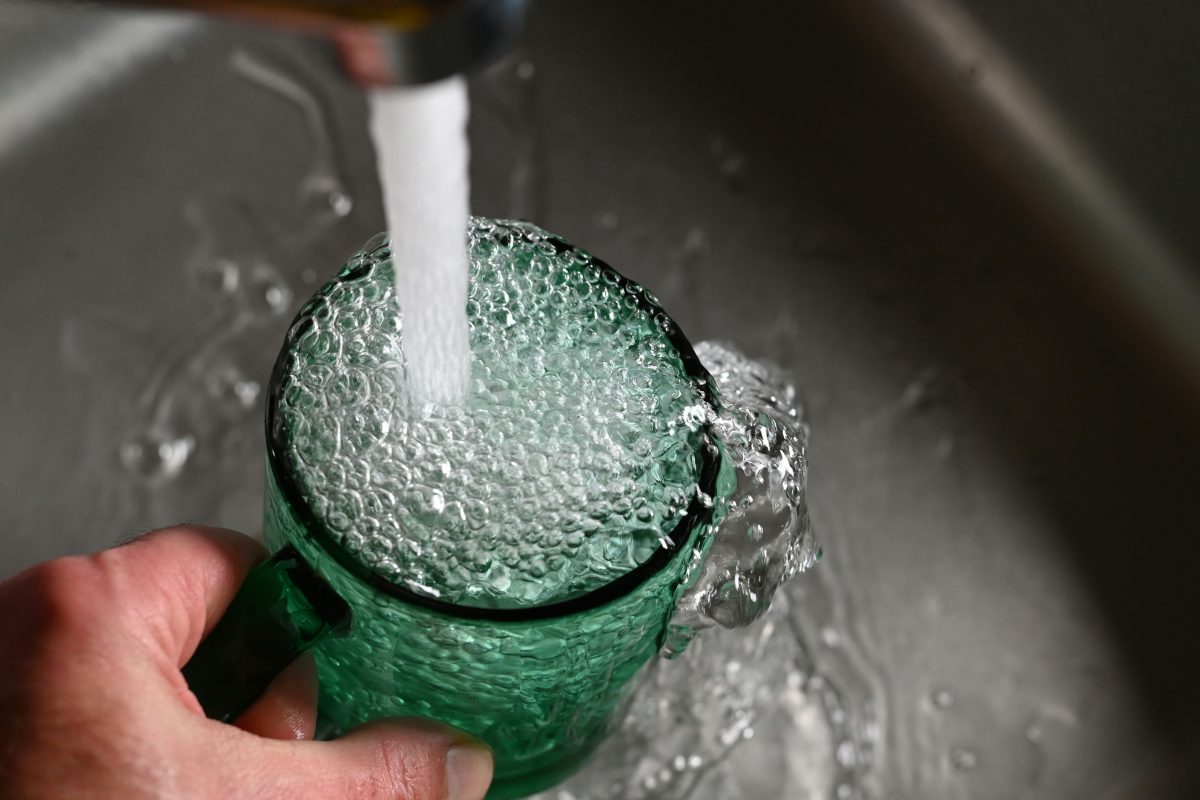 ©Andres Siimon via Unsplash
PFAS in water has been increasingly discussed for several years, and not only in technical or scientific circles. The subject pops up in local news, in daily concerns, in political choices. And each time the same problem recurs: these substances persist, accumulate, move. Disappearing is an entirely different story.
This is precisely why every new solution is viewed with interest, but also with caution. Reducing PFAS means intervening in very stable chemical equilibria, where every step can have consequences, even after treatment. Within this context, the introduction of a technology (in Italy) developed in Australia, already deployed elsewhere and aimed at wastewater treatment is appropriate.
Starting in Piedmont, the experiment revolves around a system that works on an exact physical principle: using the behavior of PFAS to separate them from the water, rather than trying to destroy them directly.
The concrete step came in February 2026, with an agreement between Erica Srl and Acqua Novara VCO, the company that manages the integrated water service in 139 municipalities in Piedmont. Here, the first Italian installation using the SAFF40 technology, developed by EPOC Enviro, will be installed.
The system has already been deployed at some 40 sites worldwide, with results that indicate an ability to reduce the presence of PFAS in treated water by 95% to 99%. Figures that attract attention, especially considering how difficult these substances are to intercept.
Operation is based on a mechanism consistent with the nature of PFAS. Inside the plant, contaminated water is traversed by microbubbles of air. As the bubbles rise, PFAS molecules adhere to its surface and are carried upward, where a foam layer full of contaminants forms.
At that point, separation takes place. The foam is collected and isolated, while the water continues with a lower PFAS concentration. The process continues continuously, creating a kind of dynamic filtration that works through gradual accumulation.
The crux, however, is in what happens next. The PFAS are not destroyed, but concentrated in a smaller volume that must then be further managed. This is a substantial difference because it displaces the problem rather than completely solving it. And it raises a practical question: how to treat that concentrate, with what technologies and at what environmental cost.
The Italian trial should also help answer that, in addition to assessing the effectiveness of the system under real conditions, which differ from the sites already tested. Different water, different contaminants, different infrastructures. If the results are in line with what has been observed elsewhere, the system could also be applied in other contexts. But it's ultimately practical experience that will determine the actual role.
PFAS in water: why do these substances remain in circulation?
To understand why any intervention on PFAS in water remains so complex, you have to go back to their structure. Per- and polyfluoroalkyl substances (PFAS) are molecules in which hydrogen atoms have been replaced by fluorine atoms. That makes for extremely strong carbon-fluorine compounds, which are among the most stable in chemistry.
From this stems their persistence. PFAS remain in the environment for years, migrating through soil and water, invading organisms and tending to accumulate. This is why they are often called 'perpetual pollutants'.
Their properties made them attractive for decades. They are resistant to water, greases and high temperatures. They have been used in the production of non-stick pans, dental floss, agricultural fertilizers and in the treatment of materials intended for contact with food.
The result is a widespread and stratified distribution. PFAS are not confined to a single domain, but move between industry, the environment and everyday life. They can be found in surface and groundwater and thus enter food chains. Over time, research has increasingly identified the risks of long-term exposure, increasing the pressure to find effective solutions. Yet every technology encounters the same limit: the difficulty of completely removing these molecules without causing new problems.
In this light, the arrival of the SAFF40 system in Italy is an interesting step, as it introduces a different approach, based on separation and concentration. Not yet a final solution, at least for now, but possibly a puzzle piece within a broader strategy.
The trial in Piedmont thus becomes a concrete test bed. Not so much to find out whether PFAS can be reduced, but to assess how, at what cost and with what long-term consequences. Because when it comes to PFAS in water, time always remains a crucial factor.
(©Epoc Enviro via GreenMe.it 2026 / Managing Editor: Selma Keshkire - The Press Junction / Picture: ©Andres Siimon via Unsplash)