
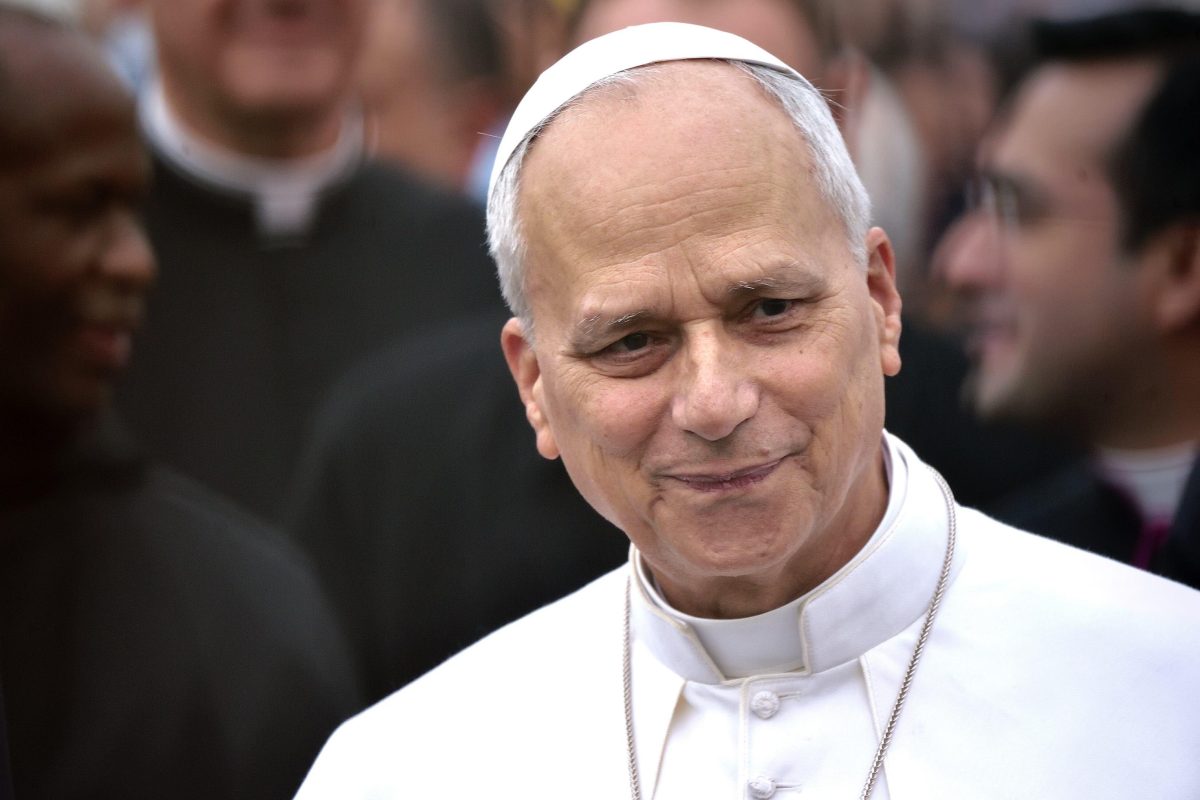
 © picture alliance / Rocco Spaziani | Rocco Spaziani
In the evening, in the silence of the Apostolic Palace, Pope Leo XIV opens Words with Friends. He is learning German on Duolingo. He challenges his brother in Wordle. He is the first pope listed by Time among the most influential people in the field of artificial intelligence, and this spring, at his initiative, St. Peter's Basilica is launching a real-time translation system for religious celebrations in as many as 60 languages. The system is completely AI-driven: all you have to do is scan a QR code with your smartphone, and there is no need to download an app for it.
After this aside, we come to the interesting part: last week Pope Leo XIV called a group of priests to Rome to tell them to stop using ChatGPT to write their sermons.
"I urge you to resist the temptation to prepare homilies with artificial intelligence. Like all muscles of the body, they die if we do not use them. The brain must be trained," it said.
(...)
The apparent contradiction of the most tech-savvy pope ever is more coherent than it seems
The Vatican's stance on artificial intelligence is built on a clear and actually quite reasonable delineation. Translating Mass into Swahili or Japanese in real time is a tool that brings people closer to the Church: blessed, useful, no problem.
Entrusting the words with which a priest should share his faith with his community to an algorithm is something else, something so specific to human beings that it simply cannot be delegated. The Pontifical Academy for Life has even coined a separate term for this line of thinking: "algorethics," the idea that ethics should be built into the code from the beginning, woven into it, and not patched up after the damage has already been done.
Moreover, the pope's argument about brains holds up beyond the religious framework. Large language models like ChatGPT are highly sophisticated statistical engines: they predict the most likely next word based on billions of texts. They can produce a homily that is grammatically correct, thematically relevant and stylistically fluent. They can also produce business e-mails that begin with "I hope you are well": formally perfect, but emotionally empty.
In a parish in the Italian countryside, with the concrete concerns of those who sit there in the pews on Sunday mornings, the right words for someone who has lost someone the week before: all that remains beyond the reach of any algorithm, no matter how sophisticated.
Don Matteo urged monks to avoid social media ... with a Facebook post
Meanwhile, cardinals attend continuing education courses on artificial intelligence, with the same resigned look as bank employees when the computer system is revamped again. Moreover, Leo XIV has warned priests not to measure their work by social media measures (such as likes, views, the engagement rate on TikTok) because the transmission of the message is more important than how much an algorithm wants to reinforce it.
Then there is Don Matteo Ferrari, from the monastery of Camaldoli, in the Tuscan mountains, who wrote to his monks that they should absolutely avoid Netflix, Instagram and TikTok, in the name of "poverty and sobriety." He did publish the letter on Facebook. Apparently, no one found the right time to point it out to him.
Don Cosimo Schena, a pastor with 500,000 followers on Instagram, says he agrees with the pope: AI dehumanizes faith; homilies should be built around the community sitting in front of you. His own, he assures, he writes. Then he posts them, and half a million people read them on the screen of his phone. The Lord works in inscrutable ways, but with neat outreach numbers.
Ultimately, the point touches all of us: priests, monks, religious influencers and anyone with a smartphone in their hand. Do you use it to reach out to others or just to say you've arrived? The answer changes everything, and probably even the person involved doesn't always know it with certainty.
Then there is the chapter on deepfakes, which partly explains the Vatican's suspicion. In 2023, Pope Francis unwittingly became artificial intelligence's most viral testimonial, pictured in a white designer puffer he never wore. The Vatican saw something troubling in it and published Antiqua et nova, a thirteen-thousand-word document warning that AI risks "addicting" workers and locking children into circuits of repetitive tasks. Leo XIV added his contribution by warning of digital companions who are "overly affectionate" and threaten to become "hidden architects of our moods."
He then opened Wordle again.
(©GreenMe 2026 / Managing Editor: Yves Peeters - The Press Junction /Picture: picture alliance / Rocco Spaziani | Rocco Spaziani)