
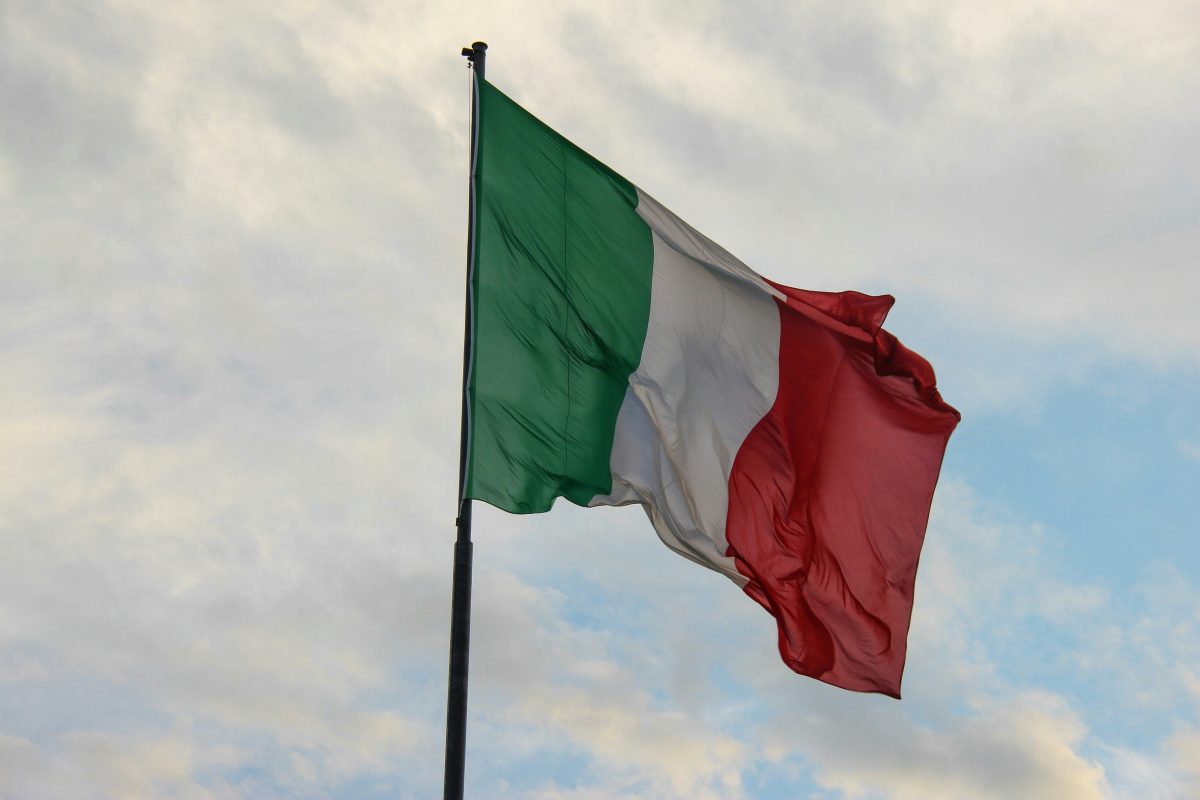
 ©aitac via Unsplash
Tension is mounting in the Middle East, and Italy seems to be moving forward on two parallel fronts: avoiding any direct involvement in the conflict, the authorities assure us, while strengthening national security and that of its military abroad.
Council President Giorgia Meloni, speaking on RTL 102.5, clarified the government's position: "We are not at war and we do not want to go to war."
This statement comes at a time when the international situation is becoming increasingly unstable, with a risk of regional escalation following the attacks and military responses that now involve several countries in the area.
Fear of escalation
The Prime Minister has openly expressed her concerns about the crisis in international law and multilateral bodies, exacerbated by the conflicts that have engulfed several geopolitical hotspots in recent years. According to the head of government, Iran's military response to the recent bombings risks further widening the conflict, with air strikes also affecting neighboring countries and potentially leading to unpredictable consequences.
This scenario is all the more worrying in that it not only threatens the West's presence in the region, but also affects the global energy balance.
Italian air defense on high alert
In the face of growing instability, the Minister of Defense, Guido Crosetto, announced an immediate decision before the Chamber of Deputies: to raise the protection of national air and anti-ballistic defense to its highest level. The mandate was given to the Chief of the Defense Staff, in coordination with NATO and allied countries.
According to the Minister, Iran's strategy is aimed at creating economic and geopolitical instability, notably through strategic maneuvers such as the closure of the Strait of Hormuz, a crucial passage for global energy trade.
Support for Gulf countries and missions in the region
While reaffirming its determination not to go to war, the Italian government is considering measures to support the Gulf states, which have become the target of Iranian attacks. This would mainly involve air defense systems designed to protect allied territories and strategic infrastructures.
This choice is not just a matter of diplomatic relations: tens of thousands of Italian nationals live in the region, and some 2,000 Italian soldiers are deployed there as part of various international missions. It's precisely for this reason that Rome is considering reinforcing its security arrangements in the eastern Mediterranean, by sending naval resources to Cyprus, in coordination with other European countries.
The question of US military bases in Italy
One of the most sensitive issues is that of US military bases in Italy. Giorgia Meloni pointed out that their use is governed by bilateral agreements in force since 1954, which have been updated over time.
At present, these bases can be used for logistical or non-offensive operations. In the event of a request for direct military operations, the President of the Council explained, the decision would rest with the government, and would have to be discussed with Parliament.
For the time being, however, no request has been made, and the government's line remains to avoid any direct involvement, while preparing for an increasingly unstable international situation. "Italy is not at war", Guido Crosetto reiterated before Parliament. But as the crisis spreads and regional tensions escalate, the country is bolstering its defenses and reorganizing its military presence in the area.
"We're not at war": but how close are we?
Italy, the authorities assure us, is not part of the conflict. Yet, at the same time, it is stepping up its military protection, redeploying troops, planning military support for the Gulf states and strengthening its naval presence in the Mediterranean.
This stance highlights an obvious contradiction: while the desire to stay out of the war is constantly reaffirmed, measures are multiplying to prepare the country for the consequences of a possible extension of the conflict. In other words, the government continues to talk in terms of non-involvement, even as Italy's military posture adapts to an ever-closer war scenario.
And this is precisely where the real political battle lies: determining how far Italy intends to remain a spectator in an international crisis that threatens to engulf Europe too.
(©GreenMe.it 2026/Managing editor: Selma Keshkire - The Press Junction/Picture: aitac via Unsplash)