
 ©雙 film via Unsplash
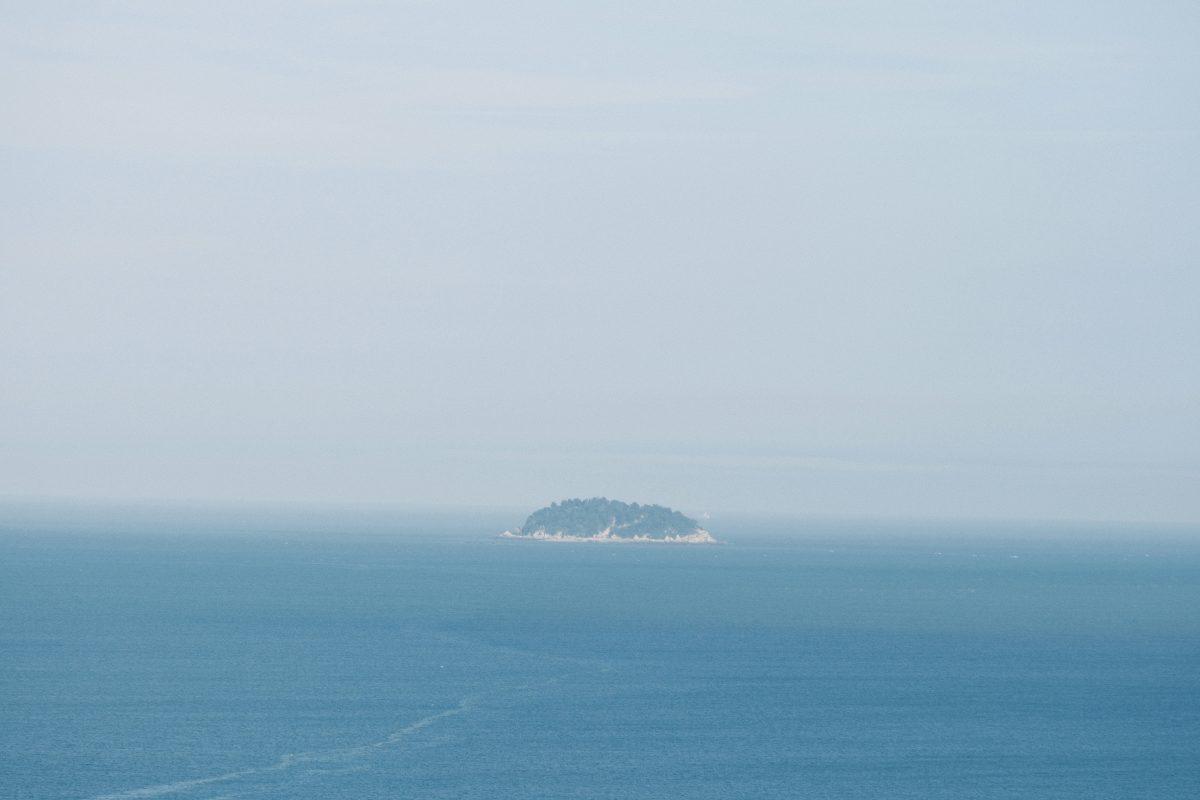
There's an island in the middle of the Pacific that almost nobody has ever heard of. It's called Minamitorishima, a triangle of rock and coral the size of a suburban neighborhood, located almost two thousand kilometers from Tokyo. Nobody lives there. Technically, it's the ideal place to get rid of things we haven't known what to do with for decades: highly radioactive nuclear waste.
The Japanese government has officially asked the municipality of Ogasawara, which formally administers the remote piece of land, to authorize an initial geological study. Nothing is definitive yet. This is what experts call a 'literature survey' or 'geological study': an analysis of documents, data on the subsoil, assessments of geological stability and possible volcanic activity. A first step, that's for sure. But also a sufficiently clear signal of the direction in which things are heading.
The question nobody wants to answer: where does the waste end up?
After the Fukushima disaster in 2011, Japan had virtually shut down everything. Reactors shut down, public debate heated up, confidence in atom is at an all-time low. Then came the global energy crisis, soaring prices and pressure to reduce emissions. The Tokyo government then changed course: nuclear power is coming back, provided it meets stricter safety standards. In January, one of the world's largest reactors was put back into service in the Niigata prefecture, after years of inactivity due to Fukushima.
But every re-started reactor produces spent fuel. And this fuel contains materials that remain radioactive for tens of thousands of years. That's not a typo: tens of thousands of years. This time scale far exceeds the duration of any known human civilization. The problem of nuclear waste is not new, but no definitive solution has ever been found. Or rather: the solution exists on paper, but implementing it is another story.
Today, the most advanced option is deep geological disposal. The principle is simple: tunnels are dug hundreds of meters underground, in rock deemed stable, and sealed containers containing the waste are buried. Finland has already done this, at the Onkalo site, where spent nuclear fuel will be isolated at a depth of around 400 meters.
Scientists consider this to be the best available solution. And yet, no one can guarantee what will really happen in ten thousand years' time: geological, climatic and social changes. There are too many unknowns.
An isolated island, a seabed rich in resources and a future yet to be written
What makes the story of Minamitorishima so special is that this small, forgotten island is anything but insignificant. In recent years, it has become strategically important for an entirely different reason: the seabed surrounding it is extremely rich in rare earths, the chemical elements essential for telephones, wind turbines and electric car batteries.
According to some estimates, the sediments surrounding the island could contain over 16 million tonnes of these raw materials. Japan has already launched experimental tests to extract them from depths of over six thousand meters, with the aim of reducing its dependence on China, which currently controls most of the world market.
The same island could therefore, in theory, become both a source of key materials for the energy transition and a burial ground for the most problematic waste products. If there were a prize for the paradox of the decade, this candidate would prominently feature.
The fact that such a distant solution is being considered speaks volumes about the difficulty of finding a political and social consensus around these sites in populated areas. Nuclear NIMBYism - none of that where I come from - is universal. Nobody wants a waste dump on their doorstep. So we look far away, in the middle of the ocean, where there are no inhabitants to protest.
If the results of the preliminary study are positive, we'll move on to the next phase: field surveys, then deep drilling to analyze the actual characteristics of the subsoil. A process which, even if it goes smoothly, could take decades. Meanwhile, nuclear waste continues to accumulate in temporary structures scattered across the country.
The question that remains on the table, the one to which no technology has yet come up with a truly convincing answer, is this: is there anywhere on Earth safe enough to store what we have produced in just a few decades for millennia? Minamitorishima could be Japan's answer.
Source : METI
(©GreenMe.it 2026/Managing editor: Selma Keshkire - The Press Junction/Picture: 雙 film via Unsplash)