
 ©PA
©PA
Hostage to fossil fuels more than ever: there is no US-Iran agreement, as confirmed by both US Vice President JD Vance and Iranian sources, with the Strait of Hormuz remaining the main 'war front', with the risk of bringing the economy of a large part of the world to its knees.
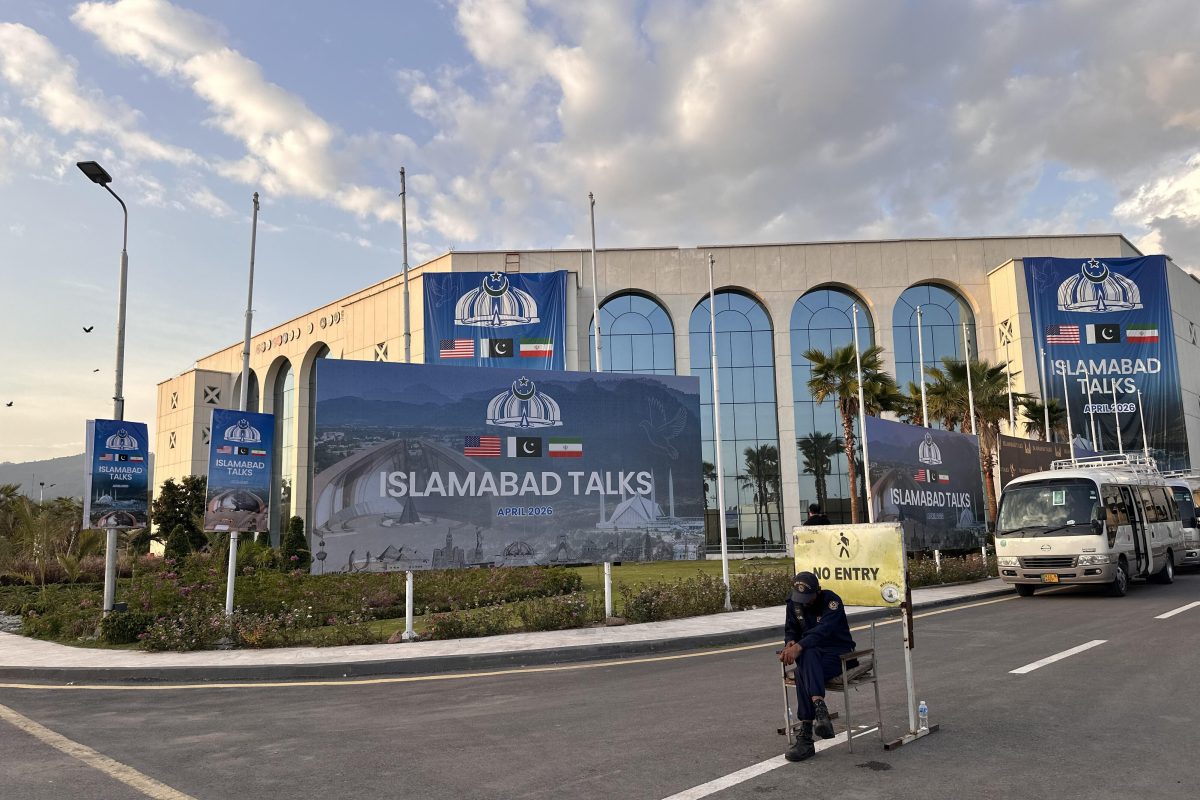
The first round of official negotiations in Pakistan ended in total failure: both sides confirmed this, and predictably disagreed on the reasons for the failure. According to the United States, it wasn't possible to reach an agreement because Iran had not promised to give up nuclear power once and for all, while Teheran denounced the White House's unreasonable demands.
Talks began on Saturday April 11 in Islamabad and continued throughout the night until Sunday morning Pakistan time, without reaching an agreement that would put a definitive end to the war.
At the heart of the disagreement is the alleged nuclear program, which Iran is unwilling to give up. From the outset, the United States has presented this renunciation as a non-negotiable condition for a final agreement.
"I think this is bad news for Iran, much more so than for the United States of America. So we're going back to the United States without a deal," said JD Vance on CNN, according to whom the US offer was very flexible:
"We were very accommodating [...] We were, and unfortunately we didn't manage to make any progress," he concluded.
The Iranian side obviously disagrees, calling the demands unreasonable.
Esmaeil Baqaei, spokesman for the Iranian Foreign Ministry, told the semi-official Tasmin news agency that the negotiations had ended without any agreement due to the excessive demands made by the American side.
Even if common ground was found on some issues, other very important ones remain too divergent to reach a final agreement.
These negotiations took place after 40 days of imposed warfare, and in a climate of mistrust and suspicion. Understandably, we didn't expect to reach an agreement in a single meeting from the outset. Nobody expected it.
Along the same lines, the Iranian news agency IRNA reports that war reparations, the lifting of sanctions and a complete end to the war against Iran and the region were also on the agenda of the negotiations (not to mention the fact that Israel continues to bomb Lebanon, arguing that this front was not part of the truce, already extremely fragile in itself, concluded in recent days).
"Nothing can or should deter us from fulfilling our great historic mission to our beloved homeland and noble Iranian civilization," said Iranian Foreign Ministry spokesman Esmaeil Baqaei. The Islamic Republic of Iran is determined to use all the instruments at its disposal, including diplomacy, to guarantee its national interests.
The Strait of Hormuz threatens to bring the economy of much of the world to its knees. The day after the US-Israel attack, Iran closed the maritime corridor between the Persian Gulf and the Indian Ocean, 33 kilometers of sea crucial to the stability of the world's energy markets.
Every day, around a quarter of the world's oil and a fifth of its liquefied natural gas pass through this strait, millions of barrels and huge volumes of gas supplying industry, power stations, transport and domestic heating. It is an essential route for exports from the main Gulf producers - Saudi Arabia, Iraq, the Emirates and Qatar - as well as for Iran itself.
The blockage implies a drastic reduction in the world's energy supply. And when supply is reduced, prices rise: oil and gas prices literally soared in the first hours following the announcement, with immediate repercussions on the daily expenses of each and every one of us.
Since February 28, the day of the first attack, traffic has plummeted by 81% compared with levels at the start of the year: from 10.3 million gross tons per day to around one million. On March 2, the Pasdaran officially confirmed the closure, threatening to strike at any ships in transit.
Four days later, on March 6, Teheran announced a partial reopening, but with conditions that rendered the measure ineffective, so the markets failed to react.
On March 22, the âyatollâh regime had set six conditions for ending the conflict: closure of US military bases in the region, rejection of aggression and payment of reparations to Iran, an end to the war on all regional fronts, prosecution and extradition of all Iranian nationals, and an end to the war in Iran.regional fronts, prosecution and extradition of anti-Iranian media operators and, not surprisingly, the establishment of a new legal regime for the Strait of Hormuz.
Conditions deemed unacceptable by the United States, so much so that Donald Trump's "response" was a 48-hour ultimatum, later withdrawn in the name of a truce.The truce was followed by a violent Israeli attack on Lebanon, killing between 182 and 254 people and wounding up to 890.
Benjamin Netanyahu's government was quick to point out that operations against Hezbollah were continuing, as a separate front from that covered by the truce. But the raids also hit densely populated central areas, killing innocent civilians. Among the hardest-hit areas was Corniche al Mazraa, one of the capital's main urban thoroughfares, where rescue workers and firefighters worked for hours amid gutted buildings and charred cars.
In fact, we're all being held hostage: the US-Iran war and the other "separate fronts" are bringing the economy of half the planet to its knees. An economy which, as we know, still relies almost entirely on fossil fuels.
(©GreenMe.it 2026 / Managing Editor : Selma Keshkire - The Press Junction / Picture : Picture Alliance - Anadolu - Muhammad Reza)