
Society
Environment
Microplastics are increasingly contaminating our bodies, and bottled water is one of the main causes of contamination
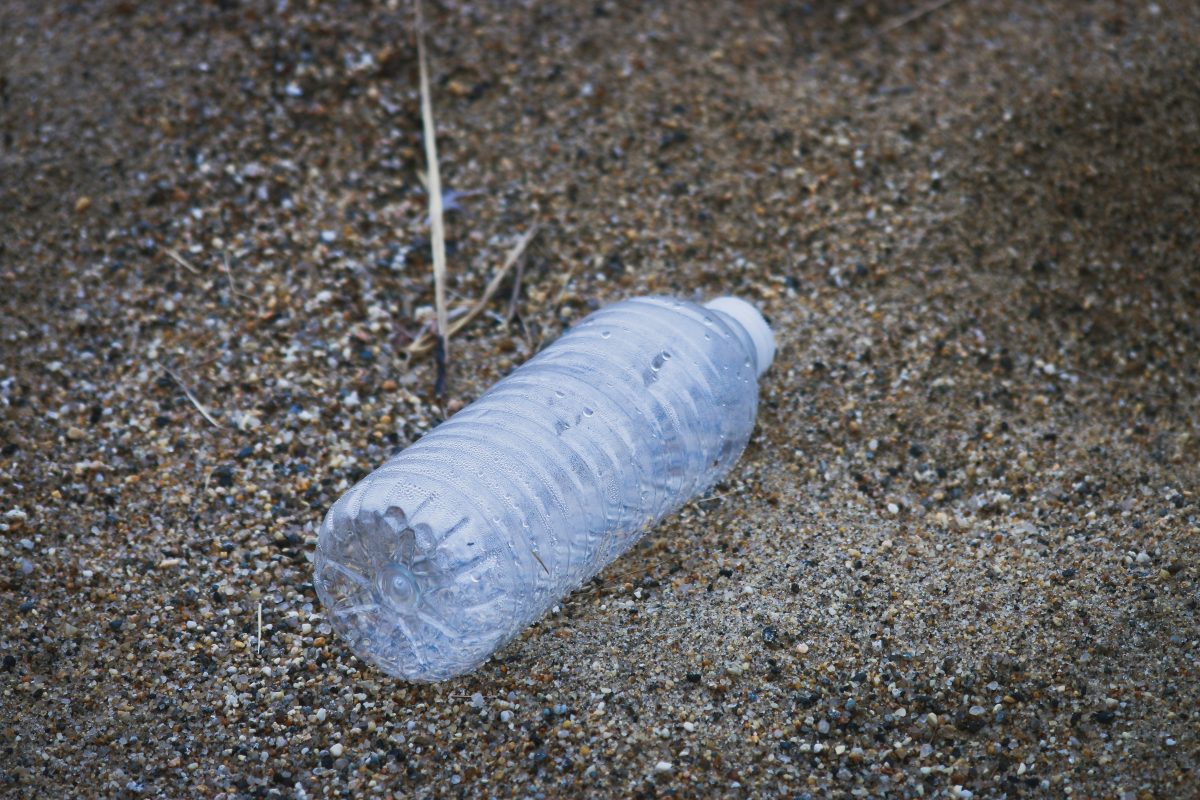 ©Brian Yurasits via Unsplash
It's a gesture that's repeated over and over again: you open a bottle of water, take a sip, close it again. An automatic, reassuring, almost neutral gesture. The water is transparent, odorless and tasteless. And yet, there could be much more in it than we imagine. Nothing visible. Something that goes unnoticed. Microplastics.
The idea that plastic is a distant problem is a hard one. We can imagine it on dirty beaches, in the oceans and in photos on social media networks. Then something happens that suddenly shortens the distance. Then, an event occurs that suddenly reduces the distances. A researcher, a tropical beach, fragments of bottles mixed in with the sand. The result is a simple, yet disturbing question: if plastic is everywhere, why isn't it also in the water we drink?
In recent years, hundreds of scientific studies have begun to examine the insides of single-use plastic water bottles. Not to find out whether they pollute the environment - we already know that - but to observe what they release. The result is far from neutral. Throughout their life cycle, bottles shed tiny particles. This happens during manufacture, transport, when they are opened, crushed, left in the sun in a car or on a balcony. It happens without a sound.
The difference with other forms of contamination is subtle, but significant. Here, there's no intermediate stage. No fish, no salt, no food chains to reconstitute. The water goes straight from the bottle to our bodies.
Microplastics in bottled water: a silent, accumulating presence
Not all microplastics are created equal. Some are large enough to pass through the digestive system and be eliminated without a trace. Others are so small that they can cross the intestinal barrier, enter the bloodstream and reach organs and tissues. This is where the question ceases to be abstract.
In laboratories and animal studies, these particles have been associated with persistent inflammation, hormonal imbalances and oxidative stress. Meanwhile, in real life, microplastics have already been detected in lungs, blood, placenta and even breast milk.
It's not a question of drinking the occasional bottle. The issue is habit. Slow, daily, almost banal accumulation. Those who drink mainly bottled water end up ingesting far more microplastics than those who drink mainly tap water. There isn't a precise moment when 'something happens'. Rather, it's a silent addition that progresses over time.
Exact figures are still a matter of debate, especially as measuring these particles is complex and costly. But the trend is clear. Bottled water is one of the most direct and constant routes by which plastic enters our bodies.
A little-discussed normality and an open question
In the meantime, many forms of plastic have come under the spotlight. Bags, straws, packaging... But not water bottles. They remain a constant, protected by an aura of safety and practicality. In some contexts, they're indispensable, no one disputes that. In others, they've simply become the default choice.
Perhaps this is the crux of the problem. A habit that we no longer question. The idea that 'if it's water, then it's harmless'. And yet, bottled water tells a more complex story, made up of invisible particles and continuous exposures that don't make a sound, but do exist. There's no need to dramatize. Instead, we should stop believing that what's invisible doesn't concern us.
Source : UEG
(©GreenMe.it 2026/Managing editor : Selma Keshkire - The Press Junction/Picture : Brian Yurasits via Unsplash)