
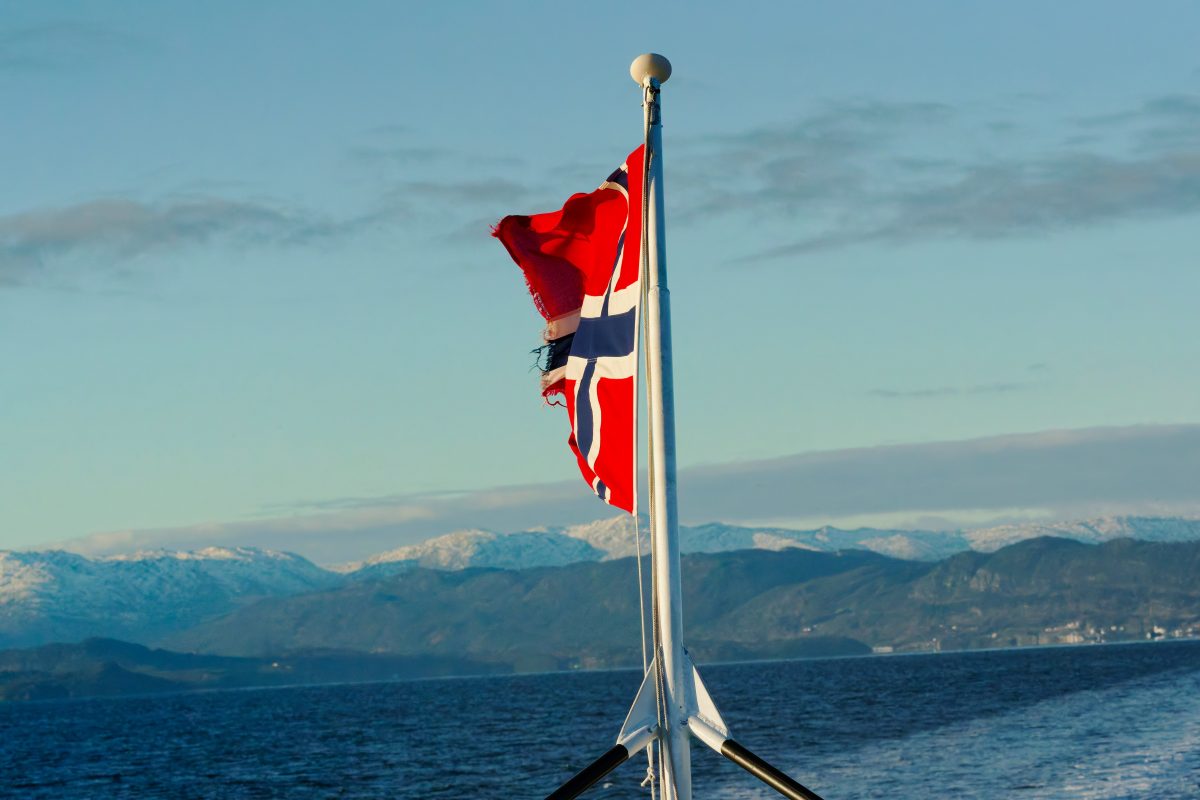
 ©Mario Dominguez via Unsplash
The deep sea possesses an almost cruel gift: it retains what men prefer to forget for a long time. It also does this with shipwrecks, metal and the military memory of the Cold War. It does the same with the Komsomolets, the Soviet nuclear submarine that sank in 1989 and remained there, 1,680 meters down, in the total darkness of the Norwegian Sea.
Almost thirty-seven years later, a new study confirms that this wreck is still releasing radioactive material from its reactor. The picture, however, calls for cool-headedness and precision, as reality remains more complex than a headline would suggest.
The K-278 Komsomolets sank on April 7, 1989 after a fire on board. With it went the nuclear reactor and two torpedoes with nuclear warheads. There were 69 men on board; 27 survived, while 42 crew members lost their lives, between the accident itself and the icy cold waters that followed. Since then, the wreck has rested at a depth that crushes metal, slows gestures and stretches time until it becomes a silent menace, one that makes no noise on the surface but continues to work in the depths.
The site has been monitored for decades, and the real qualitative leap came with the new-generation remotely operated vehicles. When the Norwegian ROV Ægir 6000 descended around the wreck, the work was not limited to capturing spectacular images of the seabed. Researchers were looking for precise signatures: caesium 137, strontium 90, all traces useful for understanding whether the submarine was continuing to release radionuclides into the sea. The answer came with almost brutal clarity: yes, there are still leaks.
ROV images showed intermittent emissions, like small puffs escaping from a ventilation duct. Sampling these plumes, the researchers measured peak caesium-137 concentrations up to 800,000 times higher than normal Norwegian Sea levels, and strontium-90 concentrations 400,000 times higher than local background. Added to this are high levels of plutonium and uranium isotopes which, through atomic ratios, indicate that the reactor's nuclear fuel is undergoing corrosion. Herein lies the crux of the matter: the wreckage is still leaking, and it's leaking in spurts, not in a steady, linear stream.
Depth dilutes the damage, but time continues to work its magic on the hull.
It's precisely here that the story changes pace. The word 'radiation' immediately conjures up an apocalyptic scenario, but the seabed works differently. At this depth, radioactive material undergoes extremely rapid dilution in the surrounding water. Just a few meters from the hull, levels drop drastically, and data collected so far show little evidence of any significant accumulation in the submarine's immediate environment. Norwegian monitoring in previous years had already concluded that the documented leaks didn't represent a risk to people or marine life; the new results also fall within a framework of high dilution. Even the marine life observed on the wreck, from the organisms attached to the structure to the corals cited in the popular accounts linked to the study, does not yet reflect any image of clear biological collapse.
Today, paradoxically, the most sensitive point seems to lie less in the reactor than in the bow, where the two nuclear torpedoes are located. In the 1990s, the Russian authorities, fearing contact with seawater, intervened with a decision that, with hindsight, retains as much political as technical significance: torpedo tubes sealed with titanium plugs, openings covered with plates, corrective measures implemented at a time when Moscow was also seeking to be more transparent after the historic lesson of Chernobyl. Data from 2026 confirms that these seals are still holding, and around the damaged forward section, researchers have found no trace of plutonium from the torpedo warheads. In this story of scrap metal, black water and toxic memory, at least one indisputable fact remains: this intervention averted a far worse scenario.
Svetlana Savranskaya of George Washington University's National Security Archive has interpreted this phase as a direct reflection of the lessons learned after Chernobyl: less secrecy, more international responsibility. It's one of those rare cracks in the monolithic narrative of the Cold War where, for once, cooperation manages to prevail before disaster strikes. And yet, this almost civilized note prevents any let-up. The wreck is still there, the titanium resists, the salt insists, the sea works with infinite patience. In the long run, the sea always wins.
Corrosion remains the real enemy
The authors of the study state with almost brutal clarity: reactor discharges will continue, and further investigations are needed to understand the mechanism of these impulses, the corrosion processes at work inside the reactor and the effects on the environment. corrosion processes at work inside the reactor and their future consequences for the nuclear materials remaining on board. In other words, the Komsomolets continues to 'breathe' isotopes in the dark, and no one is yet able to fully explain why this leak is behaving intermittently. Internal pressure, wreck dynamics, deep currents, microcracks and combinations of factors: the sea delivers clues, not sentences.
From time to time, the idea of bringing the submarine to the surface resurfaces. But just imagine the operation, and the scale of the nightmare becomes clear: thousands of tons of corroded nuclear material, a mile of water above, a structure already scarred by time and a single failed maneuver capable of transforming a localized leak on the seabed into a much wider contamination in the water column and on the surface. Previous analyses of a possible salvage operation had already warned of the radiological risks involved. That's why the most sensible strategy is also the most frustrating: monitor, take samples, return to the site, leave the sensors on and put aside the muscular fantasies of "we're bringing everything back up".
In the end, the Komsomolets remains a gaping wound at the bottom of the sea, inflicted by human arrogance. We built a machine capable of going where the human body gives way, carrying considerable power and continuing to do damage even after death. Then we discovered that actually dismantling this legacy requires know-how that we're still pursuing. For the moment, the Norwegian Sea is absorbing, diluting and absorbing. The real problem is in the timing, because while the seabed preserves our mistakes far better than the surface, sooner or later it always ends up footing the bill.
Source : PNAS
(©GreenMe.it 2026/Managing editor: Selma Keshkire - The Press Junction/Picture: Mario Dominguez via Unsplash)