
Science
Weird & strange
Electric hand dryers bad for children? A 9-year-old girl's astonishing discovery
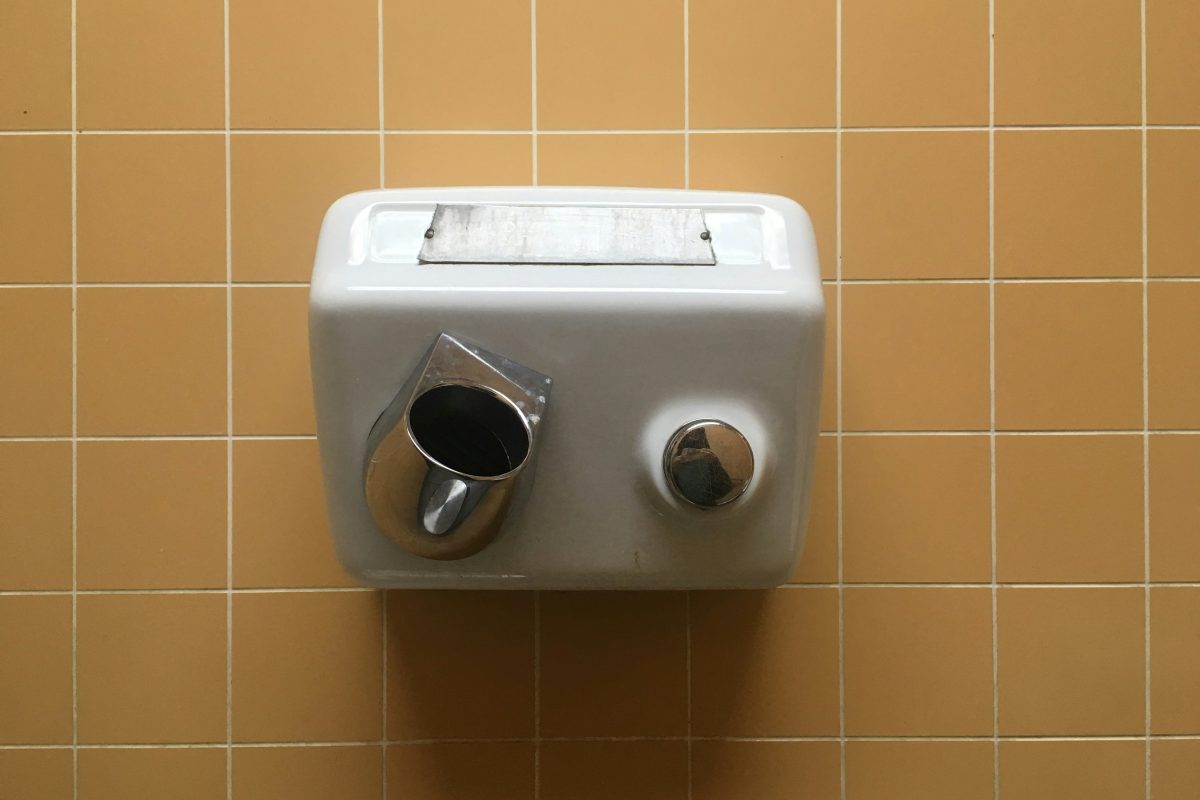 ©K Eareast via Unsplash
In the toilets of shopping malls, airports and restaurants, the same scene repeats itself over and over again: a child approaches the sink, washes its hands, looks at the electric (air) hand dryer and freezes. Hands over ears, shoulders up..., eyes closed, waiting for it to stop. While many adults smile, thinking it's an exaggeration, this grimace reflects a very real phenomenon.
The story comes to us from Canada and features Nora Keegan, who was only 9 years old when she began to ask herself a very specific question: are electric hand dryers bad for children's ears? A few years later, her research was published in the scientific journal Paediatrics & Child Health.
When discomfort turns into scientific discovery
Nora lives in Calgary. It all started with a simple sensation. After using the hand dryer, she felt her ears 'burn'. A brief but intense pain, difficult to explain. In the public toilets, she observed other children covering their ears in exactly the same way.
She wanted to understand, and asked how companies measure the noise of their equipment. Unfortunately, all she found were vague statements, so she decided to carry out the measurements herself. For over a year, she visited public family washrooms in her town. For each air dryer, she took 20 measurements. She meticulously collected the data, accompanied by her father, who turned these outings into little scientific missions.
The results highlighted a very clear situation: many devices exceeded 100 dBA. In Canada, this threshold represents the maximum permissible limit for toys. At 100 dBA, prolonged exposure can present a risk to hearing after around 14 minutes. However, the height at which hand dryers are installed in public places often coincides with that of children's ears. So the sound hits them head-on, loud and powerful, without warning.
Listening to children makes all the difference
As mentioned above, the study was accepted and published in 2019 by Paediatrics & Child Health for its clarity and originality. Specialists recognized the value of a young researcher's perspective on a subject that has yet to be fully explored.
Lauren Durinka, pediatric audiologist at Nationwide Children's Hospital, highlighted a crucial point: corporate testing takes place in controlled environments, whereas public toilets have very different acoustics, with their walls amplifying the sound. The most sensitive issue concerns hearing loss in children. Repeated exposure to intense sound alters hearing in the long term. Children already live in an environment saturated with sound stimuli. Any additional source counts.
This story is memorable for more than just numbers. It shows how often children's complaints are reduced to mere whims. After four years' work, Nora confided that seeing her study published was incredible, especially when you consider that she had started it when she was just a child: today, she dreams of becoming a scientist. (...)
Source : Paediatrics & Child Health
(©GreenMe.it 2026/Managing editor: Julie Morgan - The Press Junction/Picture: K Eareast via Unsplash)