
 ©Unsplash
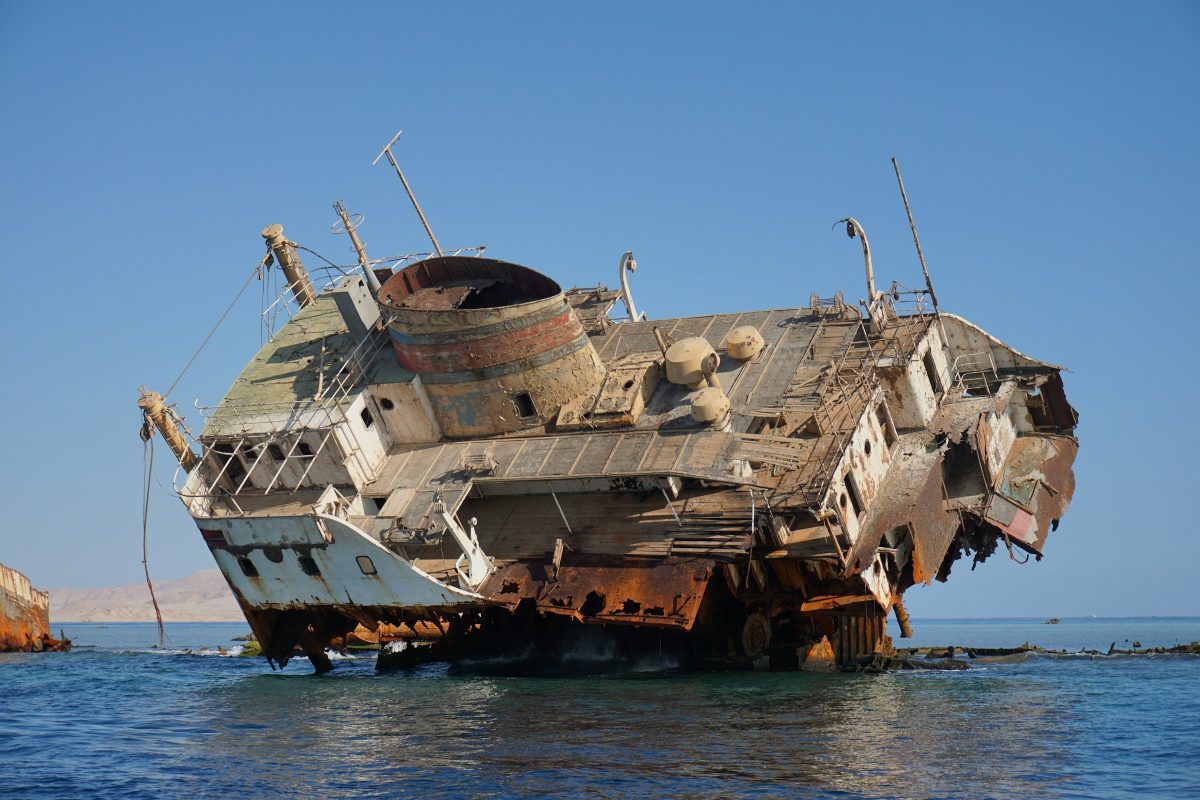
Dozens of merchant ships sunk in the Mediterranean between the late 1970s and early 2000s could contain toxic and radioactive waste.
Most of these shipwrecks, concentrated along the Italian coast in the 1980s and 1990s, remain shrouded in mystery. Europe is being asked to carry out new investigations on the seabed and to be more transparent about the illegal trafficking that still threatens the sea.
The Italian investigations of the 1990s, which were also launched thanks to reports from the environmental association Legambiente, have helped to identify certain leads, but too many questions remain unanswered. Behind each wreck lie environmental safety issues, health risks and legal responsibilities. These suspicious shipwrecks have involved strategic routes and international ports, pointing to the existence of a criminal network responsible for disposing of toxic and even radioactive waste without leaving a trace.
An emblematic figure in these investigations is Commander Natale De Grazia, who died in 1995 while investigating these 'waste ships' on behalf of the Reggio Calabria public prosecutor's office. His death, never fully elucidated, became a warning of the risks incurred by those who try to shed light on opaque and potentially criminal international trafficking. Over the years, Legambiente has continued to raise awareness, reminding people of the importance of not leaving this case unsolved.
For the first time, the case was brought before the European Parliament at the event 'Ships of Shame and Poison Ships – The role of the European Union in investigating hazardous and radioactive waste in the Mediterranean', organized by Sandro Ruotolo MEP in collaboration with Legambiente. Representatives from the scientific world, institutions and international police forces took part. The aim was to show that these shipwrecks are not an isolated problem, but a transnational issue affecting trade routes, European ports and intermediaries between Italy, Spain, Bulgaria and the African coast.
During the meeting, updated information was presented on the mapping of shipwrecks and on technologies for monitoring the seabed, from geo-radarisation to advanced chemical analysis. The participants stressed the urgent need to combine scientific expertise, judicial cooperation and democratic transparency in order to turn reports, complaints and studies into concrete action.
Legambiente has submitted six proposals to the European Commission and the European Parliament. The first is to gather all available documentation on suspicious shipwrecks, including investigations by the Italian parliamentary committee and the United Nations Environment Programme. Secondly, to launch targeted scientific and environmental programmes on the seabed harbouring suspect wrecks and to make use of cutting-edge surveillance technologies. Finally, we need to work with EURATOM to look more closely at the question of any radioactive waste produced or in transit between the 1980s and 1990s, mobilise Europol and Interpol to reconstruct the criminal networks trafficking toxic and radioactive waste, and develop an action plan to prevent the proliferation of radioactive waste.and radioactive waste, and to launch an exploratory European investigation into'waste ships' and toxic and radioactive waste, including the coastal and African countries affected by this trafficking.
According to Enrico Fontana of Legambiente,"we can no longer accept further silence: truth and justice are a duty to those who, like De Grazia, have devoted their lives to the public interest".
In the depths of the Mediterranean, currents, erosion and human activity can move or release dangerous materials that have remained submerged for decades. Establishing what these wrecks contain today is not just an act of remembrance, but a practical necessity for environmental protection and accident prevention.
The "waste ships" affair is also a test of transparency and responsibility: confronting the past is essential to give credibility to current waste policies and to protect the future of the sea. The Mediterranean has a right to know what lies beneath its surface and to see the truth finally come to light.
(©GreenMe.it 2026 / Managing Editor: Selma Keshkire - The Press Junction / Picture: ©Unsplash)