
 ©Unsplash
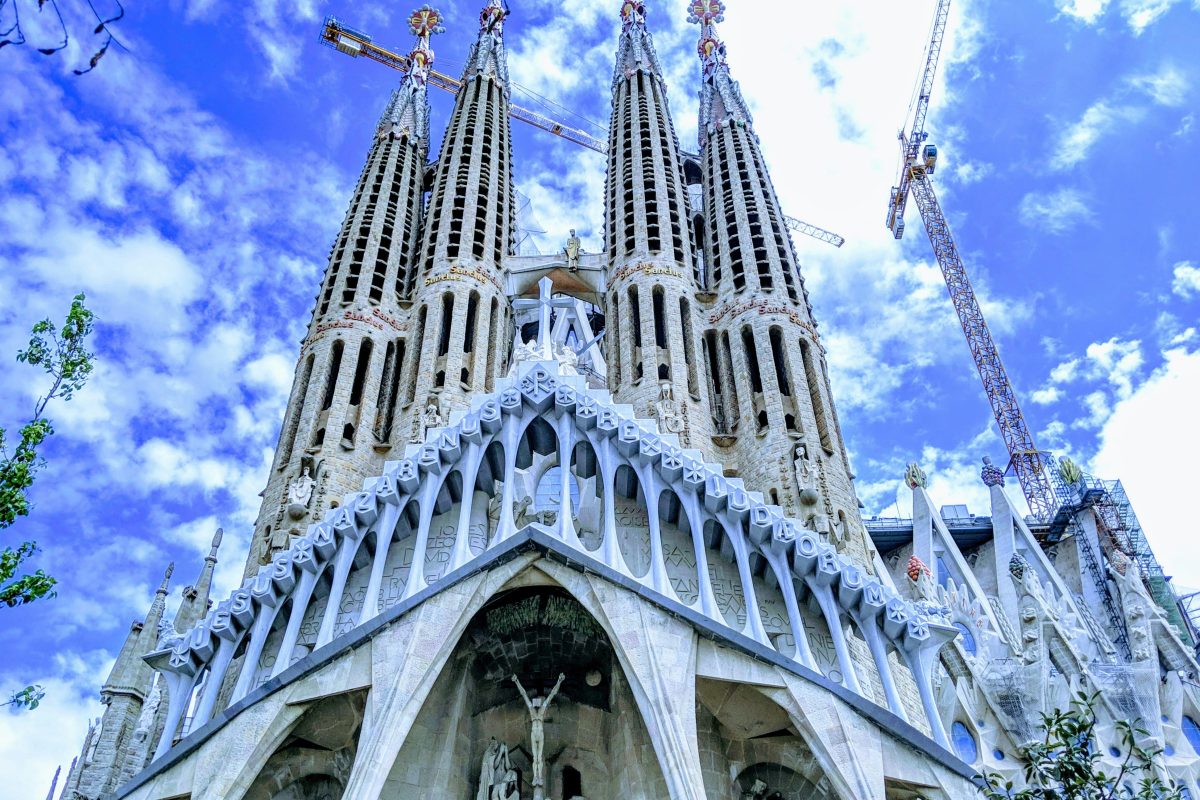
With the installation of the upper arm of the cross over the tower of Jesus Christ, the Sagrada Familia has written a new page in architectural history. The Barcelona basilica has reached a height of 172.5 meters, relegating the bell tower of Ulm Cathedral in Germany, which at 161.5 meters held the world record for a religious building, at second place.
Antoni Gaudí did not choose this figure at random. The architect was convinced that no human creation should exceed the limits imposed by nature. He therefore designed the tower to remain slightly below Montjuïc Hill, the city's highest natural point at around 173 meters. A gap of just fifty centimetres, almost a gesture of humility towards creation.
The cross that caps the structure is 17 metres high and 13.5 metres wide. Its surface is covered in white glazed ceramic and glass, designed to capture and reflect sunlight during the day, while at night an internal lighting system transforms it into a point of light visible from afar, like a lighthouse suspended in the Barcelona sky. The horizontal arms, installed between the end of 2025 and the first days of 2026, each weigh around 12.8 tonnes and follow a double-twist geometry: their cross-section changes from a square shape towards the outside to an octagonal shape at the point of connection with the central core.
Italian artist Andrea Mastrovito's Agnus Dei has been installed inside the upper arm. The tower is open to visitors: a panoramic glass elevator takes you up to 140 meters, flanked by a spiral staircase for those wishing to get closer to the base of the great cross.
The past century has also put the construction site to the test. In 2020, the pandemic brought work to a halt, affecting the most sensitive point of all: financing. The Sagrada Família receives no public funding and lives entirely off visitors' admission tickets. With tourism at a standstill, the accounts froze along with the cranes. Recovery came gradually, but solidly: in 2024, almost 4.9 million people passed through the basilica's doors, with around one in seven visitors coming from the United States.
The tower's completion is no coincidence either: 2026 marks the centenary of Antoni Gaudí's death, and the foundation wanted this milestone to coincide with the commemoration. With the completion of the tower, construction of the six central towers is also nearing completion. What remains to be completed is the Glory façade, the last major architectural element of the project, around which open urban planning debates still revolve, and which will take several years to complete.
(©GreenMe.it 2026 / Managing Editor : Julie Morgan- The Press Junction / Picture : ©Unsplash)