
 ©Unsplash
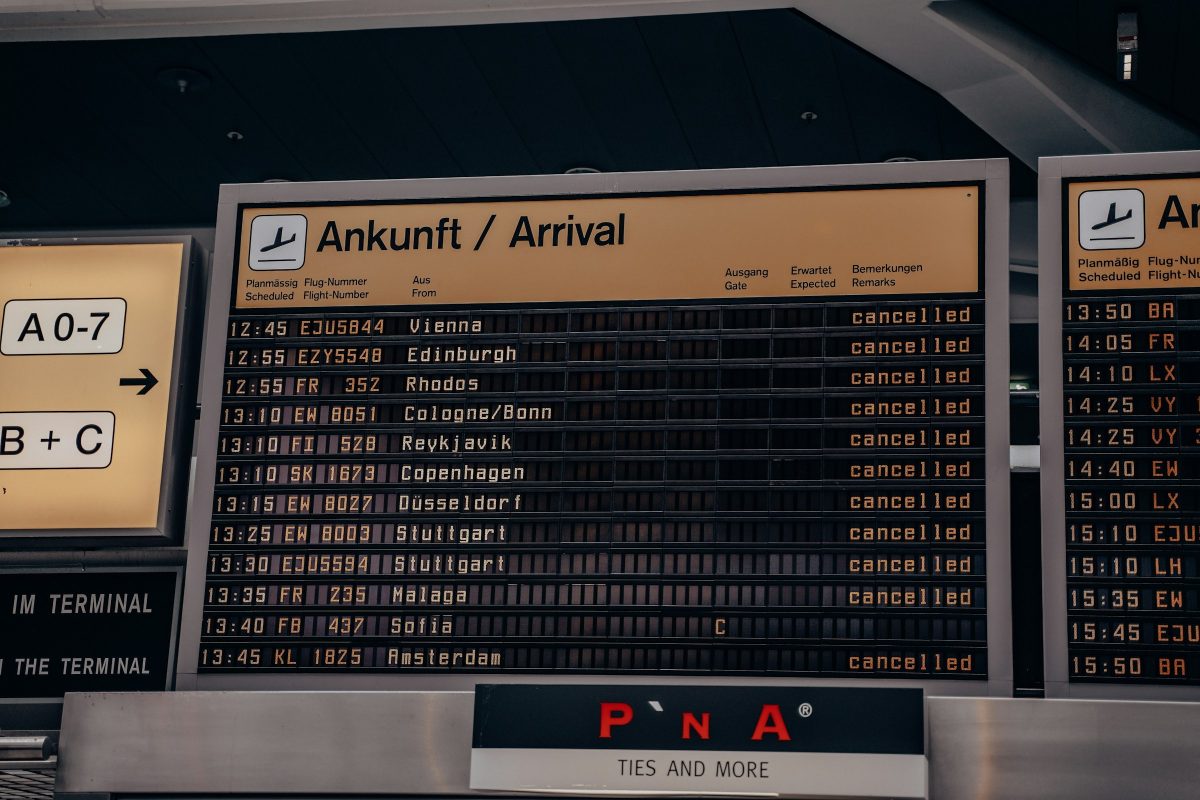
More than five thousand flights were canceled in just over twenty-four hours, thousands of planes rerouted, hubs wiped out. After the United States and Israel's attacks on Iran and Tehran's response, global air traffic is experiencing the biggest disruption since the COVID-19 pandemic. Not only the Middle East is affected: the shock wave is reaching Europe, Asia-Pacific and North America, turning intercontinental routes into a maze with no way out.
The simultaneous closure of airspace over Iran, Iraq, Israel, Syria, Kuwait and the United Arab Emirates has cut key east-west routes. The 'highways in the sky' over the Gulf, crucial for connecting Europe and Asia, have suddenly disappeared from radar screens.
Hubs in the Gulf crippled
The hardest hit are at the Dubai and Doha hubs, which are among the busiest in the world for long-haul flights. Nearly 1,800 connections were cancelled on Saturday, on Sunday the number of cancellations in the Middle East reached more than 3,500. Across the world, more than 19,000 flights were delayed.
Airlines such as Emirates, Qatar Airways and Etihad had dozens of widebody aircraft in the air as one after another country closed its airspace. Some planes turned around after 10 to 15 hours of flying; others landed at alternative, already crowded European airports. Crowded parking lots, sharply calculated fuel reserves, crews exceeding their duty hours: operational control has turned into a race against time.
Domino effect for airlines worldwide
The crisis is sparing no one. Lufthansa (along with Ita Airways and Swiss), Air France, British Airways, Turkish Airlines, Delta Air Lines, American Airlines, as well as Asian carriers such as Singapore Airlines and Air India have suspended or drastically reduced their connections to Tel Aviv, Dubai, Doha and other cities in the region.
For passengers, this means missed connections, forced overnight stays and even returning to the departure point following hours of traveling in the air. Some 90,000 people travel daily between Europe, North and South America, Africa and Asia via hubs in the Gulf: a network that now operates with difficulty.
Advice to avoid Middle Eastern airspace
The European Aviation Safety Agency has recommended avoiding all airspace over the Middle East because of the risk of civilian flights becoming unintentionally involved in the conflict. In some cases, pilots reported observing missile launches in the distance. Military tensions of this magnitude make any planning unpredictable. Airlines announce a gradual resumption, but recovery becomes complicated: aircraft and crews are scattered across multiple continents, rotations completely disrupted. In the short term, no normal schedule returns.
(©GreenMe.it 2026 / Managing Editor: Selma Keshkire - The Press Junction / Photo: ©Unsplash)