
Politics
Economy
Environment
Glacier law progresses in Argentina: Milei government paves the way for mining in protected areas
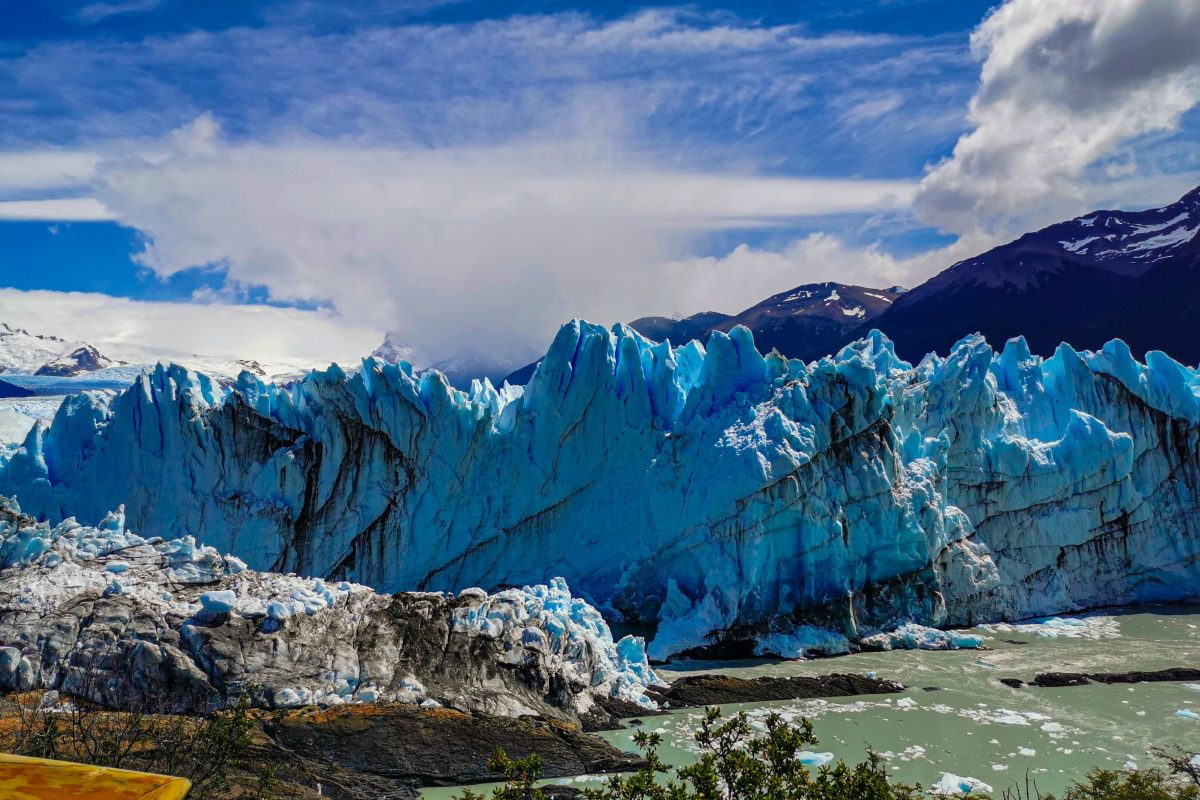 ©Florian Delée via Unsplash
Argentina has given the green light to a reform of its glacier law, a measure advocated by ultraliberal President Javier Milei. In concrete terms, this law authorizes mining activity in ecologically sensitive areas such as glaciers and permafrost.
With 137 votes in favor, 111 against and three abstentions, the Chamber of Deputies approved the amendment to the law already passed by the Senate last February. This reform paves the way for the extraction of strategic metals such as copper, lithium and silver in the most fragile areas of the Andes, where glaciers, essential to the water supply, are increasingly threatened by climate change and industrial activities.
Unsurprisingly, this process has provoked strong reactions from environmentalists, who denounce the risk of endangering the country's precious water resources. This was followed by a series of massive demonstrations outside the Buenos Aires parliament building, with "Water is worth more than gold" and "A destroyed glacier cannot be repaired" among the main slogans. The protests were marked, however, by clashes with the police, who arrested several Greenpeace activists.
For his part, Javier Milei continues to justify the reform as a necessary step to attract investment in the mining sector and strengthen the economy, particularly in a country rich in lithium, a fundamental element for the technology industry and renewable energies. Nor did he hesitate to respond to environmentalists, accusing them of preferring to see Argentina "remain in misery" rather than allow the exploitation of its natural resources.
Be that as it may, the amendment to the law on glaciers has been greeted with concern by experts, who see in this reform a threat to the preservation of water resources, on which 70% of Argentines depend. The new text gives the various provinces greater autonomy in the management of protected areas, and enables them to determine which areas can be exploited for economic and mining purposes.
Enrique Viale, President ofArgentina's Association of Environmental Lawyers, pointed out that this amendment threatens the country's water security by jeopardizing essential resources for future generations. Not only are the glaciers, whose surface area has already shrunk by 17% over the last ten years as a result of climate change, now further threatened by the expansion of mining activities. It's not just the mining itself that is worrying, but also the long-term consequences for biodiversity and the landscape, already severely damaged by pollution and the increasing scarcity of water.
Despite strong opposition, the law has received broad support from governors of northern provinces with a particularly developed mining sector, such as Mendoza, San Juan, Catamarca and Salta, who see the extractive industry as a means of stimulating economic development.
Source : The Guardian
(©GreenMe.it 2026/Managing editor : Selma Keshkire - The Press Junction/Picture : Florian Delée via Unsplash)