
 © picture alliance / Anadolu | Stefanos Rapanis
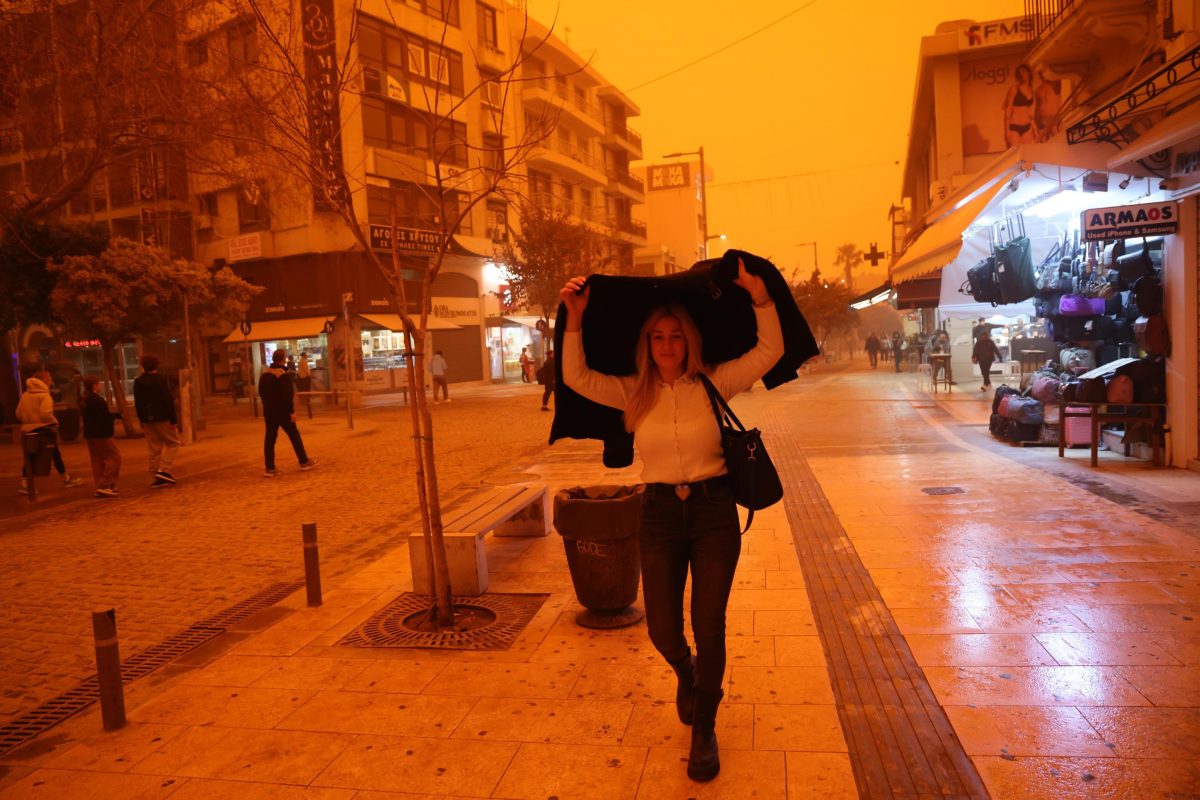
A surreal dawn assailed the island of Crete: the sky turned bright orange and became heavy with dust.
A massive Sahara sandstorm, driven by powerful southerly winds, swept across the Mediterranean Sea, enveloping cities, beaches and mountains in a dense haze. The landscape, which seemed changed overnight, was more reminiscent of desert landscapes than one of Greece's most popular vacation destinations. The images that circulated showed virtually deserted streets, buildings under a reddish veil and an unreal atmosphere that attracted photographers and the curious alike, but at the same time urged caution.
Poor visibility and diverted flights at the airport
The most immediate effects were felt in traffic. At Nikos Kazantzakis International Airport, visibility dropped to about 600 meters, versus the 10 kilometers considered normal. The conditions forced authorities to divert at least three aircraft flying directly to the island to other airports, including Athens, Corfu and Chania.
Air traffic experienced delays and tightened controls, while passengers had to wait for updates in an atmosphere of uncertainty. The dust cloud, propelled by persistent currents, also made meteorological monitoring difficult. This added to the difficulty of handling airport operations.
Experts' warning: stay indoors!
Health authorities and meteorologists urged residents to limit outdoor activities. The high concentration of particulate matter in the air can cause eye and respiratory irritations, with greater risks for the elderly and vulnerable people. In many areas, people could be seen wearing masks and improvised protective equipment. Much of the population chose to stay indoors. The air, weighted down by the floating sand, also restricted visibility on roads, slowed traffic and put a thin orange coating on cars and sidewalks.
A spectacular but increasingly common phenomenon
Intrusions of Sahara dust into the Mediterranean aren't rare, but events of this intensity are attracting increasing attention. The particles that blow up from the African deserts can rise up to kilometers in altitude and travel great distances, even reaching southern Europe.
According to several researchers, climate change and desertification could cause more frequent and intense episodes as wind patterns change and dust transport increases. Despite the impressive sight, the phenomenon is a signal of the changes underway in the global climate system.
(©GreenMe.it 2026 / Managing Editor: Julie Morgan - The Press Junction /Picture: picture alliance / Anadolu | Stefanos Rapanis)