
 ©Julian Hochgesang via Unsplash
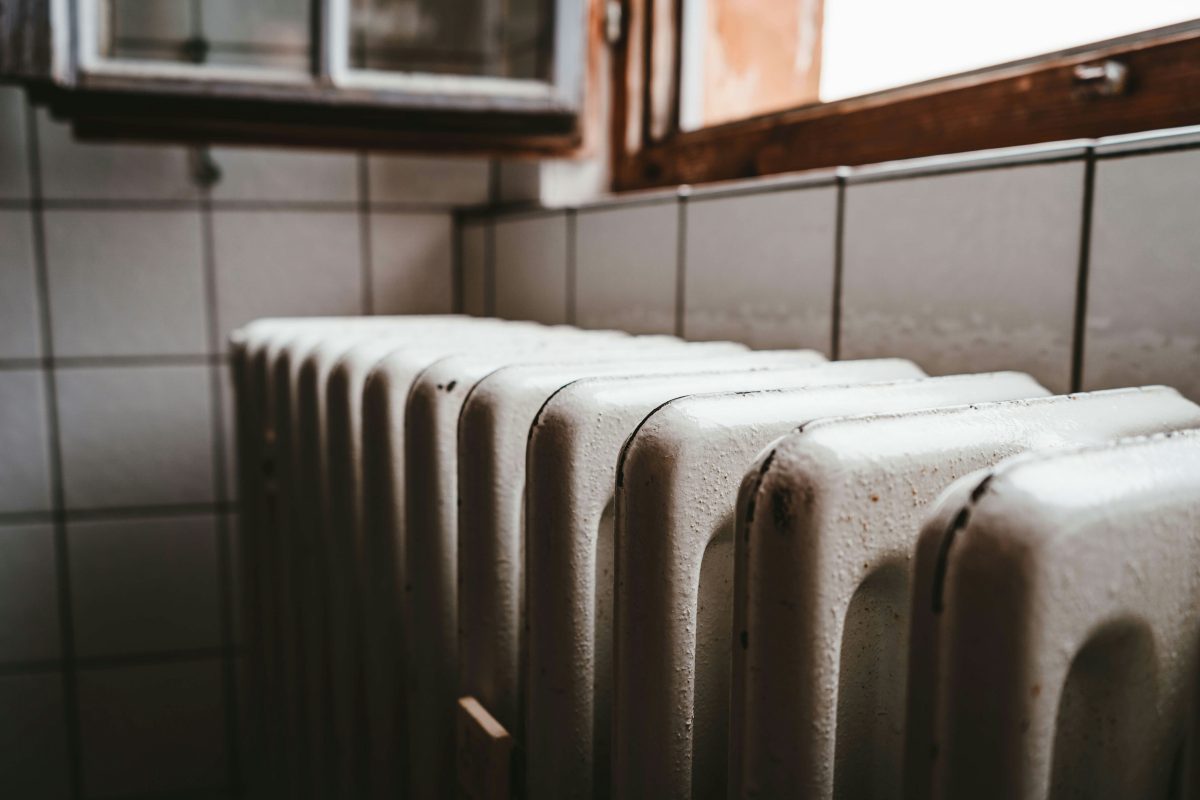
The famous trick with a sheet of aluminum foil behind the radiator has been around for generations, passed around in apartment buildings as a solution, along with the phone number of the best plumber in town. But does it really work? Or are we dealing with one of those household myths that only hold up thanks to the power of tradition?
Answers come from technical studies, real measurements and analysis that finally help put superstition behind us and bring order to what really heats your home and what only fuels the imagination.
Why the aluminum foil trick can work
The idea is simple: place a reflective material behind the radiator to prevent heat from being absorbed into the wall, especially if it's an exterior wall. It's not magic, but elementary physics: aluminum doesn't 'make' heat, it just prevents the wall from absorbing some of the heat given off by the radiator.
Studies show that this trick didn't originate out of nowhere. Some studies - such as those published on IEEE Xplore - show that a reflective panel, in poorly insulated walls, can significantly reduce heat loss to the outside. In the worst cases, energy savings even run as high as around 9%.
Another, older analysis, but essential to understanding heat dynamics, shows a reduction in heat loss through the wall of about 30% when placing a metal plate behind the radiator. This is a significant change, but one that solely affects the portion of heat directed toward the wall, not the entire heating system of the room.
And therein lies exactly the crux: radiators heat primarily via convection, i.e. via the rising warm air, and not via radiation. The reflective foil intervenes only on heat radiation, limiting its contribution to the overall efficiency of the system but stands as a small nudge, albeit often useful, especially in old houses or with cold exterior walls. But without miraculous effects.
The problem arises when you start improvising. Ordinary aluminum foil from the kitchen doesn't have the same properties as professional heat-reflective panels, while it also creases, oxidizes, comes off and therefore quickly loses its effect. Moreover, if the wall is already insulated or the radiator is hanging on an interior wall, the effect is almost undetectable.
What to expect?
Experts agree: the trick with aluminum foil is useful when a house still has unresolved heat losses. In buildings erected before more stringent energy requirements, where exterior walls function more as cooling fins than protection, a reflective panel can send some of the heat that would otherwise be lost back into the room. In practice, there's often talk of an overall improvement of around 5-10%, a modest but real effect, especially given the minimal cost.
In modern situations, the trick loses power: well-insulated homes, interior walls or already optimized heating systems. In these cases, a reflective panel is little more than an invisible showpiece.
The psychological factor also comes into play: many people harbor high expectations of such a simple intervention and hope for a substantial reduction in energy bills. However, the studies bring us back to a less romantic but more reliable truth: this is a supportive measure, not a structural solution.
The real leap forward is made with interventions such as façade insulation, high-efficiency glazing and a properly regulated heating system. But as long as you're not ready for major investments yet, a heat-reflecting panel can be a small, smart gesture, especially if the budget is tight and winter is knocking hard on the windows.
(©IEEE Xplore via GreenMe.it 2026/Managing Editor: Julie Morgan - The Press Junction/Picture: ©picture alliance/dpa/dpa-POOL | Peter Kneffel)