
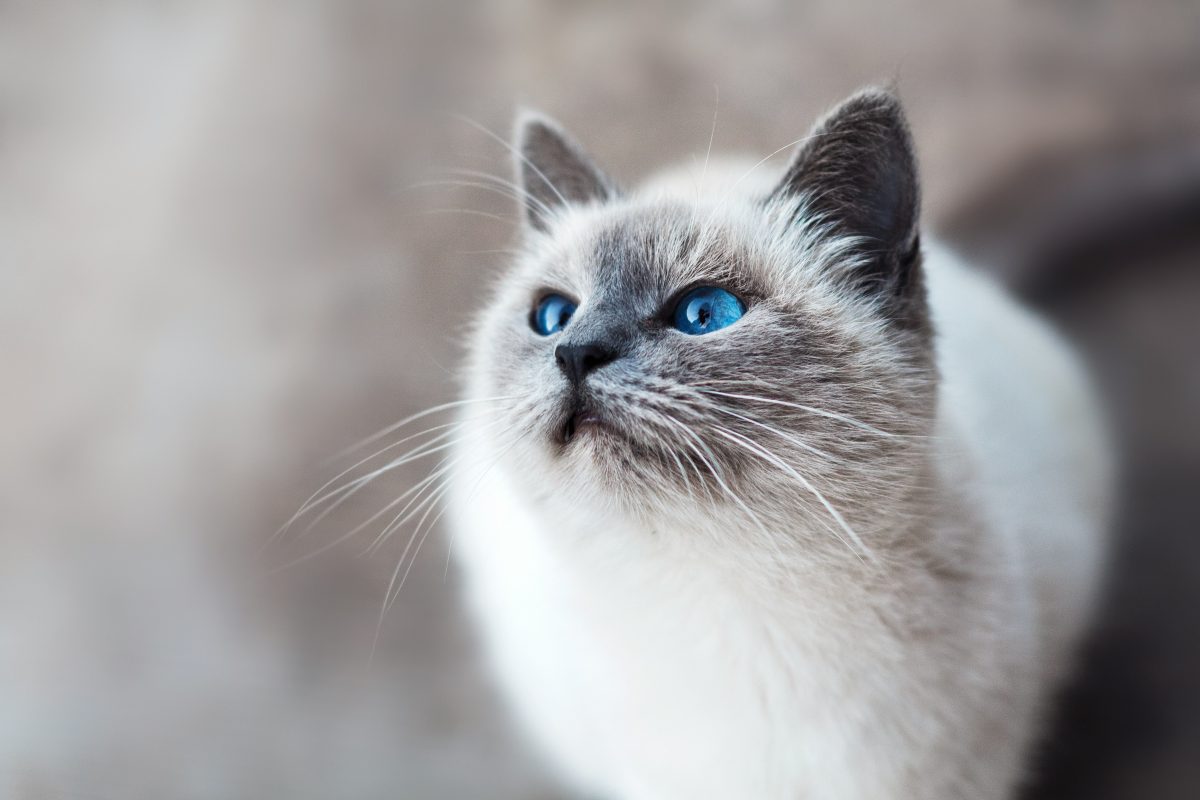
 ©Mikhail Vasilyev via Unsplash
A cat's purr fills the room in a way we all know too well. It's a low, persistent, almost hypnotic sound. We hear it while sitting on the couch, working at the computer, when our mind's elsewhere. And yet there's so much more to that vibration than we know.
A new study published by the Museum für Naturkunde Berlin in collaboration with the Università degli Studi di Napoli Federico II reveals something fascinating: the purr is stable, recognizable, personal. It's like a voice print. Meowing, on the other hand, changes sound depending on the situation, especially in cats that live with us.
A stable sound print
The researchers analyzed recordings from the museum's sound archive in Berlin using speech recognition tools originally developed to study the human voice. They compared domestic cats to wild species. They asked computers to associate a sound with the cat that produced it.
The purr was found to exhibit remarkable consistency. Each cat had its own sound structure, which remained the same over time. As though it was a kind of signature. A personal rhythm that remained the same even as everything around it changed.
Meowing told a different story. Its intensity, pitch and duration changed. It adapted to context: hunger, need for attention, irritation, excitement. Domestic cats developed a much wider range of meows than their wild relatives. Living with humans has made the voice a flexible instrument, able to adapt to our rhythms and habits.
The cat's purr, on the other hand, remains a much more intimate territory. It appears in moments of rest, during petting, in contact with a familiar person. It also occurs between mother and kittens during the first days of life. In that vibration lies identity and memory.
Domestication left the cat's purr unaffected
To understand how much influence evolution has had, the scientists compared domestic cats to five wild species: the African wild cat, the European wild cat, the jungle cat, the cheetah and the cougar. The results showed a clear difference. Domestic cats have a much more variable meow than their wild cousins. Living with humans favored cats that could better modulate their voices. Each household has different times, different habits, different responses. The cat learned to negotiate with sound.
The cat's purr followed a different path. It has remained coherent, deep and recognizable. It's a reliable social signal that helps distinguish individuals from one another in situations of close contact. It's an audible presence that forges bonds. When your cat curls up and purrs, he or she is saying something very concrete. The cat expresses well-being and, at the same time, self-identity. It's a simple but enormously powerful way of being present in the world.
(©Scientific Reports via GreenMe.it 2026/Managing Editor: Julie Morgan - The Press Junction/Picture: ©picture alliance/dpa/dpa-POOL | Peter Kneffel)