
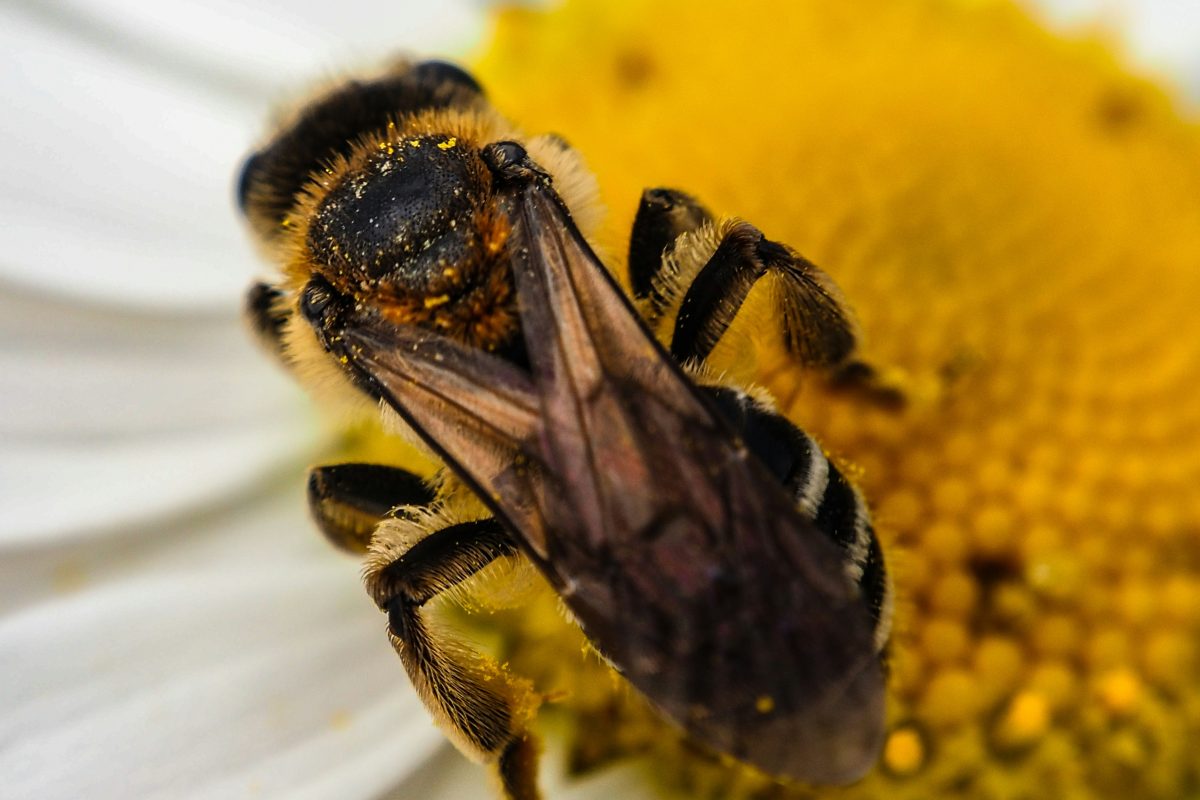
 ©Lidia Stawinska via Unsplash
Every year the same thing happens more or less imperceptibly. The cold weather arrives, we close our windows, turn on the heating and the house suddenly becomes quiet. No more mosquitoes disturbing our sleep, no more mosquitoes around the fruit bowl. And a comforting thought creeps up on us: 'finally, a little respite'.
The point is that insects don't really disappear in winter. They just change pace. It's like turning down the volume but not turning down the music.
They don't actually disappear
Many species go into a phase of deep deceleration called diapause, a kind of biological pause that allows them to survive the cold while using very little energy. Lone bees take refuge in the ground, butterflies hide among dry leaves, ladybugs crawl into crevices in walls. In this regard, nature is much better organized in this regard than we are.
And yet, in recent years, winter's stillness seems more and more present. Less vibration, less life. And it's not just a feeling.
When the silence lasts too long
In 2019, a much-cited study in the scientific community, written by Francisco Sánchez-Bayo and Kris A.G. Wyckhuys, put on paper a reality that is hard to ignore: nearly half of insect species worldwide are in decline.
This is not a study of winter in a strict sense, but it helps to understand why winter seems emptier to us today. If insect populations are already reduced to begin with, the period during which they abscond or slow down becomes even more apparent. It's not just seasonal dormancy, it's an accumulating vulnerability.
The causes are not mysterious and have nothing abstract: increasingly intensive fields, pesticides, expanding cities, breaking up habitats, seasons no longer following the calendar they once followed. All this weighs on us even when we don't see the insects, when they seem to be on a 'break'.
(©Biological Conservation via GreenMe.it 2026/Managing Editor: Julie Morgan - The Press Junction/Picture: ©Nick Karvounis via Unsplash)