
Environment
Topical
Expert reveals which oil is best for frying: olive oil, sunflower oil, peanut oil or corn oil
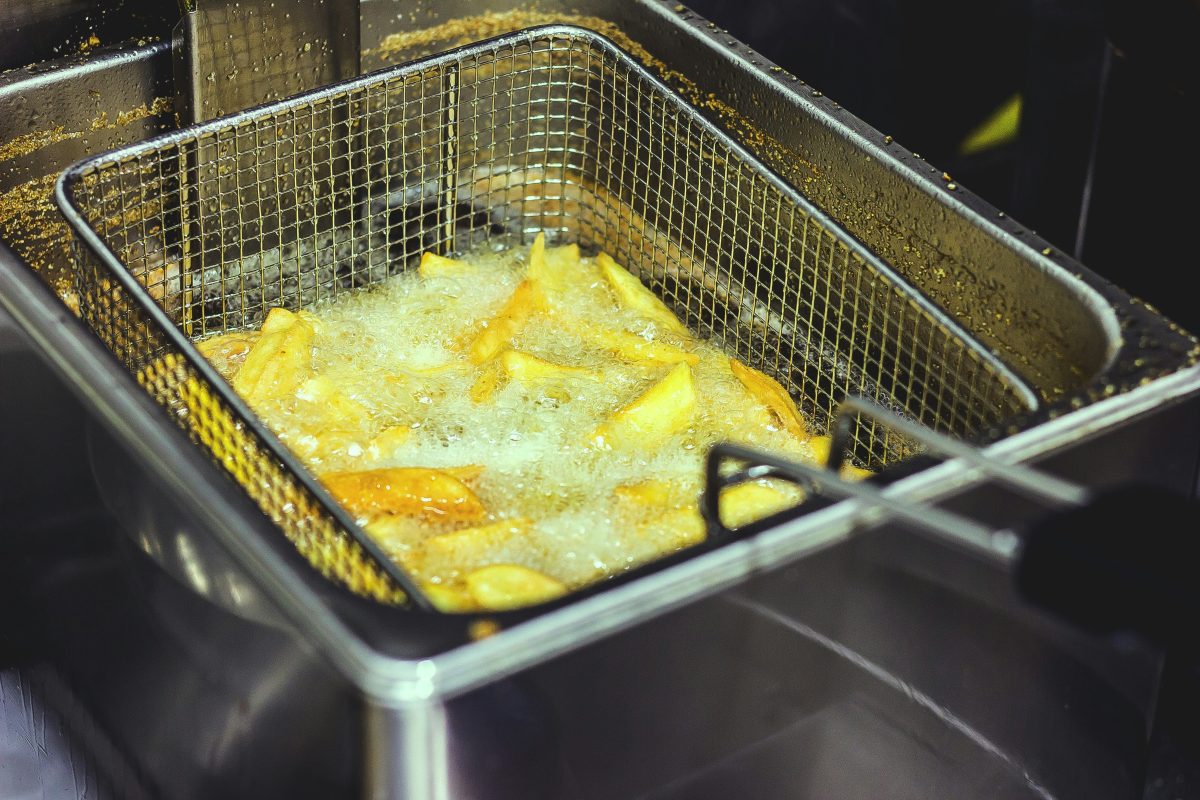 ©Wine Dharma via Unsplash
When it comes to deep frying, the choice of oil is often determined by habit or price. Yet, it's a decision that has concrete implications for the quality and safety of what we eat. Indeed, at high temperatures, an unstable oil produces oxidized compounds and irritating volatiles: a wrong choice is therefore not only a matter of taste, but also a matter of health.
Emanuela Bianchi, food technologist at Altroconsumo, clearly explains the criteria to follow: more important than the smoke point - which is often used as the only measure - is the composition of the oil in fatty acids. Oils rich in polyunsaturated fatty acids are chemically fragile and oxidize quickly when heated. In contrast, oils rich in monounsaturated fatty acids are more stable and can withstand the high temperatures typical of deep frying, typically between 160°C and 180°C.
Review of the properties of the most important oils
Corn oil
Corn oil is one of the least suitable oils for frying. Its composition is dominated by polyunsaturated fatty acids, which makes the oil very unstable when heated: it degrades rapidly, deteriorating both the quality of the fried product and the safety profile of the oil itself. It's more suitable to be used cold, as a dressing.
Sunflower oil
Traditional sunflower oil is one of the most commonly purchased oils, often precisely for frying. Yet, as Bianchi explains, it's rich in polyunsaturated fatty acids and tends to deteriorate quickly when heated, especially in a home setting where the temperature is not always constant. Its neutral taste makes it popular, but that's not a sufficient reason to consider it suitable for frying.
High-oleic sunflower oil, obtained from varieties selected to contain a much higher content of oleic acid, is a good option. In this case, its composition becomes similar to that of olive oil, with a significantly higher heat resistance than traditional sunflower oil. On the label, it can be identified by the label 'alto oleico' (high oleic): if this is on it, the oil can be considered a suitable alternative for frying.
Peanut oil
Peanut oil has been a regular choice for home fryers for years. Its composition - about 50% monounsaturated fatty acids, with a good fraction of saturated fats - provides decent resistance to high temperatures, even during prolonged deep frying. Its neutral taste does not alter the taste of food. It should, of course, be avoided in case of peanut allergy.
Extra virgin olive oil
Extra virgin olive oil is often considered too expensive or unsuitable for frying, but technically it's one of the best choices. It's rich in oleic acid - a monounsaturated fatty acid that is stable when heated - and contains natural antioxidants such as polyphenols, which actively slow down oxidation processes. This makes it more resistant to degradation than many refined oils, which, while having a high smoke point, lack this natural protection.
As Bianchi emphasizes, quality makes the difference: an extra virgin olive oil with low acidity and a good concentration of polyphenols provides the best performance. Its more delicate aromas diminish when heated, so using it for frying does not mean 'wasting' its most refined organoleptic properties.
The label 'for frying' is not a guarantee
One element the expert warns to watch out for is the text 'oil for frying' on some labels. This is not a technical certification: in general, it refers to a refined oil with a high smoke point, but no details are given about its fatty acid composition nor its actual oxidation stability.
For a more conscious choice, it's useful to check what type of oil is involved, whether sunflower oil is marked 'alto oleico' (high oleic), and whether antioxidants have been added.
Pay attention to the frying temperature
The frying temperature not only determines the outcome in the pan, but also safety. Above the smoke point, the oil degrades rapidly, forming irritants and oxidation products that affect both the quality and safety of the fried food. The signs are recognizable: visible smoke, a pungent odor and - in the case of oil that has been used several times at too high a temperature - a dark color, syrupy consistency and foaming. When these signs occur, the oil should be discarded.
The ideal temperature for the vast majority of fryers is between 160°C and 180°C, but not all foods behave the same way. Fish, because of its delicate structure, requires a temperature between 165°C and 175°C: at too low a temperature it absorbs a lot of oil and becomes limp, at too high a temperature the outside burns while the inside remains raw. Vegetables, which contain a lot of water, need higher heat - between 170°C and 180°C - so that the liquids evaporate quickly and crispness and color are preserved. Breaded products and batter dishes, on the other hand, need the highest temperatures, between 175°C and 185°C, in order to immediately form a crust that seals the inside: if the oil is too cold, the breadcrumbs will fill up and fall apart.
In all cases, the golden rule is to keep the temperature as stable as possible: sudden fluctuations deteriorate both the quality of the oil and that of the fried food.
Reusing oil
Each heating cycle accelerates the oxidation and degradation processes, gradually making the oil less stable and increasing the content of unwanted by-products. For home use, Bianchi recommends not reusing oil, or at most a limited number of times and only for similar preparations, and even then provided the oil shows no obvious signs of deterioration.
There is no set number of times that counts as safe: it depends on the type of oil, the temperatures reached, the duration of frying and the foods being fried. With each use, the residue left behind accelerates degradation even further: therefore, if you decide to reuse oil, it's essential to filter it carefully before storing it. It should then be stored in a sealed, opaque and clean container, in a cool place and out of light. The most reliable assessment remains that with the senses: the appearance, color and smell of the oil tell more than any counter of the number of times it has been used.
(©Altroconsumo via GreenMe 2026/Managing Editor: Julie Morgan - The Press Junction/Picture: ©picture alliance/dpa/dpa-POOL | Peter Kneffel)