
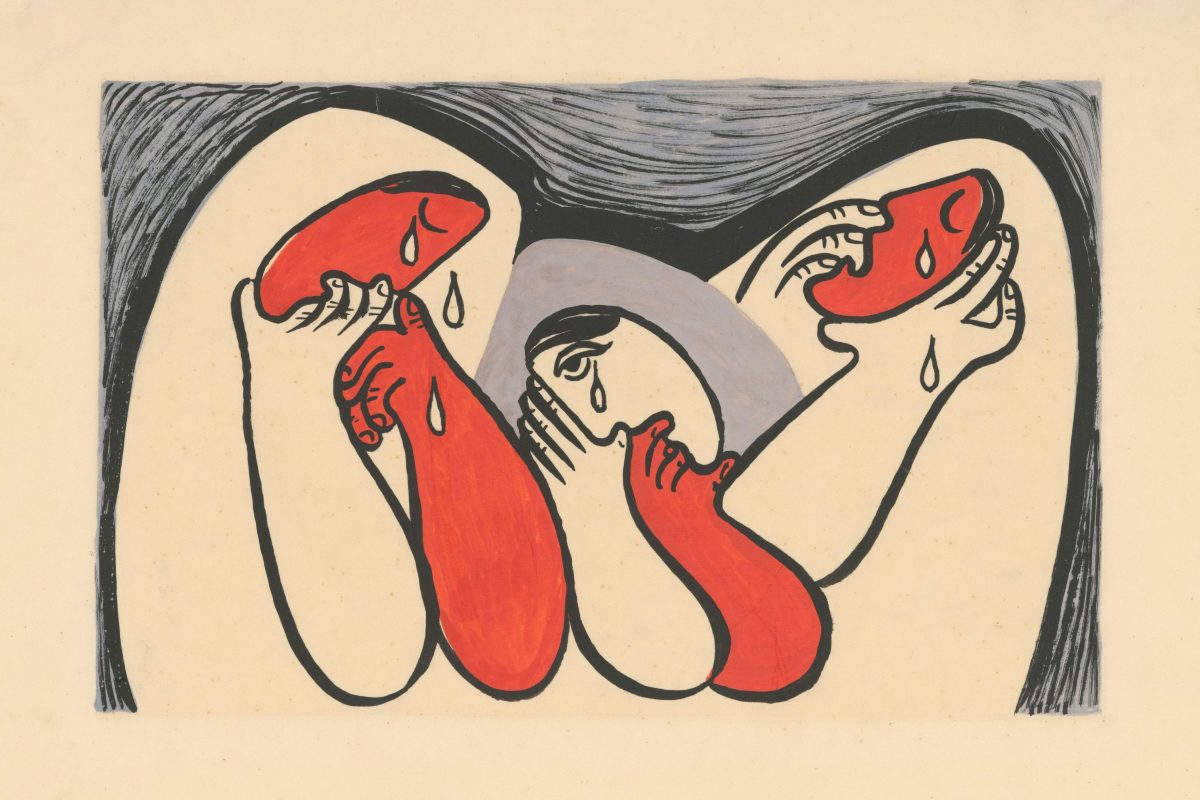
 ©Europeana via Unsplash
Sometimes, it all starts with symptoms that seem to inhabit different quarters of the same body. The headaches that come knocking every month. The intestine that goes haywire on menstruation days. The bloating, the nausea, the pain that moves from room to room.
For years, these signs have been interpreted in bits and pieces, entrusted to different specialists, separated as if they weren't communicating with each other. And all the while, endometriosis remained confined to a narrow, almost exclusively gynecological definition. Today, this framework is broadening.
The World Health Organization (WHO) describes endometriosis as a complex, chronic disease affecting around 10% of women of childbearing age worldwide. It can also affect areas outside the pelvis, including the abdomen and thorax, and is accompanied by pain, abdominal bloating, nausea, intestinal and urinary disorders, as well as mental health repercussions. Recent scientific reviews and commentaries increasingly regard it as a multisystemic pathology, with inflammatory and immune mechanisms that have long transcended the reproductive system.
For years, endometriosis was confined to the field of gynecology
The clinical picture has broadened, not least because late diagnosis continues to mark the lives of people living with endometriosis. A 2025 review estimated the average time to diagnosis at 6.8 years, with huge disparities between countries, while the WHO points out that delayed diagnosis is common and that symptoms can persist or reappear even after treatment has begun. The NICE (National Institute for Health and Care Excellence), the British body that draws up health recommendations, has also updated its guidelines to reduce the gap between the onset of symptoms, recognition of the disease and its management. At the heart of this problem lies an old cultural reflex: severe menstrual pain is often perceived as a fate to be endured; thus, for months or years, the body continues to knock on the door without getting a clear answer.
In this change of perspective, symptoms that fall outside the conventional framework carry a heavy weight. Endometriosis can affect sex life, bowel movements, urination and everyday fatigue. Research is increasingly linking it to an increased frequency of other immune-mediated conditions. In a commentary published in Nature Communications, Linda Giudice, Andrew Horne and Stacey Missmer openly describe endometriosis as a systemic inflammatory disease. They point out that endometriosis sufferers have a higher risk of extra-reproductive sequelae, including migraines, gastrointestinal and urological disorders, multifocal pain and certain autoimmune diseases. The picture that emerges from these scientific publications is quite different from the usual endometriosis narrative. Here, the whole body comes into play, with its connections, resonances and circuits activated at the same time.
Migraine, asthma and irritable bowel
Precision is essential. Studies speak mainly of associations: statistical links, biologically plausible convergences, overlaps that merit clinical attention. A direct cause-and-effect relationship remains an area in need of clarification. However, the body of evidence is thickening. A meta-analysis of 2025 involving over 331,000 people confirmed the association between endometriosis and migraine, while calling for heterogeneity and risk of bias; a 2020 meta-analysis already arrived at a similar estimate.
Another meta-analysis from 2025 showed a significant association with asthma. On the digestive front, a 2020 review showed that, in women with endometriosis, the probability of meeting the criteria for irritable bowel syndrome is around two to one.The authors urge caution, however, as symptoms, treatments and cycle phases may be confused.
This distinction also weighs heavily on public discourse. To say that endometriosis is more frequently accompanied by migraines, asthma and gastrointestinal disorders accurately reflects the state of scientific evidence. The review published in Trends in Molecular Medicine 2025 brings together precisely these data on comorbidities and immune, neuroendocrine and metabolic mechanisms. It suggests that endometriosis should be considered as a multisystemic disorder, requiring broader management than reproductive health in the strict sense. In practice: isolated symptoms cease to be background noise and become information to be linked.
Diagnosis changes direction and care requires a broader team
Clinical practice is also changing. The ESHRE (European Society of Human Reproduction and Embryology) guidelinesand their most recent updates insist on a diagnostic pathway based on history, clinical examination where appropriate, transvaginal ultrasound and, where indicated, MRI. Laparoscopy loses its former role as an automatic step, used only to confirm the diagnosis. Specialists also recommend suspecting endometriosis when severe menstrual pain is accompanied by nausea, bowel problems, cyclical urinary symptoms, pain during intercourse or infertility.
Day-to-day management is then based on therapeutic choices: hormonal treatments as the first line of defence against pain, surgery in the right centers at the right time, particular attention to pregnancy plans and, above all, multidisciplinary care. Gynecologists, experienced radiologists, pain specialists, gastroenterologists, urologists, nutritionists and psychological support are all part of the same approach, whenever necessary.
For those living with endometriosis, this change has a very tangible impact. It means moving on from years of fragmented consultations, with migraine on one side, bowels on the other, pelvic pain at the bottom of the page and fatigue left in the shadows. This time, research does a job that's simple to understand but extremely difficult to achieve: it puts the pieces of the puzzle together. And that's when the body, at last, ceases to resemble a list of "isolated breakdowns".
Source: WHO
(©GreenMe.it 2026/Managing editor : Selma Keshkire - The Press Junction/Picture : Europeana via Unsplash)