
World
Politics
Environment
Endangered polar bears: Trump paves the way for "accidental" killings for oil in Alaska
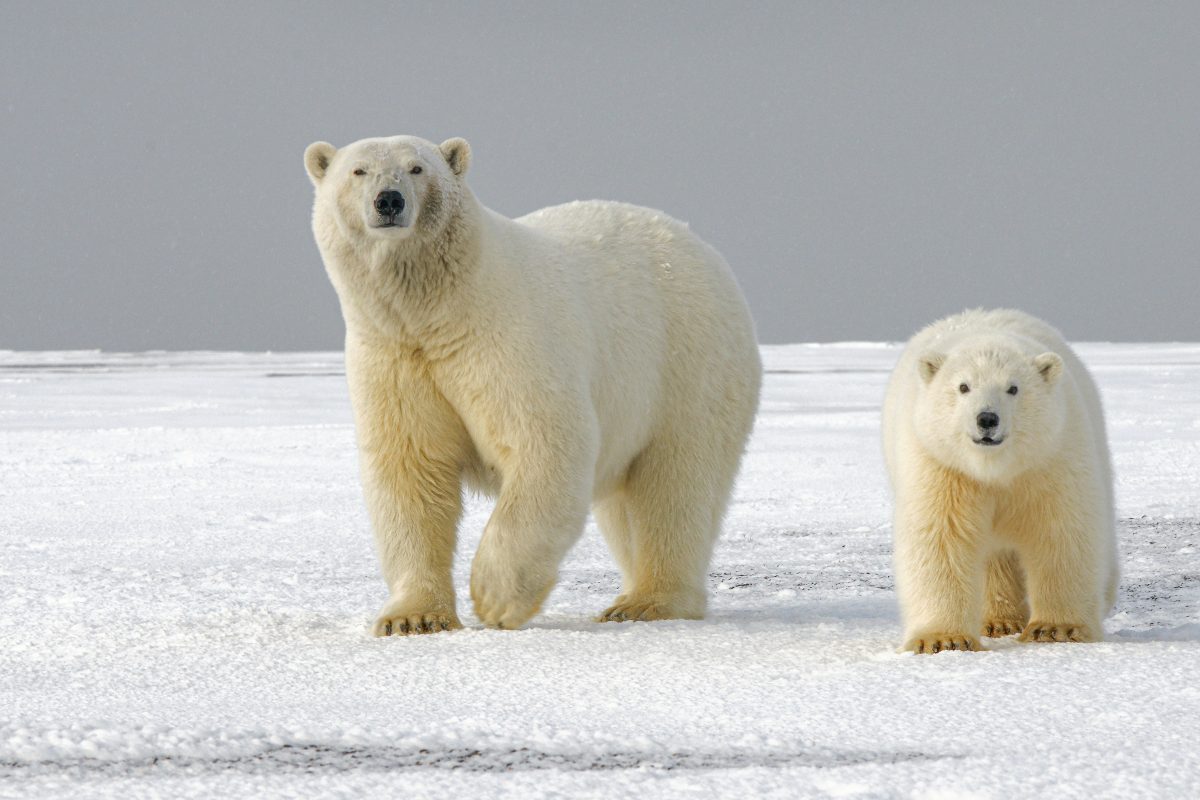 ©Hans-Jurgen Mager via Unsplash
The Trump administration is considering new rules that would allow oil companies to operate in northern Alaska, even at the cost of killing polar bears and walruses. All without any legal consequences for the companies.
Indeed, the proposal, presented by the US Fish and Wildlife Service, introduces the notion of "incidental take": a legal term that encompasses any unintentional harm to protected animals, from simple disturbance to death.
In other words: companies won't be able to "hunt" polar bears, but if, in the course of their activities - drilling, transporting oil, seismic testing - some animals die, they won't be prosecuted. These disturbing new rules apply to operations in the Beaufort Sea and the Arctic National Wildlife Refuge, one of the most fragile ecosystems in the world. This is one of the most fragile ecosystems on the planet, home to over 300 species, including caribou, wolves, elk and, above all, polar bears.
The danger is far from theoretical: if industrial activity were to disturb a female bear during hibernation, she could abandon her den and her cubs, who would not survive on their own. This is a rare but possible scenario, and has already been observed in similar contexts. For walruses, on the other hand, the main risk is related to panic: the noise of aircraft or operations can provoke massive jostling, during which animals find themselves crushed by one another. They can also be hit by boats.
Fragile populations
The polar bear population in the southern Beaufort Sea is already in dire straits: down by around 40% since the 2000s, it now numbers only around 900 individuals, with no sign of recovery. On a global scale, the polar bear is classified as a "threatened" species. Alaska is its only home state. For their part, companies in the sector, represented by the Alaska Oil and Gas Association, maintain that the impact will be minimal and that deaths are only a remote possibility.
The authorizations, if approved, would be valid for five years (until 2031). They come at a time when the USA is looking to expand drilling in Alaska: the area could contain up to 11.8 billion barrels of recoverable oil.
Environmental organizations take up the cause
According to the Center for Biological Diversity - which, during Donald Trump's first term in office, filed 266 lawsuits challenging the administration's attempts to block progress on climate change, kill off the world's biodiversity and protect the environment - the U.S. government attempts to block climate progress, kill wildlife, endanger public health and destroy public lands - allowing this level of disturbance is "far too risky", especially in an Arctic already challenged by climate change. And therein lies the challenge: even a small number of deaths can take a heavy toll on an already fragile population.
Source: Center for Biological Diversity
(©GreenMe.it 2026/Managing editor : Julie Morgan - The Press Junction/Picture : Hans-Jurgen Mager via Unsplash)