
World
Society
Environment
Bulls forced to run with horns on fire: Spain's most controversial tradition
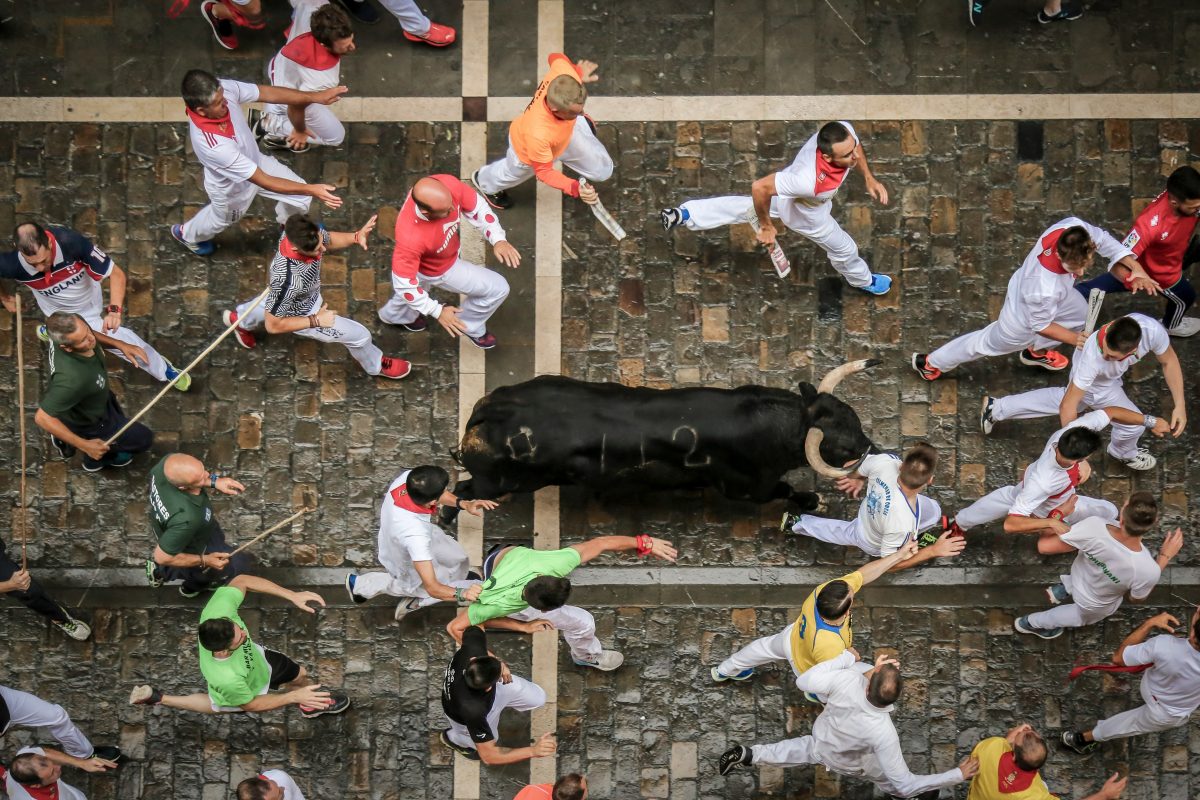 ©San Fermin Pamplona - Navarra
In a torch-lit square surrounded by hundreds of spectators, a terrorized bull runs with no way out. A wooden frame filled with burning flammable material is attached to his horns, while the crowd watches and cheers him on. This is Toro Jubilo, one of Spain's most controversial traditions.
Every year, the ritual takes place in Medinaceli, a small town in the Castilla y León region. Here, the bull is led to the center of a makeshift arena in the village square. A circle of people forms around the animal, while preparations gradually transform the scene into a spectacle that deeply divides public opinion. For some, it's an age-old tradition: in reality, it's an event that today seems increasingly difficult to justify.
The fire ritual
The central moment of the celebration occurs when a wooden structure is fixed to the bull's head, attached to its horns. At its ends are materials impregnated with pitch and cotton, destined to burn for a long time. When the torches are lit, the flames envelop the animal's horns. At this point, the bull, frightened and disoriented, begins to move frantically around the arena, surrounded by the audience.
According to the organizers, the animal's body is covered with mud to protect it from the heat. However, for many animal rights groups, this explanation is not enough to erase the bull's obvious suffering. The ritual lasts several minutes, amid applause, cheering and fireworks, as the animal repeatedly tries to free itself from the flames burning above its head.
The fight of animal rights activists
In recent years, the Toro Jubilo has become the symbol of an increasingly fierce confrontation between defenders of bullfighting traditions and the animal rights movement. The animal rights party PACMA has filed a 50-page dossier challenging the plan to classify the festival as a 'cultural asset of special interest'.
According to animal rights activists, such recognition would be more a political and electoral choice than a cultural one. Furthermore, the document argues that there's no concrete historical evidence clearly attesting to the ancient origins of the celebration, often described as a tradition more than two centuries old. PACMA also claims that the event has no solid legal basis, and continues to take the case to the Spanish courts.
Unspeakable cruelty disguised as tradition?
The debate surrounding Toro Jubilo reflects a deeper rift running through Spanish society. On the one hand, there are those who defend the value of popular traditions, seen as part of the territory's cultural identity. On the other, a growing movement denounces the animal suffering associated with many bullfighting events.
In the meantime, the celebration continues to take place every year, and attracts curious onlookers, tourists and demonstrators alike.
(©GreenMe.it 2026/Managing editor: Julie Morgan - The Press Junction/Picture: San Fermin Pamplona - Navarra)