
 ©picture alliance / Newscom | Audrey Richardson
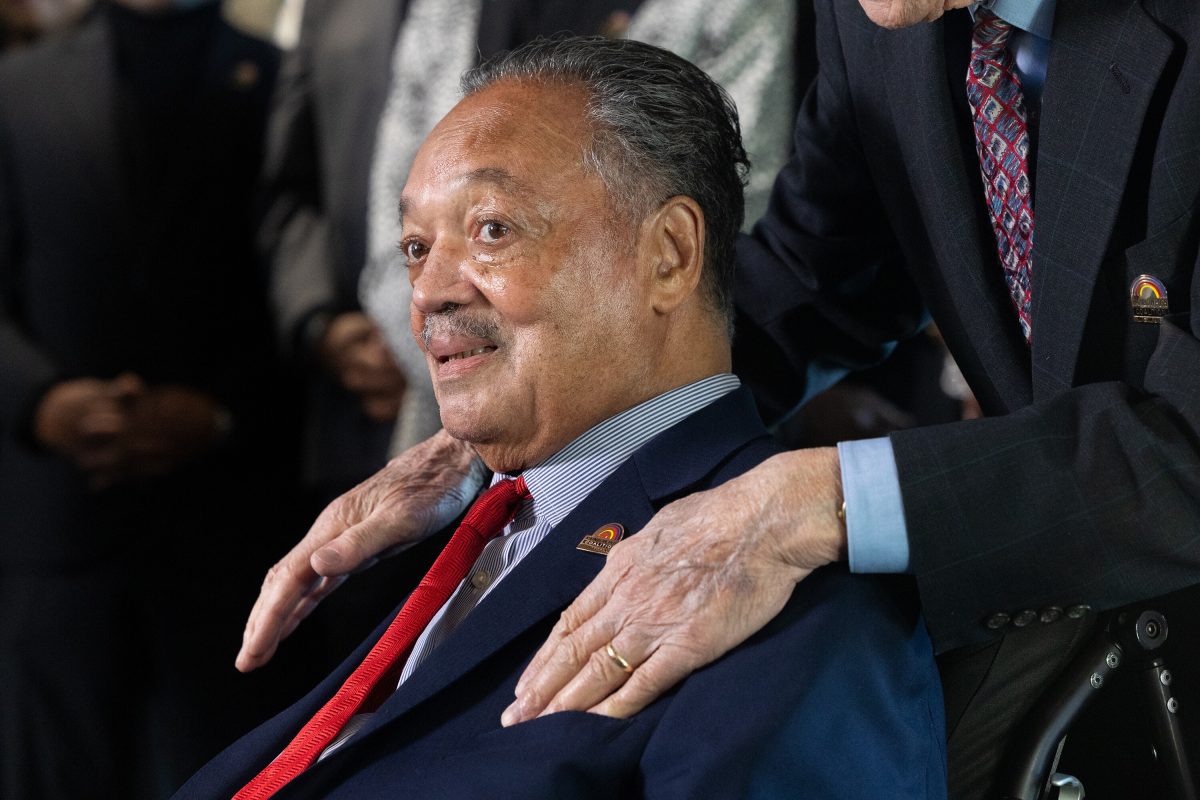
Farewell to Jesse Jackson, one of the central figures of the U.S. civil rights movement, a key player in the fight for racial equality alongside Martin Luther King Jr and a political leader who influenced generations of American progressives.
From his birth in the segregated South to the non-violent protests of the 1960s, the founding of the Rainbow PUSH Coalition and his two presidential campaigns in the 1980s, he combined social activism, political ambition and powerful personal charisma throughout his career.
A charismatic but divisive figure, Jesse Jackson has remained involved in civil rights struggles to the present day, from historic commemorations to Black Lives Matter protests.
Childhood and education
Jesse Jackson was born on October 8, 1941, in Greenville, South Carolina, as Jesse Louis Burns, son of Helen Burns, then 16, and Noah L. Robinson. When Jesse was about a year old, his mother married Charles Jackson, whose name he later took. He remained close to both of his father figures, and after Robinson's death in 1987, he declared: "They say I've missed a father, but really, I have more than enough."
Growing up in the racially segregated South, where he had to walk past a whites-only school to get to his own, Jackson began his activism early. In 1960, he led a group of students - later known as the 'Greenville Eight' - in a peaceful protest at the city's library, then off-limits to blacks. He entered the University of Illinois on an athletic scholarship, then transferred to North Carolina's Agricultural and Technical College, graduating in 1964 with a degree in sociology. It was there that he met Jacqueline Lavinia Brown, whom he married in 1962. They later moved to Chicago, where Jackson studied theology without completing his degree. He was ordained a Baptist minister in 1968, after King's death.
In 1965, he participated in the Selma marches alongside Martin Luther King Jr, who entrusted him with the direction ofOperation Breadbasket, the economic initiative of the Southern Christian Leadership Conference. Jackson's management drew some criticism, particularly on financial issues: it wouldn't be the last time his leadership style was called into question.
Jackson was in Memphis on the evening of April 4, 1968, when King was assassinated. His behavior in the aftermath of the tragedy has always been the subject of conflicting interpretations: sincere trauma, or an attempt to claim the assassinated leader's political legacy?
The PUSH era
In 1971, he founded his own organization: Operation PUSH ('People United to Save Humanity', later 'Serve Humanity'), to support troubled young African-Americans and fight discriminatory business practices, promoting boycotts of major corporations such as Coca-Cola, Burger King and Revlon.
In 1984, he also founded the National Rainbow Coalition, which campaigned for the rights of African-Americans, women and the LGBTQ+ communities. In 1996, the two organizations merged to form the Rainbow PUSH Coalition.
After his two presidential campaigns in the 1980s, Jackson continued his activism in the decades that followed, participating in civil rights march commemorations as well as Black Lives Matter protests after the murder of George Floyd in 2020. His progressive ideas have influenced political figures such as Bernie Sanders and Alexandria Ocasio-Cortez.
His legacy remains complex: a leader who became a symbol of social justice, but also a controversial public figure. With his death, one of the most important chapters in the history of American civil rights comes to a close, leaving a mark that helped make possible the emergence of a new generation of progressive leaders in the United States.
(©GreenMe.it 2026/Managing editor : Selma Keshkire - The Press Junction/Picture : picture alliance / Newscom | Audrey Richardson)