
Society
Economy
Environment
Free electricity on windy days: the UK's plan to stop wind turbines from shutting down
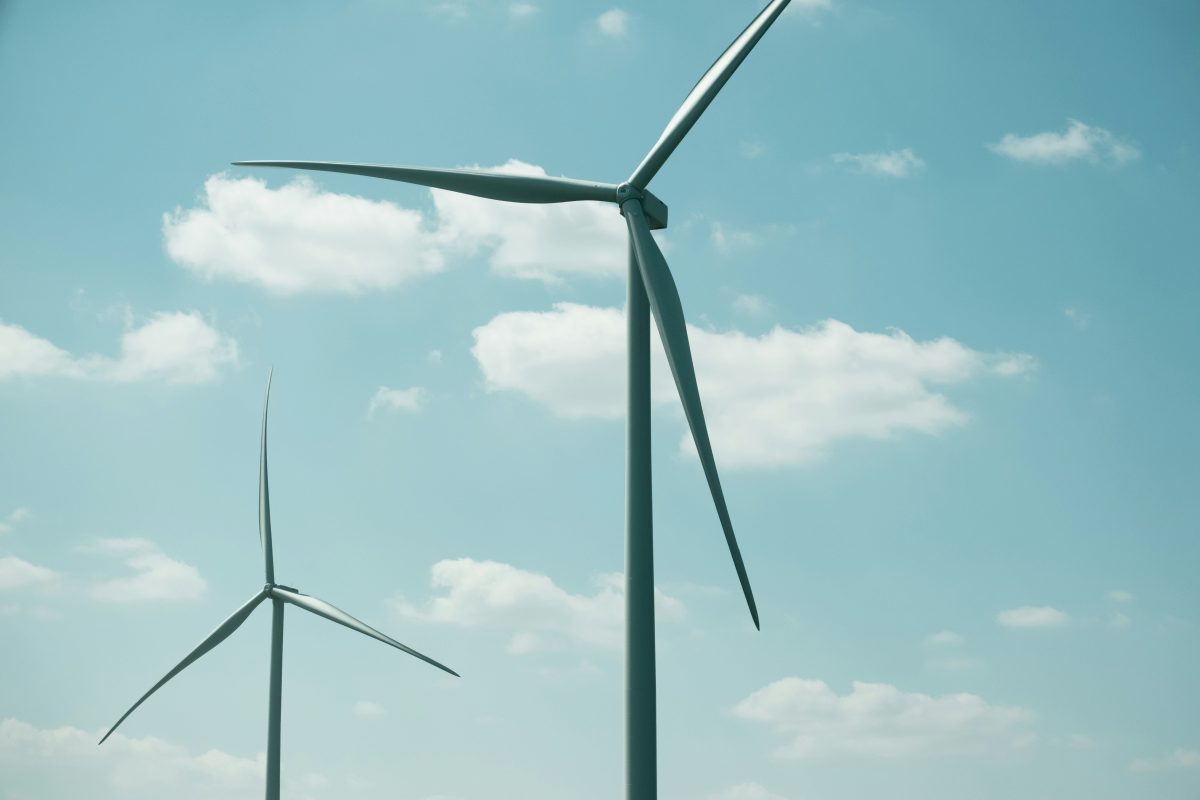 ©Cyrus Crossan via Unsplash
There are days when the wind does exactly what we expect it to do: it blows hard, consistently, turns the blades of wind turbines and generates electricity. And yet, it's precisely when clean energy is in abundance that the system breaks down. The grid becomes saturated, the electricity gets stuck where it's produced, and the country ends up paying twice: first to shut down the turbines, then to buy power elsewhere, often from gas-fired plants.
It's at the heart of this paradox that the UK has decided to launch a very concrete proposal: to offer free or heavily discounted electricity to homes near areas where the grid is congested, rather than continuing to waste wind generation.
It all comes down to the power grid. Much of Europe's infrastructure was designed for an energy world centred on coal and gas, with large power plants on specific sites and consumption distributed elsewhere. Wind power, on the other hand, is installed where the wind really works: on the open sea, along the coast, in remote areas. As a result, energy is produced far from major demand centres and, when cables and interconnections are no longer sufficient, it remains trapped. Aurora Energy Research has estimated that in Europe, congestion management costs reached 8.9 billion euros in 2024, while 72 TWh of electricity, largely renewable, were lost.electricity, much of it renewable, was cut due to these bottlenecks: a volume close to Austria's annual consumption.
The UK offers the most striking example. According to the count cited by Octopus Energy and reported by Euronews, in 2025 the country wasted £1.47 billion, or almost €1.68 billion, shutting down wind turbines and running gas-fired power stations to compensate. On March 26, 2026 alone, the amount wasted on wind power exceeded £1.31 million: part of this was compensation paid to shut down the turbines, the rest was used to buy substitute electricity elsewhere on the grid. In Germany, meanwhile, compensation costs linked to the reduction in renewable production reached 435 million euros in 2025, down from 554 million in 2024, a sign that the problem is evolving but remains colossal.
Against this backdrop, the British idea follows a logic of almost brutal simplicity: if energy is available in certain regions and the grid is struggling to evacuate it, it's better to bring the price down on the spot, immediately, in real time, rather than pay to make it disappear. The Department for Energy Security and Net Zero has put forward an experiment in thisThe Department for Energy Security and Net Zero has put forward an experiment along these lines, proposing reduced bills for those living near "saturated" areas on very windy days. The UK government is presenting the scheme as an attempt to stop paying wind farms to shut down, and to turn the surplus into a direct benefit for local households and businesses.
Bill discounts, heat pumps, batteries and data centers
This is where the subject becomes most interesting, because it touches as much on today's prices as tomorrow's behaviors. Greg Jackson, Managing Director of Octopus Energy, welcomed the announcement, but he also made one criticism clear: simple tests are likely to have little effect. The real turning point would come with a stable mechanism, credible enough to encourage individuals to buy an electric car, a heat pump or a domestic battery, or to convince companies to locate energy-intensive activities, such as data centers, precisely in these areas. The idea is to shift demand to regions where the wind currently produces more than the grid can handle.
In other words, free or virtually free electricity on windy days serves not only as a discount on the bill, but above all as an industrial signal. It tells consumers where it makes sense to electrify their homes. It tells companies where it makes sense to invest. It tells the system that part of the solution may also come from a more flexible, more mobile, more intelligent demand. Investment in the network remains essential: in Europe, in fact, it has risen by 47% in five years to around 70 billion euros a year. But this pace, according to analysts, remains below actual needs.
In the background, there is also the geopolitical question, which has weighed heavily in recent weeks. The war with Iran and the crisis around the Strait of Hormuz have pushed oil back above the $100 a barrel mark, awakening the Pavlovian (conditioned) reflex to drilling and fossil licenses throughout Europe. And yet, a recent analysis by Oxford University argues that maximizing oil and gas extraction in the North Sea would save British households only16 to 82 pounds a year, whereas a system powered entirely by renewable energies could cut the bill by £105 to £441 a year per household.
So, behind all the rhetoric about energy abundance, the real issue is the ability to get it to where it's needed, when it's needed. Europe already has enough signals to understand this: in several countries, including Spain and France,curtailment rates reached record levels in the first nine months of 2025. So the problem isn't the lack of wind. It's wind that arrives and gets stuck behind an electrical bottleneck.
With this experiment in free electricity, the UK is trying to treat excess renewables as a resource to be exploited rather than a nuisance to be extinguished. The test itself won't change the game. But the direction it is taking already says a lot. The wind is turning. So do the blades. All that's missing is the wire.
Source : WastedWind
(©GreenMe.it 2026/Managing editor : Selma Keshkire - The Press Junction/Picture : Cyrus Crossan via Unsplash)