
Society
Topical
Chinese New Year 2026: everything you ABSOLUTELY must not do if you don't want to ruin your year
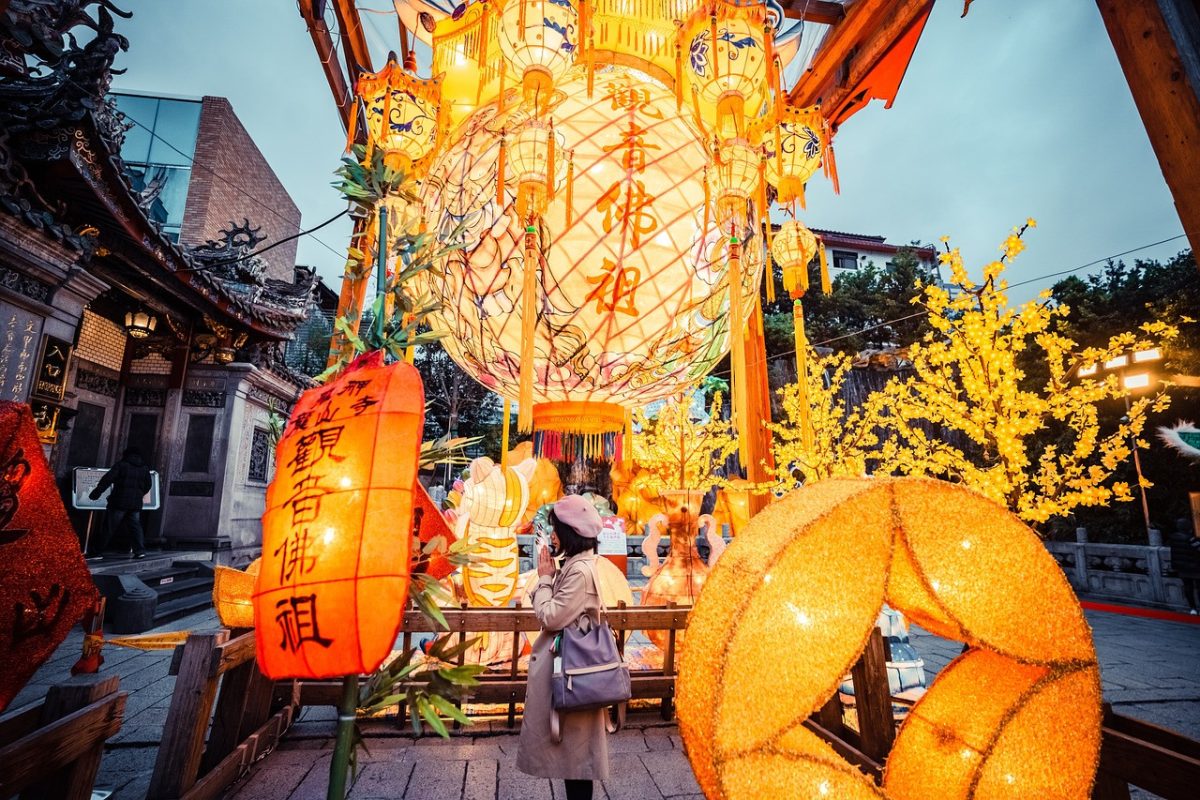 ©Image by Vuong Viet from Pixabay
Today, February 17, 2026, begins one of the most highly anticipated and spectacular celebrations of the lunar calendar: the Chinese New Year. This year ushers in the Year of the Fire Horse, a constellation seen as powerful, dynamic and full of overwhelming energy. The festivities last until March 3, with two weeks of celebrations, luminous lanterns, dragon dances and colorful parades that bring Chinatowns around the world to life, from Beijing to San Francisco and London to Milan. An explosion of colors, flavors and traditions that captivates millions of people every year, even those who have little to do with Chinese culture.
But the Spring Festival, as the Chinese New Year is also called, is not just fireworks and socializing. It's also a celebration deeply rooted in ancient beliefs, rituals for prosperity and - above all - a long list of things not to do if you want to start the year off right. Because Chinese tradition is clear: the way you spend the first few days of the new year determines what will happen in the months that follow. Therefore, here is a guide to everything you should avoid during this special celebration, according to popular wisdom.
Watch your words
In Chinese, sound is everything; the language is full of homophones - words that sound the same but mean something different - and as a result, language during the holiday season is a minefield that you should tread on carefully. Some words are considered ominous just because their pronunciation is reminiscent of concepts related to death, endings or misfortune. Therefore, during New Year's celebrations, it's better not to use terms associated with an 'end' or an 'expiration' of something.
A practical example: during New Year's Eve dinner, if you are the first to empty your plate, do not loudly announce: "I'm done!" or "I'm already done!" It sounds like gloomy omen when thought about within this context. It's better to remain silent, or choose your words carefully. The first words of the year are like seeds: they grow into fruit for the next twelve months that follow.
No medicine on the first day of the year
One of the most remarkable superstitions concerns health: on the first day of the Chinese New Year, you should not take medicine. In fact, according to popular belief, taking medicine means condemning yourself to a year full of ailments. A paradox, certainly, and quite an ordeal for those plagued by seasonal discomforts. But the logic of the tradition is clear: rather endure some discomfort for one day than to have an entire year of illnesses brought upon you. A small sacrifice in the name of future prosperity.
Cleaning is done before the holidays, not during
Broom and dustpan should be put away well before the feast begins. According to tradition, sweeping during the holidays or taking out the garbage is one of the biggest mistakes you can make: in doing so, you would literally 'sweep away' the good opportunities that have just come into the home and throw the accumulated prosperity of the past year into the trash. You do the big house cleaning during the days leading up to the celebrations, to rid your home of all the negativity left behind. But once the festivities have begun, the broom stays where it is.
In the unlikely event that you do break something - a plate, a glass, an object made of glass - don't panic. Tradition teaches that you can easily turn bad luck into a blessing by saying aloud the words 岁岁平安 (suì suì píng ān, 'peace all year round'). This is because the character 岁 (suì, 'year') sounds exactly the same as 碎 (suì, 'break'), and thanks to the similarity of the sound, you can symbolically transform the meaning of misfortune into something positive.
Knives, scissors and hair: what you better not cut
Using knives or scissors during the New Year celebrations is not recommended, as it symbolizes 'cutting' happiness or emotional ties. Therefore, in more traditional households, all dishes are prepared during the days leading up to celebrations so that knives are not needed during celebrations. Similarly, cutting your hair in the first lunar month is considered ominous: it's said to bring bad luck to your maternal uncles. A very specific belief that shows how important family ties and blood relations are in Chinese culture.
Washing your hair on the first day of the New Year is also traditionally discouraged. In Chinese, 'hair' is written as 发 (fà), but the same character and sound also refer to the concept of 'prosperity' or 'growing prosperity'. Washing your hair would then, symbolically, amount to washing away your wealth.
Colors say it all: day black and white
On New Year's Day, the closet changes. Black and white are mourning colors in China, and wearing them during the celebration is equivalent to inviting sorrow to the table. The leading role is given to red, pre-eminently the color of happiness, joy and vitality. Red clothes, red envelopes (the famous hongbao with money inside), red decorations everywhere: red is the absolute protagonist of this celebration.
No debts, no quarrels
Asking for or lending money during Chinese New Year is seen as a bad omen for your finances: starting the year with a debt means symbolically carrying it around all year. Nor is it wise to argue, shout or use foul language. Negative emotions in the very first days of the year could hang like a dark haze over everything that comes there after. Even crying is considered an ominous sign, an omen of sadness that would extend throughout the year.
You never quite eat the fish
At the table, during New Year's Eve dinner, fish is indispensable. But beware: you should not eat it whole. There is a Chinese proverb, 年年有余 (nián nián yǒu yú), which means 'to have more than enough every year'. The character 余 (yú, 'over, abundant') is pronounced exactly the same as 鱼 (yú, 'fish'). Leaving a bit of fish is thus a powerful symbolic gesture: you thereby wish yourself and your family abundance and prosperity for the coming year. A tasty but necessary sacrifice.
A married woman waits until the second day
Finally, one of the most surprising customs for those unfamiliar with Chinese culture: a married woman is not supposed to visit her parents on the first day of the New Year. According to superstition, this would cause financial difficulties for her birth family. She waits until the second day to celebrate the New Year with them. A rule that tells a lot about the value system and family structures on which Chinese society has rested for centuries.
Whether you are superstitious or not, knowledge of these traditions means showing respect for an ancient culture that even today manages to connect billions of people around a common fire of hope, family and the desire for a better future. Happy Year of the Fire Horse to all: may it be a powerful, free and extremely prosperous year.
(©GreenMe.it 2026/Managing Editor: Julie Morgan - The Press Junction/Picture: ©picture alliance/dpa/dpa-POOL | Peter Kneffel)