
 ©Roi Dimor via Unsplash
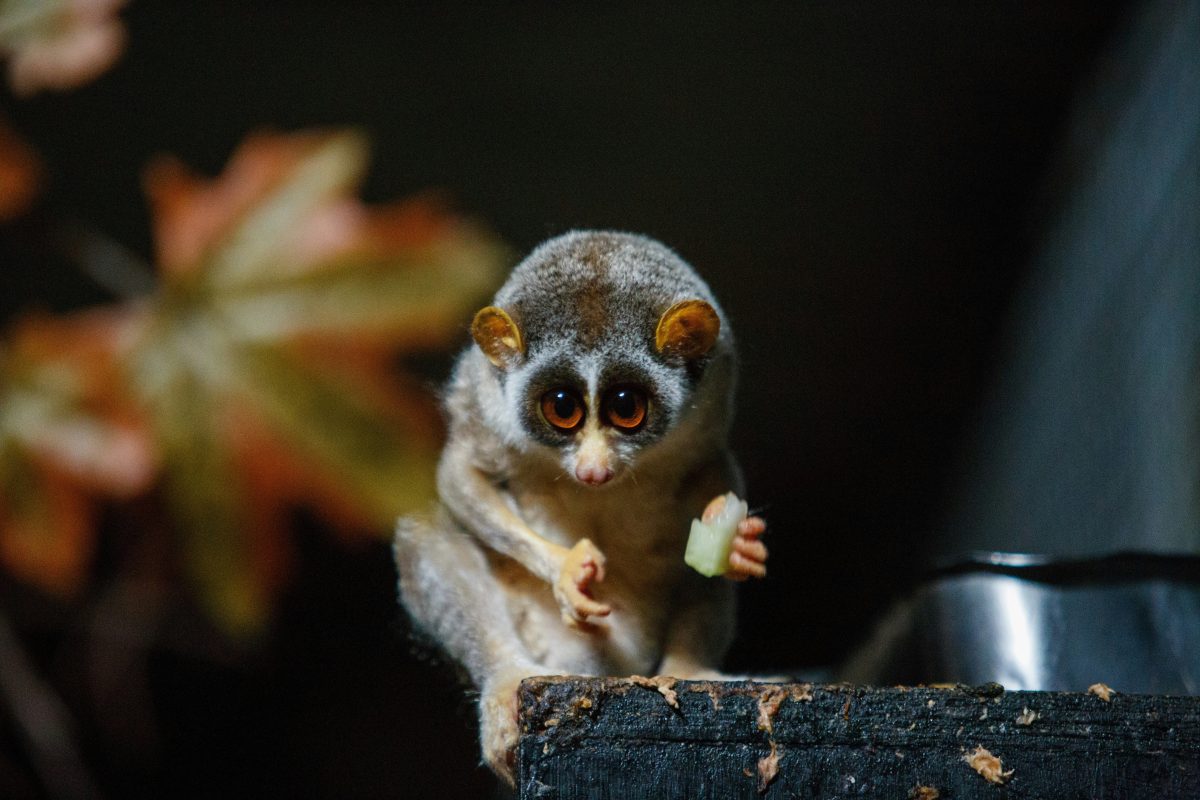
It looks like a wide-eyed stuffed animal, the kind that stares at you and makes you melt instantly. But no: this tiny newborn primate is the only known venomous primate on Earth.
The primate was born in December 2025 at the Bronx Zoo and is one of only 50 slow pygmy lorises living in the AZA (Association of Zoos and Aquariums) accredited zoos in North America. A figure that shows just how vital every birth is. Pygmy slow lorises are born with their eyes already open and their bodies completely covered in fur, ready to cling on to their mothers from the very first moments of life.
As adults, this primate will weigh no more than half a kilo. For the moment, it's impossible to know whether it's a male or a female: the se.x will be determined at its first veterinary examination. Its name also remains a mystery.
Why the slow pygmy loris is venomous: a unique case among primates
The slow pygmy loris is not only adorable, it's also an exception in the wild. It is, in fact, the only primate known to produce venom. It secretes a toxic substance from a gland near its arms. This substance is not dangerous in itself, but when the animal licks itself (a natural behavior), it mixes with saliva and becomes an active venom. It is not lethal to humans, but can be very dangerous.
The loris mainly uses this mechanism to defend itself against predators: it can spread the compound on its fur or bite, causing intense pain, swelling and, in some cases, severe allergic reactions. It's a sophisticated evolutionary strategy, developed to survive in hostile environments, but one that also makes it even more vulnerable to illegal trafficking: many individuals captured for the pet trade have their teeth pulled, condemning them to a slow death. This is a fact that reminds us just how much this extraordinary animal needs protection, not domestic cages.
An endangered existence
Native to Southeast Asia, this nocturnal primate can live between 10 and 20 years. Yet, its existence is under increasing threat. According to the 2021 IUCN assessment, the slow pygmy loris is classified as endangered due to habitat destruction, hunting and illegal trafficking linked to the exotic pet trade and alleged 'medicinal' uses. The birth of this baby, which is part of the international Species Survival Plan for the pygmy slow loris, brings renewed hope for this species, which is crucial to protect.
Source : WCS
(©GreenMe.it 2026/Managing editor: Julie Morgan - The Press Junction/Picture: Roi Dimor via Unsplash)