
Society
Topical
Famous cherry blossom festival canceled in Japanese city: Hanami halted due to unmanageable mass tourism
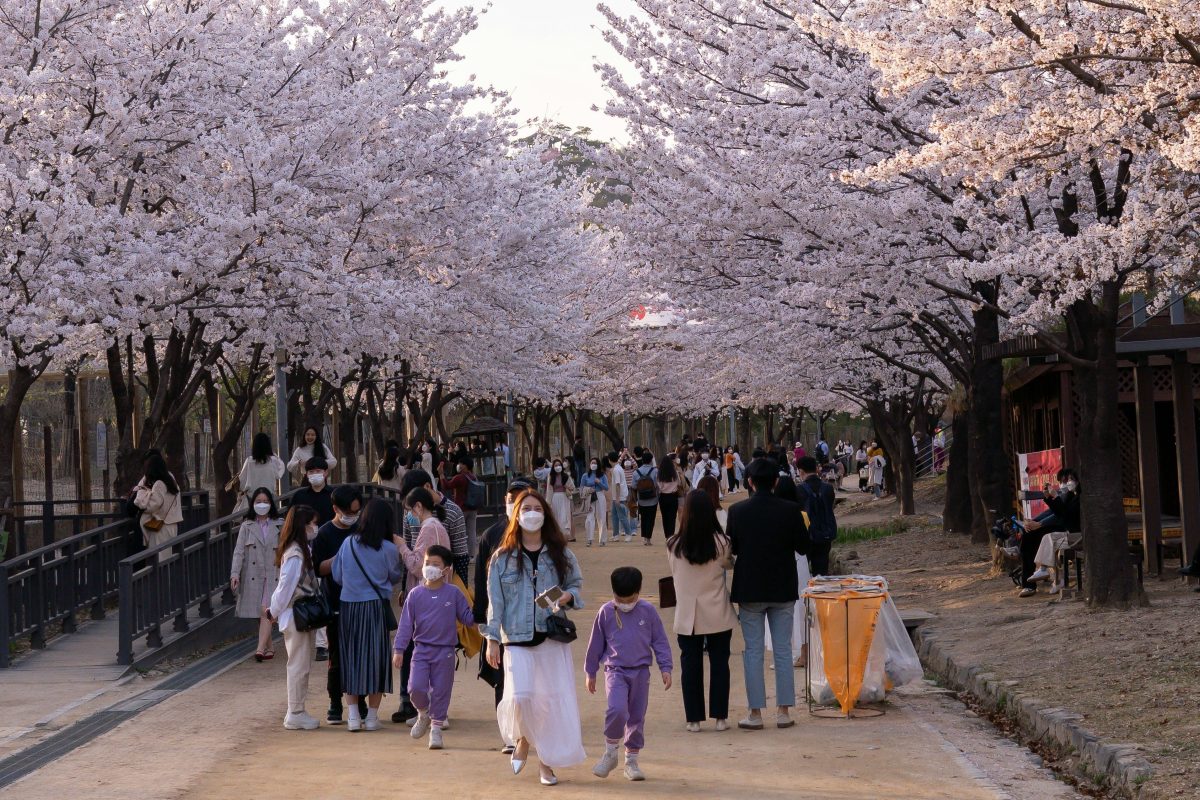 ©Clement via Unsplash
The view is like a postcard, with snow-capped Mount Fuji in the background of the five-story pagoda, while flowering cherry trees color the landscape in pink. Yet starting this spring, this setting will no longer be accessible during the traditional hanami festival. Indeed, the Arakurayama Sengen Park in the city of Fujiyoshida (Yamanashi Prefecture) has had to succumb to a phenomenon that severely challenges many Japanese tourist destinations: uninhibited mass tourism.
An inevitable cancellation
The city government made the decision official last February 3: the 2026 cherry blossom festival will not take place. A painful but necessary decision, prompted by the inability to manage the huge influx of visitors that has literally overwhelmed this small community at the foot of Mount Fuji.
During the two weeks in April when the cherry trees are in full bloom, the park recorded more than 200,000 visitors, with peaks of over 10,000 people per day. To reach the panoramic platforms, tourists had to brave queues of one to three hours, turning an experience that was supposed to be tranquil and contemplative into a veritable war of attrition.
When hospitality becomes an unbearable burden
The festival was created in 2016 with the intention of promoting the area and increasing the flow of tourists. A goal that, it turns out, may have been achieved too well. The pandemic paradoxically accelerated this phenomenon: once the health crisis passed, tourist demand exploded in uncontrollable ways.
The impact on residents went far beyond just some inconvenience. Traffic congestion paralyzed neighborhood roads and in some cases forced schoolchildren to step off the sidewalks, which were completely taken up by visitors. Cigarettes covered the streets, while even more serious incidents led some tourists to open gates of private homes in search of a toilet or, even worse, use the gardens as toilets.
Such behavior prompted residents to formally ask the municipal government to intervene, turning what was once a source of pride for the community into a daily source of stress.
Seeking a new balance
Mayor Shigeru Horiuchi did not mince his words when he commented on the situation: "I feel a strong sense of crisis in seeing that, behind a beautiful backdrop, the tranquility of citizens is threatened. In the future, we will implement an adequate system to create an environment where residents' lives and tourism can coexist."
The cancellation of the festival, however, does not mean that the park will be deserted. The municipal government knows all too well that tourists will continue to come anyway, attracted by the beauty of the place. Therefore, from April 1 to 17, security measures are still being taken: guards will regulate traffic and temporary toilets will be put in place to prevent the recurrence of the most unpleasant incidents.
A clear appeal has been made to visitors: respect basic rules of decency, avoid entering residential areas and refrain from photographing private property without permission. The requests, made in a country with such a strong tradition of mutual respect as Japan, sound like a warning signal about the extent of the problem.
The situation at the Arakurayama Sengen Park is illustrative of how tourism, if not carefully managed, can turn from an asset into a threat to local communities and turn into so-called 'overtourism,' mass tourism. The challenge now is to find a sustainable model that allows visitors to enjoy these exceptional places without compromising the quality of life of those who live there year-round.
(©asahi.com via GreenMe 2026/Managing Editor: Julie Morgan - The Press Junction/Picture: ©picture alliance/dpa/dpa-POOL | Peter Kneffel)