
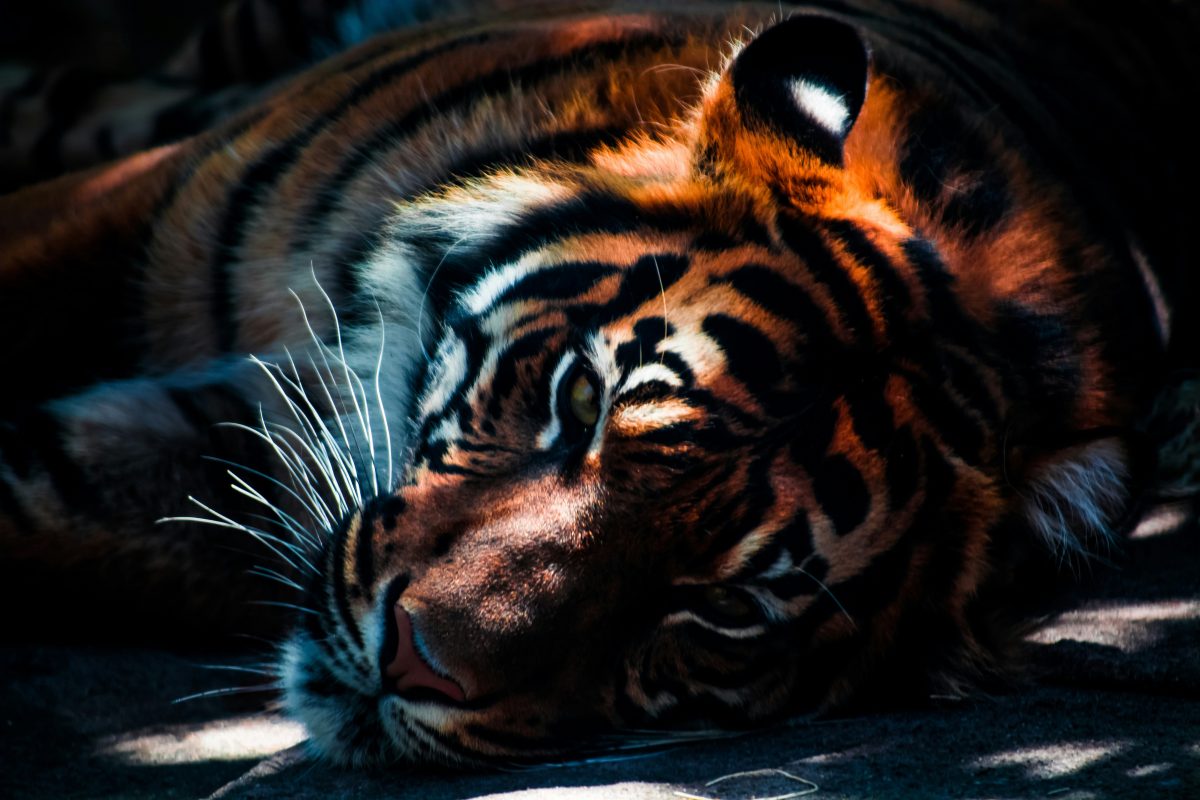
 ©Edewaa Foster via Unsplash
And suddenly, the tiger loses its stripes. Find out why nature restoration may cause this jungle icon to go black.
The Similipal Tiger Reserve in eastern India is home to striking tigers: their orange coats are largely dominated by broad, black stripes. This rare genetic mutation, called pseudo-melanism, occurs in about half of the roughly 30 tigers in the reserve. The dark coat is harmless in itself, but it signals a larger problem: inbreeding due to isolation.
Decades ago, India’s tigers were on the brink of extinction. Thanks to stricter protection measures, including those implemented by the National Tiger Conservation Authority (NTCA), the population rose from around 1,400 in 2006 to more than 3,100 in 2022. Similipal, one of the largest reserves, saw its population climb from just four tigers in 2014 to a more stable number. But the reserve is a veritable “tiger island.” It is surrounded by cities, villages, and farmland, with no functioning corridors to neighboring reserves such as Satkosia (where tigers no longer live) and the Sundarbans. Because tigers can barely enter or leave Similipal, the gene pool is small. The rapid spread of pseudo-melanism, caused by a natural DNA coincidence, demonstrates how quickly traits can spread through inbreeding. Experts warn that harmful mutations can also emerge in this way, threatening long-term survival. The goal is no longer simply to count tigers, but to restore genetic diversity.
Creating genetic diversity
That's why forest rangers, conservationists, and geneticists are collaborating on a targeted breeding program. Molecular ecologist Uma Ramakrishnan of the National Centre for Biological Sciences (NCBS) studies the DNA of both modern and historical tigers. He even examines stuffed specimens from old hunting collections to find the best genetic matches. Meanwhile, teams in the field are searching for males like T12, an older, mostly black tiger who is central to plans to establish new, healthy bloodlines. Without intervention, Similipal’s tiger population is at risk of genetic collapse. Conservation today requires more than just habitat protection. It calls for breaking down isolation and securing a resilient future for this unique part of India’s natural world.
©Edewaa Foster via Unsplash - Illustration of a tiger.