
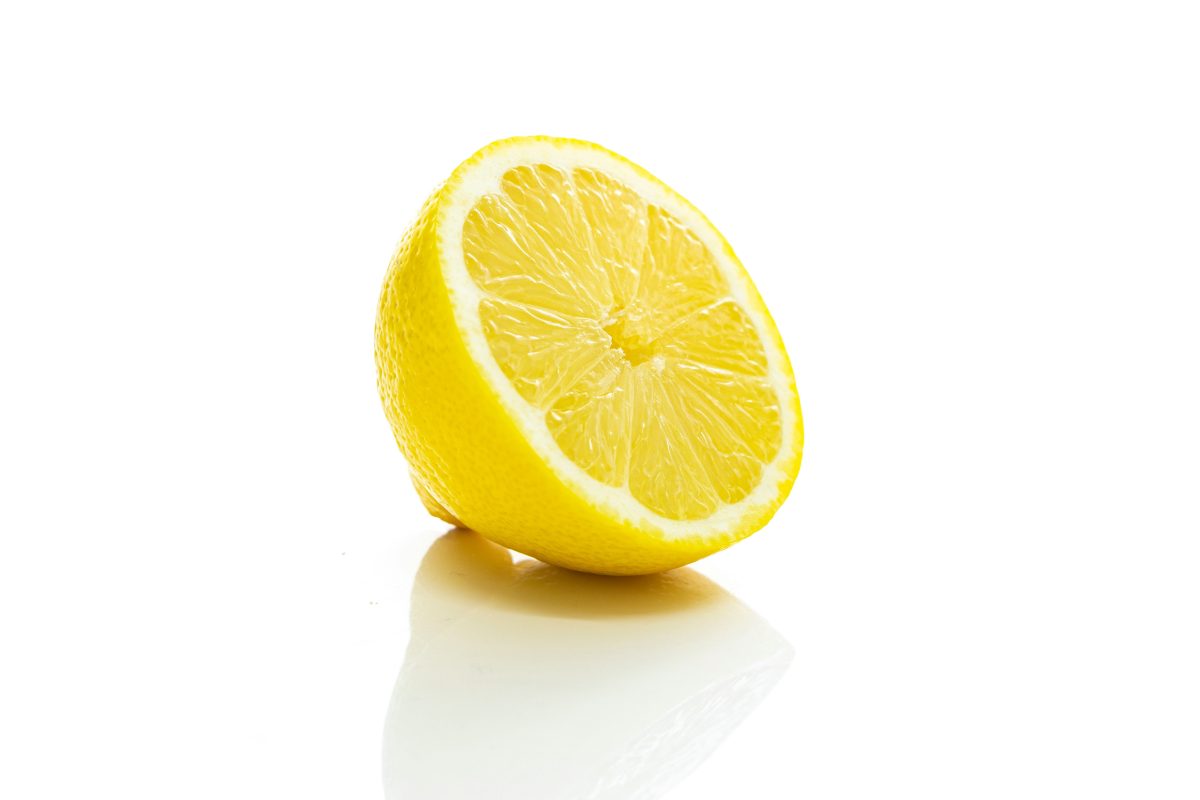
 ©Moritz Nie via Unsplash
Is a simple squeeze of lemon juice really enough to change how our bodies respond to a carb-rich meal?
The surprising answer is yes. We're not talking about yet another miracle cure going around on social media, but an effect observed in science: lemon can reduce the blood sugar spike after eating white bread by as much as 30% and delay the moment when that spike occurs by more than half an hour. A simple gesture, that's achievable by anyone, can make a difference especially for those who want to better balance their blood sugar or avoid that pesky 'dip' after eating.
The study, published in the European Journal of Nutrition, looked at what happens in the body when white bread is eaten with lemon juice instead of water. And the results are worth looking at.
Why lemon juice can lower blood sugar by 30% after white bread
Researchers asked a group of volunteers to eat white bread accompanied by lemon juice. At another time, they ate the same bread, but with plain water. With lemon, blood sugar rose more slowly and the peak remained significantly lower.
The blood sugar curve, followed for three hours, showed an average drop of 30% in peak blood glucose and a delay of more than 35 minutes compared to intake with water. Normally, after white bread, blood glucose reaches its maximum after about 40 minutes. With lemon, the peak shifted to around 80 minutes, so the rise extended over a longer period and was less abrupt.
That's not a detail. When glucose enters the blood too quickly, our bodies must respond quickly with a hefty production of insulin. When the sugar arrives more gradually, insulin can work in a more balanced manner and the cells can absorb it better and without 'stress'. The result? Fewer blood sugar 'roller coasters' and a more stable feeling of energy.
Of course, lemon is not a magic wand. But it can be an additional, simple and natural aid within an already conscious lifestyle.
Acidity, enzymes and fiber
The mechanism is fascinating and begins even before food reaches the stomach. Starch digestion starts in the mouth thanks to salivary alpha-amylase, the enzyme that breaks down complex carbohydrates. When the environment becomes more acidic - as with lemon juice - the activity of this enzyme slows down. Simply put, the starch is 'chopped up' more slowly and glucose enters the blood stream more gradually.
In a later phase of the study, stomach scans were also taken on a small group of participants. In the first 30 minutes after the meal, the volume of liquid in the stomach increased by about one and a half times, a sign that lemon stimulates additional digestive juices. Immediately afterwards, gastric emptying was faster, despite the extra liquid. A combined effect that seems to act directly on digestive processes, not just hormonal signals.
Added to this is an aspect that should not be underestimated: the whole lemon, with pulp and peel, provides soluble fiber, which forms a kind of gel during digestion, further inhibiting the absorption of sugars. Incorporating a little grated zest or some pulp into a salad, yogurt or marinade can be an interesting strategy, more complete than just the juice.
In addition to its effect on blood sugar, lemon provides vitamin C, with antioxidant properties, and flavonoids: plant compounds that can help modulate inflammation and improve insulin response. Nutrients that, taken through the whole food, avoid the risks associated with megadoses of supplements.
However, a few caveats are important. The studies conducted so far have involved healthy adults and focused primarily on the consumption of white bread alone. In everyday life, meals are mixed and include fats, proteins and other fibers, which can alter the blood sugar response. Moreover, those with diabetes should not view lemon as a substitute for therapies or medication.
Dental health also comes into play: the acidity of lemon, if you drink it often and sip by sip, can damage tooth enamel. Therefore, preferably take it during meals and don't overdo it. And those who suffer from reflux would do well to be careful with citrus fruits.
(©European Journal of Nutrition via GreenMe.it 2026/Managing Editor: Julie Morgan - The Press Junction/Picture: ©picture alliance/dpa/dpa-POOL | Peter Kneffel)