
Environment
Science
Deformation detected beneath Yellowstone supervolcano could trigger catastrophe, say experts
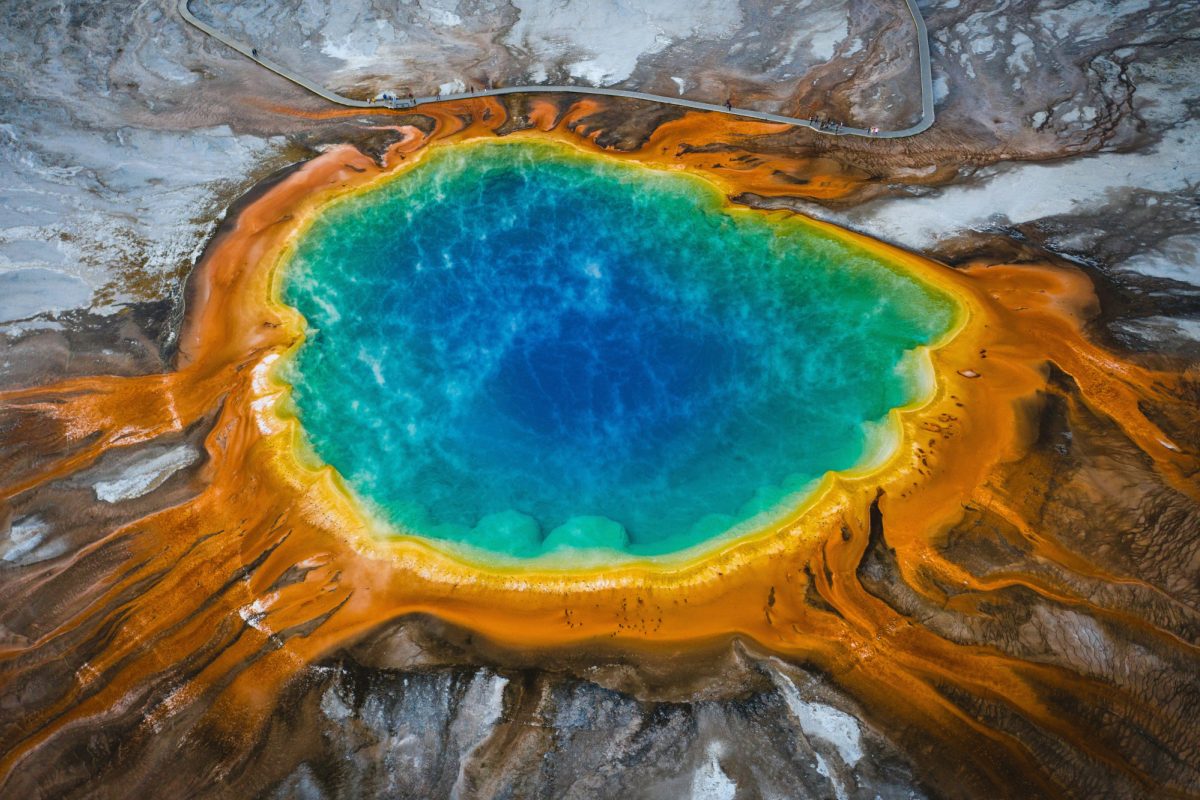 ©Unsplash
US Geological Survey (USGS) instruments have detected ground uplift of 1.5 to 2 centimetres along the northern rim of the Yellowstone caldera, located in the US National Historical Park.
Although the anomaly was recorded in July 2025 and confirmed by radar and GPS measurements, it was only recently that the USGS published its statement. The question is: should we be worried?
According to Dr Michael Poland, director of the Yellowstone Volcano Observatory and a USGS geophysicist, this deformation is part of the caldera's normal behaviour, which has alternated between ground subsidence and uplift over the last hundred years. Magmatic activity, fault movements and changes in underground hydrothermal fluids may be responsible for these movements.
A well-known history of deformation
The impacted area lies just south of the Norris Geyser geothermal basin: one of the hottest and most active areas of the supervolcano. Between 1996 and 2004, an uplift of 12 centimetres was detected there, known as the 'Norris Uplift Anomaly' (NUA), caused by the accumulation of magma at a depth of around 14 kilometres. After 2004, the ground subsided and then remained stable until 2013, when it began to show alternating phases of uplift and subsidence due to the water released by the magma.
Thanks to modern instruments such as GPS stations and interferometric synthetic aperture radar (InSAR), the new uplift of 2 centimetres has been precisely identified. Although accompanied by a slight increase in seismic activity, 2025 has seen fewer earthquakes than usual, with a maximum magnitude of 2.7 recorded last November.
No imminent warning
The geophysicist insists that, for the moment, there are no signs of an imminent eruption. Yellowstone remains a sleeping giant, with its fumaroles, geysers and earthquakes, but the deformation currently observed is modest compared with other volcanic systems. Any catastrophic eruption would lead to a drastic acceleration in deformation rates, which could be monitored in real time by the various GPS networks.
The risks of a supervolcano
The real danger of supervolcanoes such as Yellowstone, Toba or the Phlegrean Fields lies not just in the eruption itself, but in the impact it could have worldwide. The gases and ash released into the atmosphere would have the power to block out sunlight, triggering a 'volcanic winter' with a sudden drop in temperature, repercussions on photosynthesis and serious consequences for the biosphere and humanity. The last effusive eruption at Yellowstone was 70,000 years ago, while the most violent eruptions occurred between 2.1 million and 630,000 years ago.
Source: US Geological Survey
(©GreenMe.it/Managing Editor: Selma Keshkire - The Press Junction/Picture: Unsplash)