
World
Politics
Society
Environment
Mobility
Science
Weird & strange
Topical
Soviet nuclear submarine is a ticking time bomb off the Norwegian coast
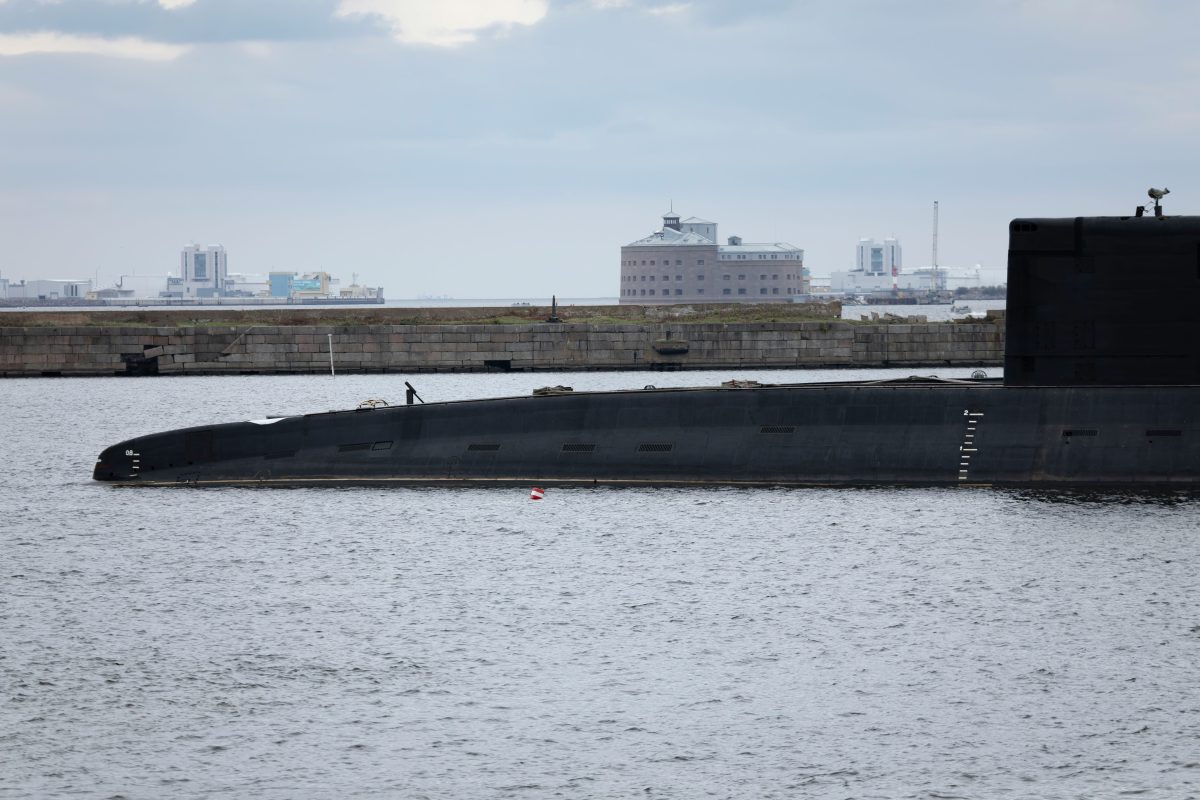 ©Belov Sergey via Unsplash
Thirty years after its sinking, the sunken Soviet submarine Komsomolets continues to cause a stir in the Norwegian Sea. Although recent measurements show that the nuclear-tipped torpedoes are not yet leaking plutonium, the wreck’s nuclear reactor is indeed still emitting radioactive substances.
This is evident from a study published in PNAS by J.P.G., H.E.H., H.-C.T., A.V., O.C.L.; J.P.G., H.E.H., H.-C.T., A.V., S.M.J., O.C.L., J.P.G., H.E.H., H.-C.T., A.V., S.M.J., O.C.L., J.P.G., H.E.H., H.-C.T., S.M.J., and O.C.L.
The Komsomolets sank in 1989 following a fire on board, at the end of the Cold War. Forty-two of the 69 crew members lost their lives in the incident. The submarine lies on the seabed at a depth of approximately 1.7 kilometers, some distance off the Norwegian coast.
New research by Norwegian authorities shows that previous sealing work is still in place but can no longer be considered a permanent solution. The study reveals that the reactor periodically causes leaks, with peak levels of strontium-90 and cesium-137 that are 400,000 and 800,000 times higher, respectively, than typical levels in the Norwegian Sea. However, there is currently no indication that radioactive substances are accumulating in the immediate vicinity of the wreck. According to the researchers, the released radionuclides are rapidly diluted in the surrounding seawater, so the impact on the marine environment appears to be limited for the time being. However, the scientists do see clear signs of corrosion in the reactor and in parts of the hull. This suggests that the nuclear material is continuing to deteriorate and that future leaks cannot be ruled out. Norwegian regulators are therefore calling for further research into the corrosion process and how emissions might develop in the future.
The issue of the Komsomolets thus remains relevant, not only because of the historical significance of the wreck, but also because of its broader implications. At a time of rising geopolitical tensions and increased military activity at sea, the submarine serves as a cautionary example of how long the consequences of a nuclear accident can linger.
©Belov Sergey via Unsplash - Illustration of a submarine; this is not the sunken Komsomolets.